
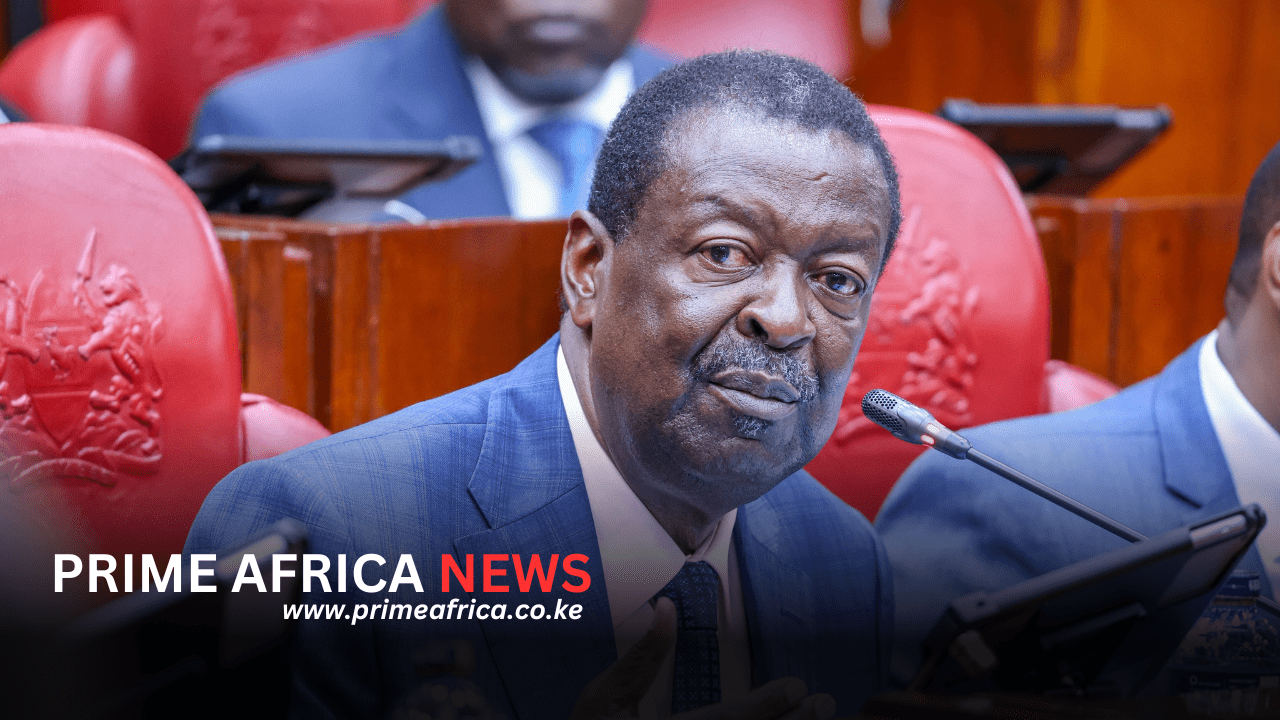

NAIROBI, Kenya — In a move to quell rising concerns over the constitutional autonomy of Kenya’s capital, Prime Cabinet Secretary Musalia Mudavadi has officially distinguished the new intergovernmental agreement between the National Government and Nairobi City County from the previous military-led administration.
Appearing before the Senate Committee on Devolution and Intergovernmental Relations on Tuesday, Mudavadi emphasized that the current framework is a partnership of equals rather than a transfer of powers.

The Prime CS sought to distance this new arrangement from the Nairobi Metropolitan Services (NMS), the temporary entity created in 2020 under former President Uhuru Kenyatta. While the NMS saw the National Government take full control of four key sectors—Health, Transport, Public Works, and Physical Planning—Mudavadi insisted this new agreement is built on structured collaboration.
“The agreement does not transfer functions, but establishes a structured framework for collaboration, distinct from the former Nairobi Metropolitan Services,” Mudavadi told the committee, chaired by Wajir Senator Abass Sheikh Mohammed.
Mudavadi’s justification for the heightened cooperation centers on Nairobi’s unique status as a continental hub. As the only city in the Global South to host a United Nations headquarters (UNON), the capital’s efficiency is tied directly to Kenya’s national interests and international image.
The Prime CS highlighted several pillars where Nairobi’s performance impacts the entire region:
-
Diplomatic Standing: Hosting major missions and multilateral corporations.
-
Economic Competitiveness: Serving as the gateway into Eastern and Central Africa.
-
Infrastructure & Security: Ensuring urban management meets the standards required for investor confidence.

Key Differences at a Glance
| Feature | Nairobi Metropolitan Services (NMS) | Current Cooperation Agreement |
| Legal Basis | Transfer of Functions (Article 187) | Intergovernmental Cooperation Framework |
| Control | National Government led | Shared responsibility |
| Duration | Temporary/Fixed term | Ongoing collaborative framework |
| Autonomy | County functions surrendered | County functions retained with support |
The Senate’s Oversight
The Senate committee’s inquiry follows questions regarding whether the “cooperation” might be a “soft takeover” of Governor Johnson Sakaja’s administration. By appearing before the Senate, Mudavadi aims to reassure devolution proponents that the National Government’s involvement is limited to enhancing service delivery in areas that affect Kenya’s global competitiveness and regional integration agenda.
For the National Government, a functional Nairobi isn’t just about local services; it is about maintaining the city’s title as the political and economic capital of East Africa.
About The Author

