
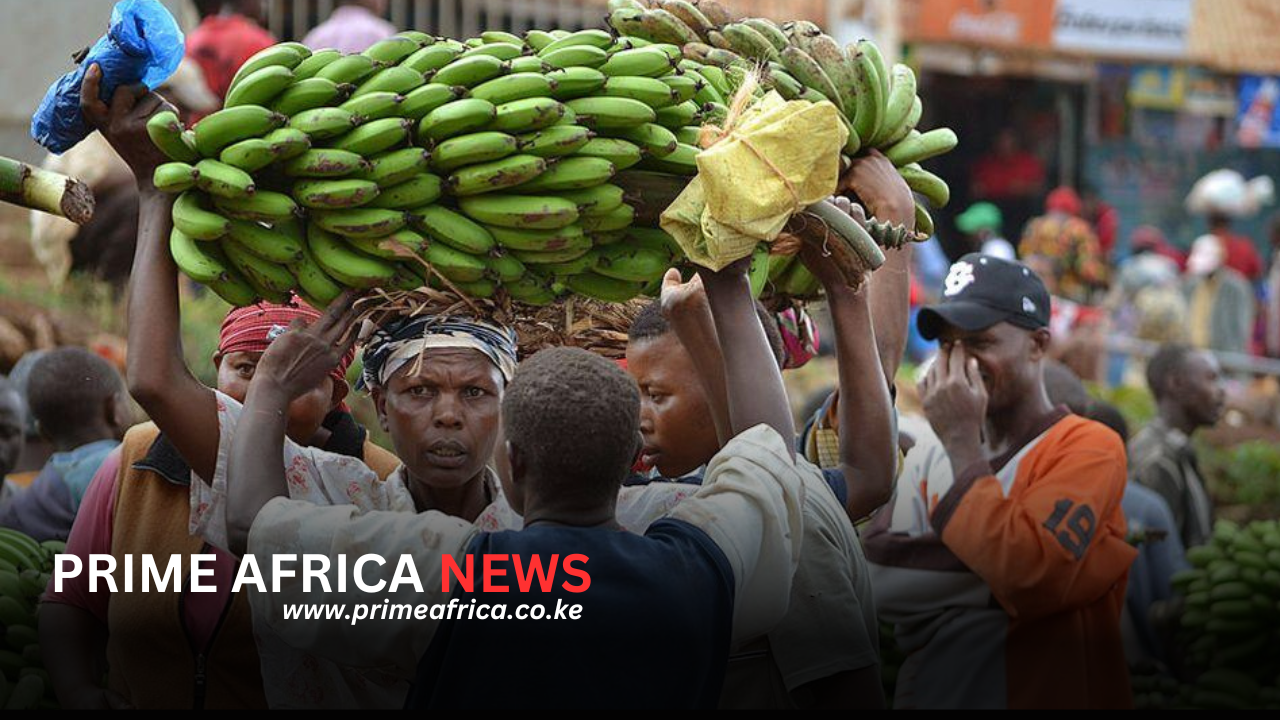

In Lilongwe’s busy Mchesi Market, 30-year-old Enock Dayton stands beside a small pile of green bananas—what’s left of his once-thriving fruit business. Born and raised in Molele village in Thyolo, southern Malawi, Dayton has sold bananas for most of his life. But in recent months, he’s watched his stock—and profits—dwindle.
“We used to grow our own bananas and bring them here in trucks,” he recalls. “Now, it’s getting harder to even find enough to sell.”
Dayton’s struggle mirrors a broader crisis facing Malawi’s banana industry. Once a major banana-producing region, the country’s farms were ravaged by Banana Bunchy Top Virus (BBTV) in 2013. The disease forced farmers to uproot entire plantations, wiping out banana production in key areas and leaving a gaping hole in local supply.
[spacer height=”20px”]
Since then, Malawi has turned to regional neighbors, especially Tanzania, to meet demand. In 2023 alone, the country imported over 5.5 million kilograms of bananas, valued at more than $491,000, mainly from Tanzania, with smaller amounts from Mozambique and South Africa.
[spacer height=”20px”]
But that supply line was abruptly cut off in March 2025, when the Malawian government announced a temporary ban on several agricultural imports—including bananas. Officials said the move was aimed at protecting local industries and easing pressure on foreign exchange reserves, which have been under severe strain.
The fallout was swift. In April, Tanzania retaliated by banning all agricultural imports from Malawi. The ban extended beyond bananas, also targeting fertilizer exports to landlocked Malawi and threatening to block goods transiting through Tanzanian ports. The trade rift deepened when Tanzania extended similar restrictions to South Africa, accusing both nations of unfair trade practices.
[spacer height=”20px”]
For Malawi, the stakes are high. The country relies heavily on imports from Tanzania, including fuel, lubricants, cement, glassware, and industrial goods—imports valued in the hundreds of millions of dollars annually. Meanwhile, its exports to Tanzania, such as soybean meal and legumes, are worth less than $50 million.
[spacer height=”20px”]
Analysts warn that Malawi, which is already facing high inflation and food insecurity, may have underestimated the economic consequences of its import restrictions.
[spacer height=”20px”]
“The intention to support local agriculture is understandable,” said a Lilongwe-based trade expert. “But such moves require coordination and careful diplomacy. Otherwise, the economic blowback can be severe.”
[spacer height=”20px”]
The UN’s Food and Agriculture Organization (FAO) agrees. It has been working with Malawi to revive the banana sector and says the country’s banana industry has the potential to contribute significantly to food security and economic growth—if given proper support.
But until local production recovers, vendors like Dayton remain in limbo. “The prices have gone up, and people are buying less,” he says. “If the borders stay closed, we don’t know how we’ll survive.”
[spacer height=”20px”]
With trade negotiations reportedly ongoing, all eyes are now on Lilongwe and Dar es Salaam to resolve the standoff and restore a critical supply chain that affects farmers, traders, and consumers across the region.
[spacer height=”20px”]
About The Author

