
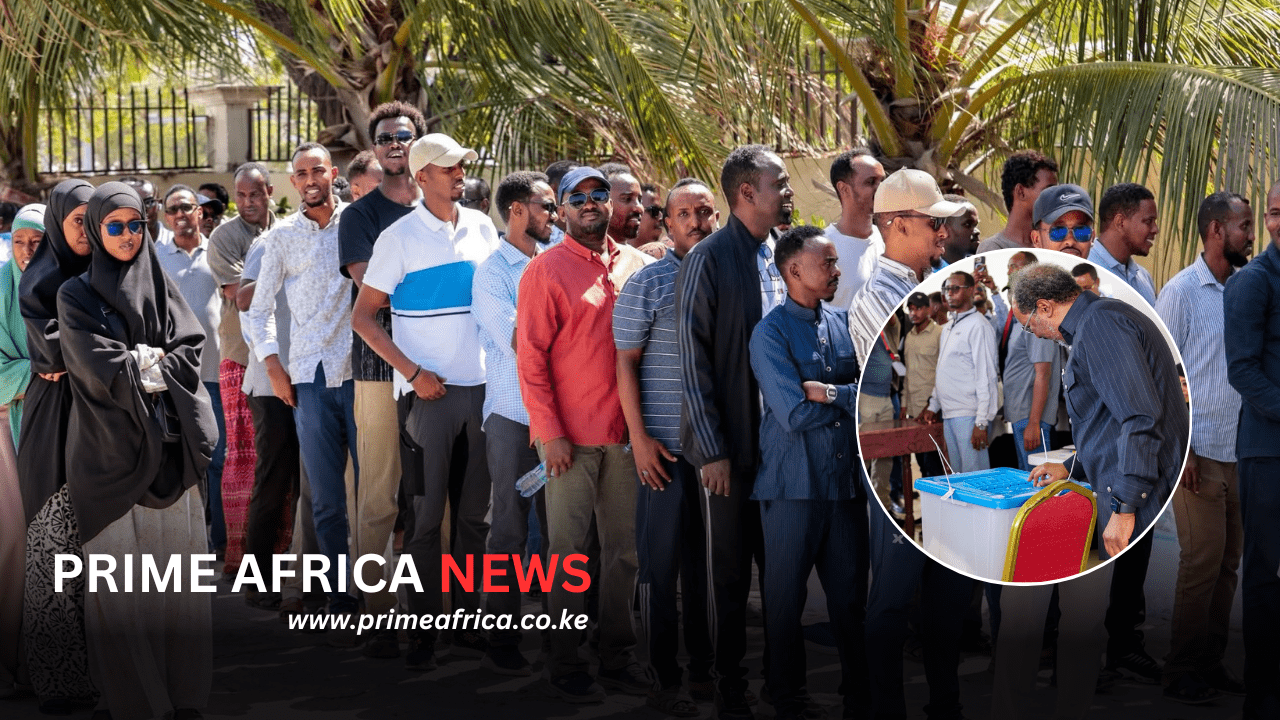

MOGADISHU, Somalia — Residents of Somalia’s capital, Mogadishu, went to the polls on Thursday in landmark municipal elections seen as a critical step toward the country’s first direct national elections in more than 50 years.
[spacer height=”20px”]
With the exception of the semi-autonomous Puntland region and the self-declared independent Somaliland, Somalia last held direct elections in 1969, months before military strongman Mohamed Siad Barre seized power in a coup. Following Barre’s overthrow in 1991 and years of devastating civil war, Somalia adopted an indirect electoral system in 2004 aimed at fostering consensus among rival clans amid a persistent Islamist insurgency.
[spacer height=”20px”]
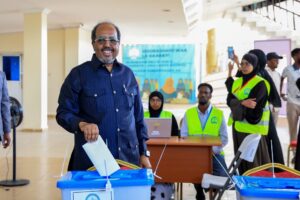
Under the indirect model, clan elders select lawmakers, who then elect the president. The president has traditionally appointed Mogadishu’s mayor. Critics, however, argue the system has entrenched elite interests and enabled corruption, with many politicians preferring it over popular voting.
Thursday’s vote in Mogadishu — a city of roughly three million people — is widely viewed as a test case for nationwide direct elections. According to the National Electoral Commission, about 1,605 candidates are contesting 390 seats in district councils across the capital. The elected councillors will later choose the city’s mayor.
“This shows Somalia is standing on its feet and moving forward,” said Abdishakur Abib Hayir, a member of the National Electoral Commission. “After the local election, elections can and will take place in the entire country.”
[spacer height=”20px”]
Voters began lining up outside polling stations early in the morning, with security tightened across the city. Major roads were closed to vehicles, while the airport, seaport and many businesses temporarily shut down as authorities sought to prevent potential attacks. The electoral commission said around 10,000 security personnel were deployed to secure polling centres.
[spacer height=”20px”]
Despite ongoing threats from al Qaeda-linked al Shabaab militants, security conditions in Mogadishu have improved in recent years, allowing the vote to proceed.
[spacer height=”20px”]
For many residents, the elections marked a deeply personal milestone.
[spacer height=”20px”]
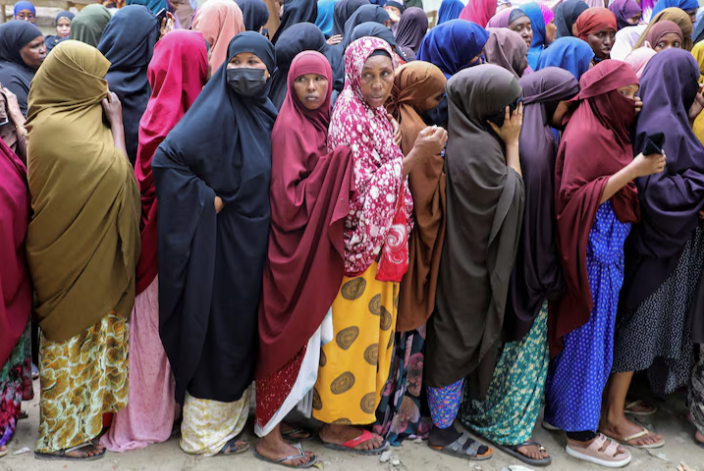
“This is my first time to vote. I am very happy and I came here early in the morning, walking with other mothers,” said Addey Isak Abdi, 65, her face covered with a pink veil, speaking to Prime Africa.
[spacer height=”20px”]
The municipal elections follow the passage of a 2024 law restoring universal suffrage ahead of federal elections expected next year. However, President Hassan Sheikh Mohamud reached an agreement in August with some opposition leaders stipulating that while lawmakers will be directly elected in 2026, the president will continue to be chosen by parliament.
[spacer height=”20px”]
Opposition parties have criticised the pace and structure of the reforms, arguing that the new system could favour President Mohamud’s re-election bid. They have also raised concerns about whether Somalia is secure enough for mass voting, citing al Shabaab’s continued control of large rural areas and its ability to carry out attacks in major urban centres.
[spacer height=”20px”]
Even so, Thursday’s vote was widely seen as a significant step in Somalia’s long and fragile journey toward inclusive, democratic governance.
[spacer height=”20px”]
About The Author

