
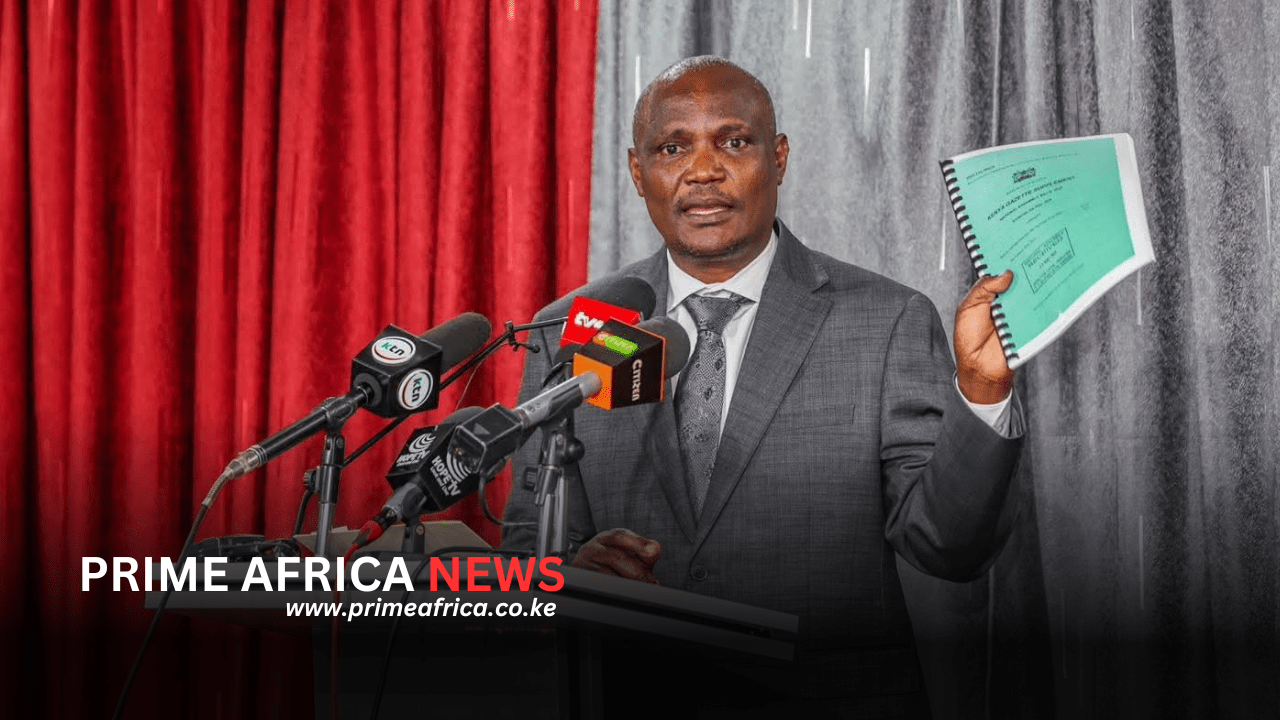

NAIROBI, Kenya – Kenya’s Cabinet Secretary for the National Treasury, John Mbadi, has assured Kenyans that the proposed Finance Bill 2026 is designed to create a more transparent, inclusive and simplified taxation framework aimed at easing the burden on citizens and businesses.
Speaking during a press briefing at the National Treasury in Nairobi on Monday, CS Mbadi dismissed what he termed as misinformation and political propaganda surrounding the proposed bill, insisting that the government has carefully developed the proposals after extensive consultations and technical analysis.
According to Mbadi, the Finance Bill 2026 seeks to promote fairness, equity and simplicity in tax administration while encouraging investment, innovation and long-term economic sustainability.
“My team and I have carefully observed, consulted and analysed this year’s Finance Bill proposal. Kenyans should not be deceived by propaganda since the proposed bill is based on fairness, equity and simplicity,” said Mbadi.
The Treasury also emphasized that the bill remains open to public participation and parliamentary scrutiny as required under the Constitution.
One of the most debated proposals in the Finance Bill 2026 has been the taxation of mobile phones.
However, the Treasury clarified that the proposal does not introduce a new tax on mobile phones as widely perceived. Instead, the government plans to simplify the existing taxation structure by replacing multiple taxes and levies with a single 25 percent excise duty collected upon activation of the phone.
Currently, mobile phones attract several charges including:
- 16% VAT
- 10% excise duty
- 25% import duty
- 2.5% Import Declaration Fee
- 2% Railway Development Levy
The Treasury says these combined taxes create an overall tax burden of approximately 55.5 percent. Under the new proposal, VAT, Import Declaration Fee, Railway Development Levy and import duty on phones would be removed, reducing the overall cost burden on consumers.
Officials say the move is intended to support digital access, youth innovation, online businesses and financial inclusion rather than punish technology users.
The Finance Bill 2026 also introduces proposals aimed at modernising Kenya’s tax framework, especially in the growing digital economy.

The Treasury proposes new reporting requirements for virtual asset service providers to improve transparency and accountability in digital and crypto-related transactions.
The government says the reforms are necessary to align Kenya’s legal and tax systems with the rapidly evolving financial technology environment.
Additionally, the bill seeks to clarify the taxation of digital payment processing services and card transaction fees following recent court rulings on digital financial services.
Mbadi further clarified that local and international companies offering digital payment solutions may be subjected to withholding tax on specific card transaction and payment processing fees.
The Treasury explained that the proposal is mainly targeting ICT-driven digital intermediary services and not ordinary mobile money transactions such as deposits and withdrawals.
The CS also assured Kenyans that Safaricom’s core M-Pesa services are not the primary target of the proposed changes following consultations between the Treasury and industry stakeholders.
Treasury Dismisses Reports on New Digital Content Tax
The National Treasury also dismissed claims that the Finance Bill 2026 introduces a 5 percent withholding tax on digital content monetisation, stating that no such proposal exists in the bill.
Further, the Treasury clarified that controversial proposals contained in the withdrawn Finance Bill 2024 — including VAT on bread, motor vehicle circulation tax and access to mobile money transaction data — are not part of the current Finance Bill 2026.
The government has encouraged Kenyans to actively participate in the ongoing parliamentary review process to ensure constructive engagement on the proposed law.
“The National Treasury remains committed to maintaining a balanced fiscal framework that supports revenue mobilisation, economic growth, investment, innovation and long-term economic sustainability while taking into account prevailing economic conditions and public concerns,” the Treasury stated.
About The Author

