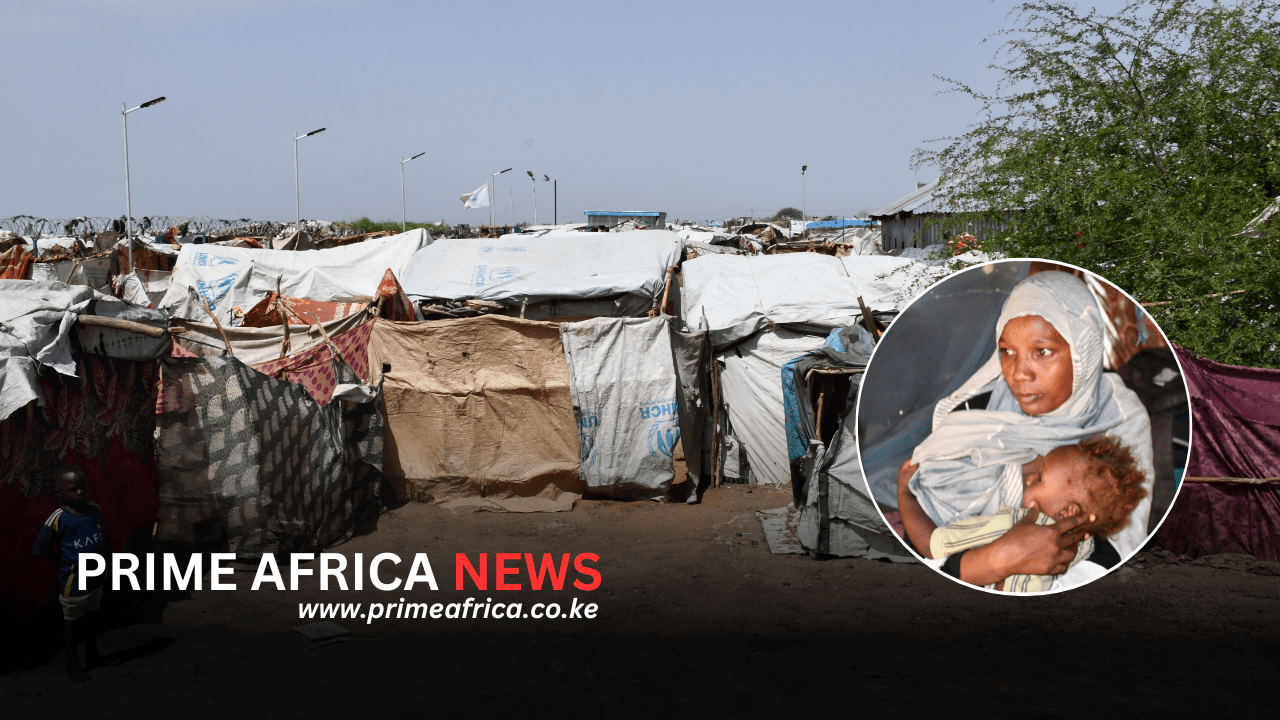

SUDAN— Nearly three years after the outbreak of the Sudan conflict, thousands of refugees and returnees at the Renk Transit Centre continue to face dire humanitarian conditions, despite having escaped the violence across the border.
[spacer height=”20px”]
The conflict, which erupted on April 15, 2023, between the Sudanese Armed Forces and the Rapid Support Forces, has triggered one of the world’s largest displacement crises. According to the United Nations, more than 13 million people have been displaced, with over 1.3 million seeking refuge in South Sudan.
[spacer height=”20px”]
At the Renk Transit Centre in Upper Nile State, survival remains a daily struggle. For Najah Al-Fadl, a 35-year-old mother of four, the journey to safety came at a devastating cost. Fleeing Sudan in December 2023 while pregnant, she escaped escalating violence, including drone strikes and armed raids on homes.
Now, she lives in a fragile shelter made of plastic sheets and sticks—offering little protection from the scorching daytime heat and harsh nighttime conditions. Overcrowding is widespread, with multiple families sharing cramped spaces, while access to clean water and sanitation remains inconsistent.
[spacer height=”20px”]
“Life here is not stable,” she says. “We are safe from war, but not from suffering.”
[spacer height=”20px”]
Education has become an unaffordable luxury for many families in the camp. Najah’s children, once enrolled in school in Sudan, have been out of class for months.
[spacer height=”20px”]
Nearby schools are either too distant, overcrowded, or require fees that displaced families cannot pay. As a result, many children spend their days idle, increasing their vulnerability to child labour, early marriage, and exploitation.
[spacer height=”20px”]
Residents say access to basic education and vocational training is urgently needed to prevent a “lost generation.”
[spacer height=”20px”]
Food insecurity remains one of the most pressing challenges. Humanitarian assistance is irregular, forcing families to rely on informal jobs.
[spacer height=”20px”]
Najah works long hours in a local restaurant, earning minimal wages and occasionally receiving leftover food. Some days, she says, her family survives on a single meal—or none at all.
[spacer height=”20px”]
Healthcare services are available but severely overstretched. Clinics frequently run out of essential medicines, pushing families toward costly private pharmacies they cannot afford. Malnutrition, especially among children, is widespread.
[spacer height=”20px”]
A Mother’s Struggle
[spacer height=”20px”]
Israhak Yusuf, also 35, fled from Medeni with her children. Shortly after arriving in Renk, one of her children fell critically ill. Desperate for treatment, she briefly returned to Sudan but found no adequate care. Back in Renk, the child was diagnosed with severe acute malnutrition—linked to food shortages and poor living conditions.
Although the child recovered after treatment at a nutrition centre, Israhak says the challenges remain. She now supports her family by baking and selling cakes, but the income is insufficient.
[spacer height=”20px”]
“Even with work, we cannot meet our basic needs,” she explains.
[spacer height=”20px”]
Water and Sanitation Crisis
[spacer height=”20px”]
Water shortages are frequent, with long queues forming at limited water points. Sanitation facilities are inadequate and poorly maintained, increasing the risk of disease outbreaks—particularly among children.
[spacer height=”20px”]
For many, these conditions compound an already fragile existence.
[spacer height=”20px”]
AU Warns South Sudan on Brink of Renewed Conflict, Urges Ceasefire and 2026 Elections
[spacer height=”20px”]
Stuck in Transition
[spacer height=”20px”]
Fathina Abdrahaman, 57, has lived in the transit centre since fleeing Sudan in 2023. Initially told that Renk would be a temporary stop, she has now spent years there.
[spacer height=”20px”]
She declined relocation to Maban, citing concerns over insecurity and limited services. Some families who relocated have reportedly returned to Renk under similar concerns.
[spacer height=”20px”]
While she acknowledges the efforts of humanitarian organisations—particularly in treating malnutrition—she says the support falls short of the growing needs.
[spacer height=”20px”]
“We need more than emergency aid. We need a future,” she says.
[spacer height=”20px”]
Calls for Sustainable Solutions
[spacer height=”20px”]
The Renk Transit Centre hosts a growing population of Sudanese refugees and South Sudanese returnees, many arriving with little or nothing. As new arrivals continue to cross the border, overcrowding and pressure on already limited resources are intensifying.
[spacer height=”20px”]
IGAD Urges Immediate Ceasefire in South Sudan as Regional Leaders Convene for Crisis Summit
[spacer height=”20px”]
Residents are calling for long-term solutions, including access to education, vocational training, and livelihood opportunities that would enable them to rebuild their lives and reduce dependence on aid.
[spacer height=”20px”]
Hope for Peace
[spacer height=”20px”]
As the Sudan conflict approaches its third year, hope remains the strongest currency among those displaced.
[spacer height=”20px”]
For families like Najah’s, the ultimate goal is simple: peace, and the chance to return home.
[spacer height=”20px”]
Until then, life in Renk continues—marked by resilience, uncertainty, and the daily fight for survival.
[spacer height=”20px”]
About The Author