
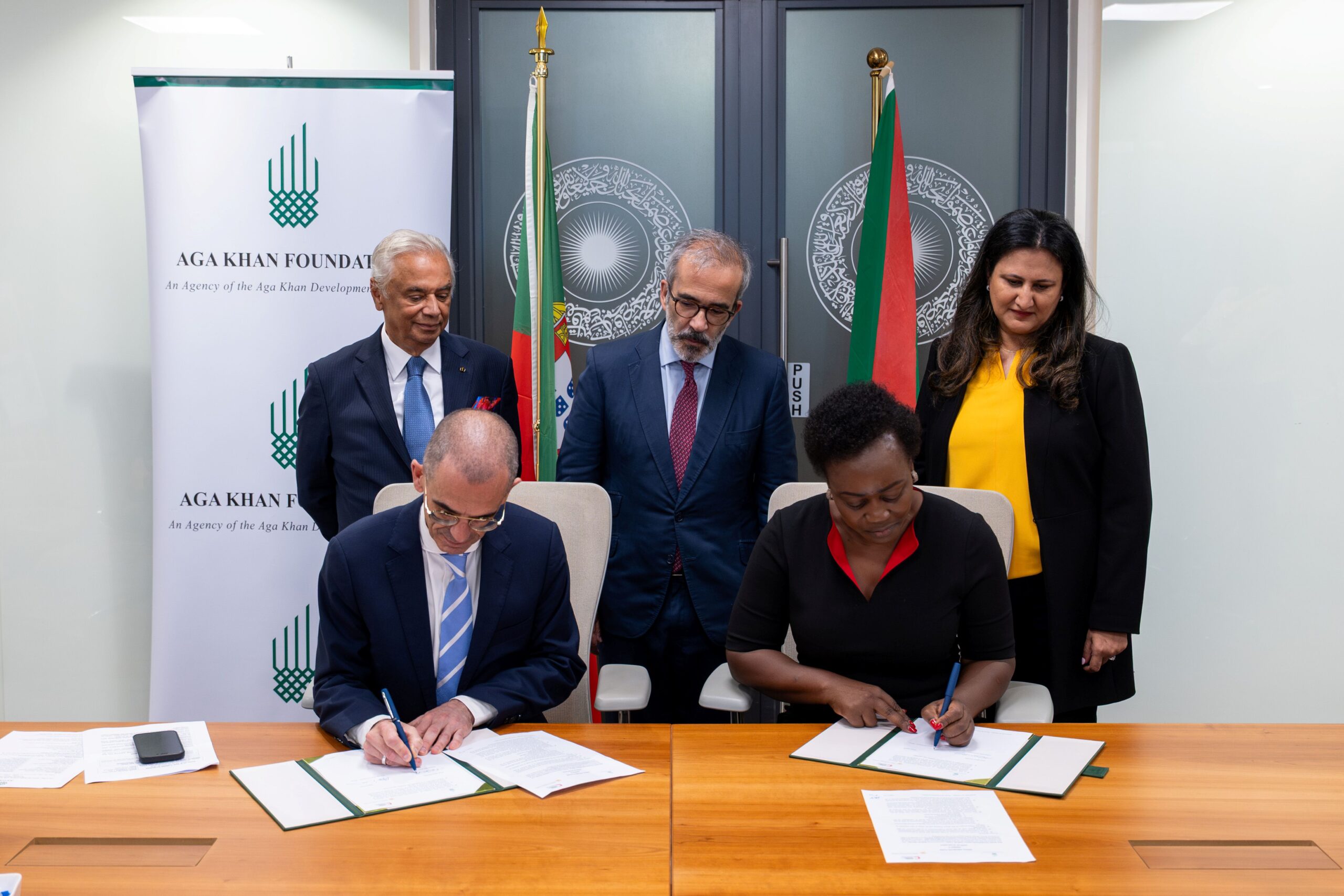

KWALE, Kenya — A new partnership between the Aga Khan Foundation (AKF) and the Camões Institute is set to boost coastal restoration and eco-tourism in Kenya, with over 65,000 mangrove seedlings expected to be grown and nurtured under the Gazi Bay Coastal Restoration and Eco-Tourism (G-CORE) initiative.
[spacer height=”20px”]
The agreement, signed during an official visit to Kenya by Paulo Rangel, marks a significant step in advancing climate resilience and community-led development along the country’s coastline.
[spacer height=”20px”]
Speaking during the signing, Amin Mawji, Diplomatic Representative of the Aga Khan Development Network in East Africa, reaffirmed the network’s commitment to environmental sustainability and inclusive growth.
[spacer height=”20px”]
“The Aga Khan Development Network remains committed to working with partners across sectors to advance climate resilience, environmental stewardship, and inclusive development,” Mawji said. “This collaboration reflects a shared commitment between Portugal, Kenya, and AKDN to sustainable development and economic growth.”
[spacer height=”20px”]
The initiative will focus on restoring degraded mangrove ecosystems in Gazi Bay, a vital coastal habitat that has suffered years of environmental degradation due to deforestation, coastal erosion, and the impacts of climate change, including rising sea levels and extreme weather events.
[spacer height=”20px”]
Through the G-CORE programme, AKF and its partners aim to plant approximately 65,000 mangrove seedlings across six hectares, contributing to a broader target of restoring 226 hectares of mangrove forest in collaboration with the Kenya Forest Service.
[spacer height=”20px”]
Beyond ecological restoration, the project emphasizes community empowerment by:
- Training local residents in conservation practices
- Upgrading eco-tourism infrastructure, including the Gazi Boardwalk
- Supporting small enterprises, particularly those led by women and youth
[spacer height=”20px”]
The initiative is part of AKF’s wider Indian Ocean ReGeneration programme, which integrates environmental restoration with sustainable economic opportunities. By strengthening eco-tourism and conservation-based livelihoods, the project seeks to create long-term resilience for coastal communities.
[spacer height=”20px”]
Mangroves play a critical role in protecting shorelines, supporting marine biodiversity, and acting as carbon sinks—making their restoration key to Kenya’s climate adaptation strategy and blue economy ambitions.
[spacer height=”20px”]
Portugal, through the Camões Institute, will provide partial funding for the project, aligning with shared priorities on marine conservation, climate adaptation, and sustainable development.
[spacer height=”20px”]
The collaboration underscores growing international partnerships supporting Kenya’s environmental goals and highlights the importance of joint action in addressing the climate crisis.
[spacer height=”20px”]
As restoration efforts take root in Gazi Bay, stakeholders say the initiative could serve as a model for community-driven coastal conservation across the region.
[spacer height=”20px”]
About The Author

