
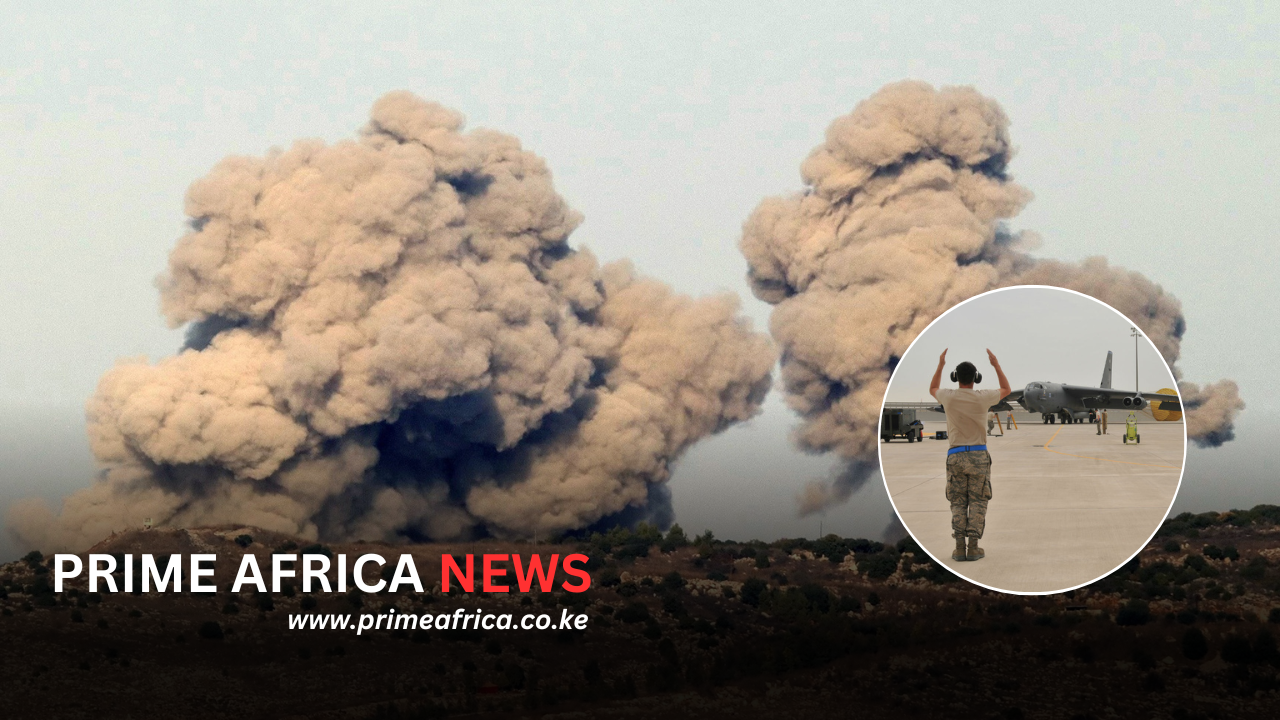

Tehran/Doha/Baghdad — Iran launched coordinated missile strikes Monday on U.S. military installations in Qatar and Iraq, marking a sharp escalation in an increasingly dangerous conflict in the Middle East. The missile attacks were in direct response to a surprise U.S. bombing campaign over the weekend that targeted three of Iran’s key nuclear facilities.
Qatar swiftly condemned the missile barrage on Al Udeid Air Base, a strategic U.S. installation near Doha that hosts the Combined Air Operations Center and the 379th Air Expeditionary Wing. The Qatari government confirmed that the missiles were intercepted without causing casualties, and assured the public that its airspace had been secured.
Iran, in a statement aired on state television accompanied by martial music, framed the attack as a “mighty and successful response” to what it termed “America’s aggression.” The country’s Revolutionary Guard claimed the number of missiles fired matched the number of bombs used in the U.S. attack on its nuclear sites—a move Iranian officials described as measured and designed to avoid civilian harm.
The Revolutionary Guard stated that Al Udeid was selected due to its location outside populated areas, in what appeared to be a signal of Iran’s effort to avoid civilian casualties and limit the scope of confrontation.
In Iraq, missiles also struck the Ain al-Assad base in the country’s western Anbar province. An Iraqi security official, speaking anonymously to the Associated Press, confirmed the strike but offered no immediate details on casualties or damage.
Qatar’s Foreign Ministry described the Iranian action as a “flagrant violation of Qatar’s sovereignty, its airspace, and international law.” The Al Udeid base is a critical hub for U.S. and allied air operations across the Gulf, hosting thousands of personnel and extensive command-and-control infrastructure.
The Iranian strike follows Sunday’s U.S. offensive, in which stealth bombers targeted the Fordo, Natanz, and Isfahan nuclear facilities—long considered central to Tehran’s uranium enrichment efforts. The attack, ordered by President Donald Trump, marked the first-ever direct U.S. military strike on Iranian nuclear infrastructure.
Just before the Iranian missiles were launched, President Masoud Pezeshkian posted on social media platform X:
“We neither initiated the war nor are seeking it. But we will not leave invasion to the great Iran without answer.”
Meanwhile, Israel expanded its military campaign against Iran, launching symbolic and strategic strikes deep into Tehran. Among the targets were the entrance to the infamous Evin Prison—known for detaining political dissidents—and the headquarters of Iran’s internal security force, which has suppressed nationwide protests in recent years.
Israel’s military declared it would continue targeting what it called “regime and repression bodies,” signaling a shift toward undermining Tehran’s authority. These statements came as Iran experienced a major internet blackout, further isolating the country and hindering internal communication.
The ongoing war, now in its eleventh day, has seen a dramatic escalation of firepower. Israeli cities remain under persistent drone and missile attacks from Iranian forces, and analysts warn of a broadening regional war. The crisis also threatens to deepen instability already caused by the Israel-Hamas war raging in the Gaza Strip.
President Trump, who returned the U.S. to the center of Middle Eastern conflict with Sunday’s strikes, further inflamed tensions by suggesting on Truth Social:
“If the current Iranian Regime is unable to MAKE IRAN GREAT AGAIN, why wouldn’t there be a Regime change???”
While the White House downplayed the remark, with press secretary Karoline Leavitt stating the president was “simply raising a question,” Tehran responded with fresh warnings and refused to consider diplomatic negotiations.
The U.S. military remains on high alert across the region, with fears that further Iranian retaliation could target American assets in the Gulf, Syria, or beyond.
As the standoff intensifies, international calls for restraint have grown—but with rhetoric escalating and missiles flying, the road to de-escalation appears increasingly narrow.
About The Author

