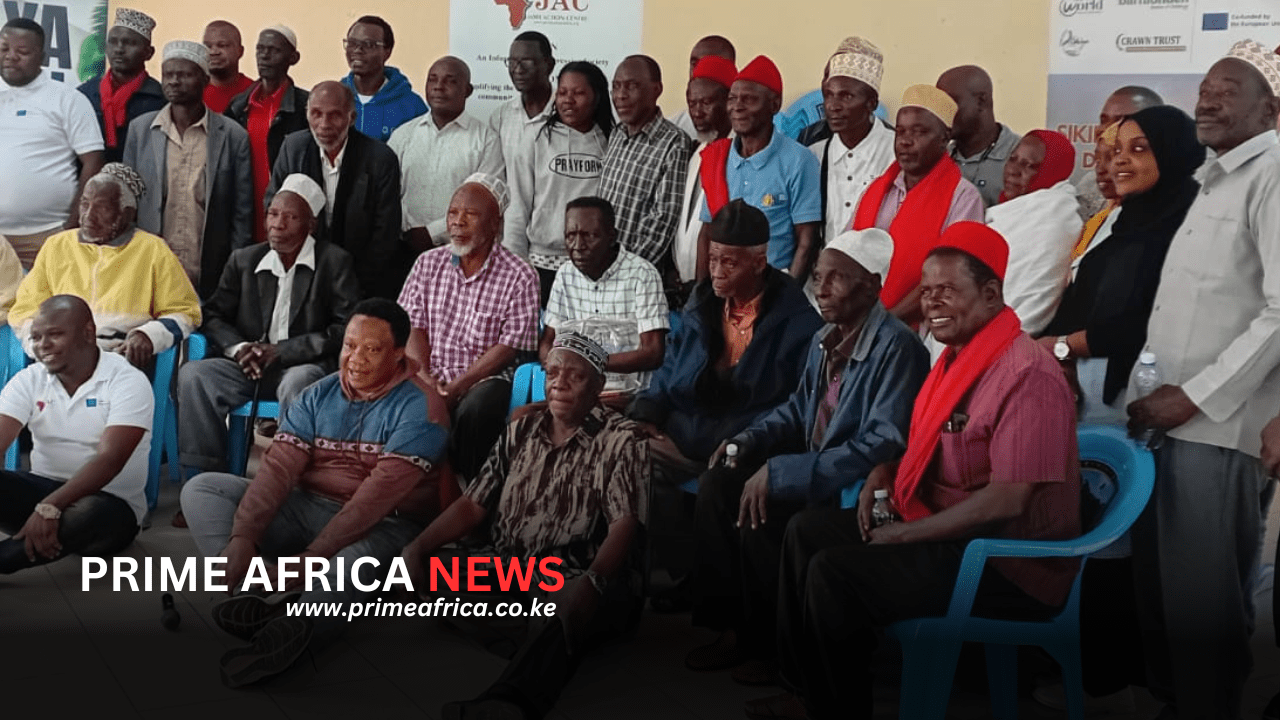

KWALE, Kenya — Kaya elders in Kwale County are calling for urgent government intervention to protect sacred forests from land encroachment, stone extraction, tree cutting and other human activities threatening sites they say have been safeguarded by communities for generations..
The elders want the government to undertake fresh surveys of Kaya lands, establish and enforce clear boundaries and fence areas facing pressure from encroachment and other activities.
At Kaya Similani, chairman Mohammed Ali Sibabu said parts of the forest had been invaded by people constructing buildings, extracting stones and allegedly subdividing and selling land.
He said the concerns had been reported to both county and national government authorities, but the problem persisted.
“Similani has become a business, alleging that some people are cutting portions of the Kaya and selling them even though the land does not belong to them,” Sibabu said.
According to Sibabu, Kaya Similani had previously been surveyed, with its acreage and boundaries established, but the boundaries were no longer being respected.
He said police officers had at times intervened, but alleged that some activities resumed after the officers left.
Sibabu is now calling for a fresh government survey to establish the acreage of Kaya land that remains, followed by fencing and stronger enforcement.
“We want the government to survey the land, identify the acreage that remains and fence it,” he said.
The concerns were raised during an ecotourism forum organised under the Kaya Zetu Rasilimali Zetu project, a 10-month initiative implemented by Jamii Action Centre (JAC) under the Sikiliza Sauti Yetu Dunia Inaita programme, funded by the European Union through WeWorld.
JAC Director Omar Chala said the project was initiated after the organisation identified a gap in environmental discussions, where Kaya elders, despite being custodians of the forests, were often excluded from important conservation discussions.
Now in its ninth month, the project has brought Kaya elders together with government agencies and other stakeholders to discuss challenges facing the sacred forests and explore ways of sustaining conservation efforts beyond the project’s funding period.
Chala said securing Kaya land has emerged as one of the major issues requiring continued attention.
He noted that some Kayas were historically established on land donated by individual families, creating challenges around formal documentation and ownership.
Discussions with relevant institutions have also focused on the status of Kaya sites, including Kaya Tiwi and Kaya Similani.
Chala said Kaya Tiwi has already been fenced, while securing land belonging to other Kaya sites remains a priority.
“Even if the project ends, the issues we have started do not end,” Chala said.
At Kaya Teleza, conservation efforts have focused on restoring parts of the forest affected by tree cutting and protecting the Colobus monkeys that depend on the ecosystem..
Elder Niazaro Bakari Mwakunena, chairman of the Colobus Monkey Conservation group at Kaya Teleza, said the forest suffered increased degradation after charcoal burning and firewood harvesting intensified.
He said the community responded by forming a conservation group that initially focused on protecting Colobus monkeys before expanding its mandate to the wider forest.
The group has 46 members, with eight selected to monitor the forest and report cases of illegal tree cutting to the Kaya committee.
Mwakunena said the group works with the Kenya Wildlife Service and forestry officials whenever government intervention is required.
The conservation campaign has also targeted young people through a football league designed to involve them in protecting the forest.
Five finals have so far been held, with the group planning to organise eight.
Mwakunena said the approach had contributed to a reduction in tree cutting.
He said the forest remains important to the community because it provides water, firewood and traditional medicinal plants.
“There are some trees you cannot find anywhere else, and there are medicines you cannot find anywhere else. They are found there,” he said..
The elders are also calling for greater participation of women and young people in Kaya conservation.
Mwanashabani Mohammed Mwakaribu, from Kaya Teleza, said women should not be excluded from efforts to protect the sacred sites.
She said she joined the Kaya conservation efforts because she understood the importance of trees and wanted to help ensure the resources survive for future generations.
Mwakaribu also wants children to learn the history of the Kayas and indigenous knowledge directly from elders.
“Our children, especially those doing the new curriculum for CBC, should be given opportunities to study the Kayas and have practical skills of protecting Kaya forests and understand fully the importance of the sacred areas,” she said.
She said some young people still associate Kaya elders with witchcraft, a perception she wants to change through greater community engagement.
According to Mwakaribu, conservation should involve the entire community, including women, girls and young people.
“Let us come in here to protect our Kayas because if we do not work together, what will happen will affect all of us,” she said.
Kwale County Director for Culture and Talent Management Samson Mangale Nyawa said the concerns raised by the elders require cooperation between different government departments.
Nyawa said indigenous knowledge held by Kaya elders should be documented and passed on to younger generations before it is lost.
He said the National Museums of Kenya is expected to undertake documentation of indigenous knowledge from Kaya elders, while the county government is also exploring ways of promoting Kaya heritage through tourism.
Nyawa urged communities to organise themselves to provide services such as traditional food and cultural performances to visitors.
He said such initiatives could enable communities to earn income from tourism while creating an economic incentive for protecting the Kayas.
He said Kayas should not only be protected as important cultural and environmental sites but should also provide sustainable economic opportunities for the communities that safeguard them.
But for the elders, the immediate priority remains securing the land.
Sibabu said the community had repeatedly raised concerns over changing Kaya boundaries and wants government agencies to act before more of the sacred forests are lost.
The elders now want the conservation gains made through the Kaya Zetu Rasilimali Zetu project to be matched with stronger protection of the land on which the forests stand.
About The Author