
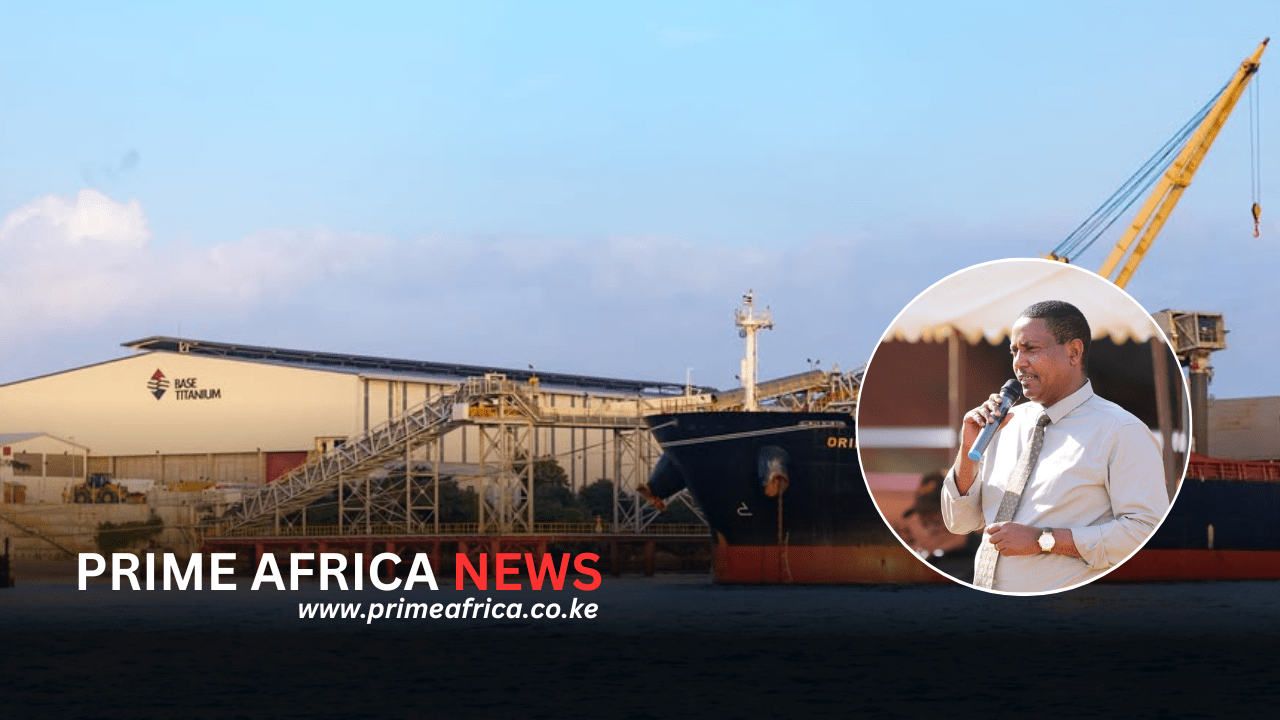

The National Environment Management Authority (NEMA) has commended Australian mining firm Base Titanium for successfully rehabilitating large sections of land at its former Kwale mining operations, describing the effort as a model for responsible mineral extraction in Kenya.
Less than two years after mining activities ceased, significant environmental recovery is already visible across the once-active sites, with vegetation regrowth and biodiversity gradually returning.
Base Titanium began operations in Kwale in 2013 and officially ended mining in December 2024 after exhausting commercially viable deposits of key minerals, including zircon, rutile and ilmenite.

According to NEMA, the company adopted a progressive rehabilitation strategy — restoring mined-out sections of land while extraction was still ongoing, rather than waiting until the end of operations. The approach, which remains uncommon among many mining firms, has enabled faster environmental recovery and reduced the long-term impact on surrounding communities.
Coast Regional NEMA Officer Isaya Chengo said Base Titanium had set a high benchmark for environmental compliance and sustainable mineral exploitation in Kenya.
“It has consistently adhered to environmental regulations and has demonstrated strong commitment to land restoration,” Chengo said. He noted that the company was the first mining operator in the country to submit a comprehensive Environmental Impact Assessment (EIA) report and secure all required licences before commencing operations.
Chengo added that the firm has pledged continued maintenance of rehabilitated areas to ensure long-term sustainability and environmental stability.
He urged other mining companies operating in Kenya to adopt similar practices, warning that many leave behind degraded and unproductive land after extraction activities cease.
Kwale Mining Alliance Deputy Coordinator Mahmoud Barow also lauded the restoration efforts, citing independent environmental assessments indicating that previously mined areas have been restored close to their natural state. He said vegetation, wildlife and soil organisms are steadily re-establishing themselves in the rehabilitated zones.
Barow emphasized that civil society groups will continue monitoring the restored land while also conducting public awareness campaigns on mineral rights, land rights and rehabilitation processes to empower local communities.
Residents who toured the restored sites expressed satisfaction with the outcome.
Mwasimba Bega said he had expected to find barren, scarred land but was instead impressed by thriving grass and tree cover across the former mining zones.
Another resident, Sikudhani Alfonce, noted that the restoration has helped protect biodiversity and eased concerns among neighbouring communities about the long-term environmental impact of mining.
Base Titanium’s Acting Environmental Manager, Mikah Muema, said independent scientific studies have validated the rehabilitation work. He added that community members were invited to inspect the restored areas to counter misinformation about the restoration process and promote transparency.
The rehabilitation milestone marks a significant chapter in Kenya’s mining sector, highlighting the growing importance of environmental accountability and sustainable resource management as the country continues to explore its mineral potential.
About The Author

