

JUBA, South Sudan – Veteran Kenyan journalist and broadcaster Jeff Koinange has been recognized among the world’s most influential war correspondents whose courageous reporting from conflict zones has shaped global journalism, promoted peace, advanced human rights advocacy, and strengthened the resilience of media professionals operating in dangerous environments.
The recognition appears in a newly released report titled “The Legacy of War Correspondents and the Global Imperative for Protection of Journalists in High-Risk Environments,” prepared by Infonile Communications Ltd, a media and communications development company. The report documents the contributions of distinguished war correspondents from the 19th century to the present day and highlights their role in exposing atrocities, documenting humanitarian crises, and advancing accountability across the world.
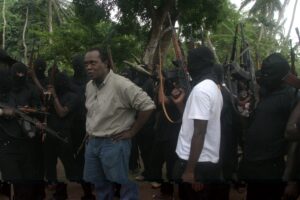
According to the report, Koinange is listed among Africa’s distinguished conflict correspondents for his coverage of major conflicts across Sierra Leone, Liberia, Sudan, the Democratic Republic of Congo, and other African war zones between 2001 and 2007. His frontline reporting brought international attention to some of the continent’s most challenging humanitarian and security crises.
The report places Koinange alongside globally celebrated conflict journalists including Christiane Amanpour, Richard Engel, Martha Gellhorn, James Nachtwey, and African journalists such as Mohammed Adow, Greg Marinovich, and Agnes Ndirubusa.
Read the Report : https://www.infonile.africa/2026/06/18/the-legacy-of-war-correspondents-and-the-global-imperative-for-protection-of-journalists-in-high-risk-environments/
The study notes that war correspondents have played a critical role in exposing genocide, ethnic cleansing, war crimes, famine, forced displacement, and violations of international humanitarian law. Through fearless reporting, they have amplified the voices of vulnerable populations and helped mobilize international responses to humanitarian emergencies.
Among the key contributions identified in the report are the promotion of human rights advocacy and accountability, documentation of war crimes, support for peacebuilding and conflict resolution efforts, protection of civilian populations, and the advancement of democratic governance and transparency.
Speaking on the significance of the recognition, the report’s author and Press Freedom Advocate, Bill Otieno, observed that the history of conflict reporting represents more than journalism; it reflects humanity’s enduring pursuit of truth amid violence, uncertainty, and oppression. The report emphasizes that the sacrifices made by generations of war correspondents have established the ethical foundations upon which contemporary journalism continues to stand.
The publication comes as preparations intensify for a major international gathering scheduled for Nairobi in November 2026. The forthcoming Global Summit on the Protection, Advocacy, and Professional Resilience of Media Practitioners Operating in High-Risk Environments set to be held at the University of Nairobi will bring together governments, media organizations, civil society groups, academia, and international institutions to address growing threats facing journalists worldwide.
Kenya to Host Global Press Peace Summit on Journalist Safety and Conflict Resolution
The high-level international convening is expected to confront one of the most urgent human rights and peacebuilding challenges of the modern era: the safety and protection of journalists working in conflict zones and fragile environments. Participants will deliberate on measures to combat impunity for attacks against journalists, strengthen legal protections, improve hostile-environment training, enhance mental health support, and reinforce global commitments to press freedom.
As the world prepares to converge in Nairobi, the report calls upon the international community to honour the courage and sacrifice of war correspondents whose reporting has illuminated humanity’s darkest moments while preserving hope for justice, accountability, and peace. It concludes that protecting journalists is not only a media issue but a fundamental requirement for democracy, human dignity, and sustainable peace.
About The Author