

The Drugs for Neglected Diseases initiative (DNDi), co-founded by the Kenya Medical Research Institute (KEMRI), has been awarded the prestigious Hideyo Noguchi Africa Prize in Tokyo for its groundbreaking work in developing life-saving treatments for neglected diseases, including sleeping sickness.
In just over two decades, DNDi has delivered 13 new treatments for six deadly diseases, nine of them targeting conditions prevalent in Africa. Among its landmark achievements is fexinidazole, the first-ever all-oral drug to cure both forms of sleeping sickness, replacing the painful injections and prolonged hospital stays patients once endured.
“This recognition is proof of the power of a model for medical innovation driven purely by patients’ needs, where African scientists are leading the charge against diseases that have long burdened our communities,” said Prof. Samuel Kariuki, DNDi Continental Lead Africa and Eastern Africa Director.
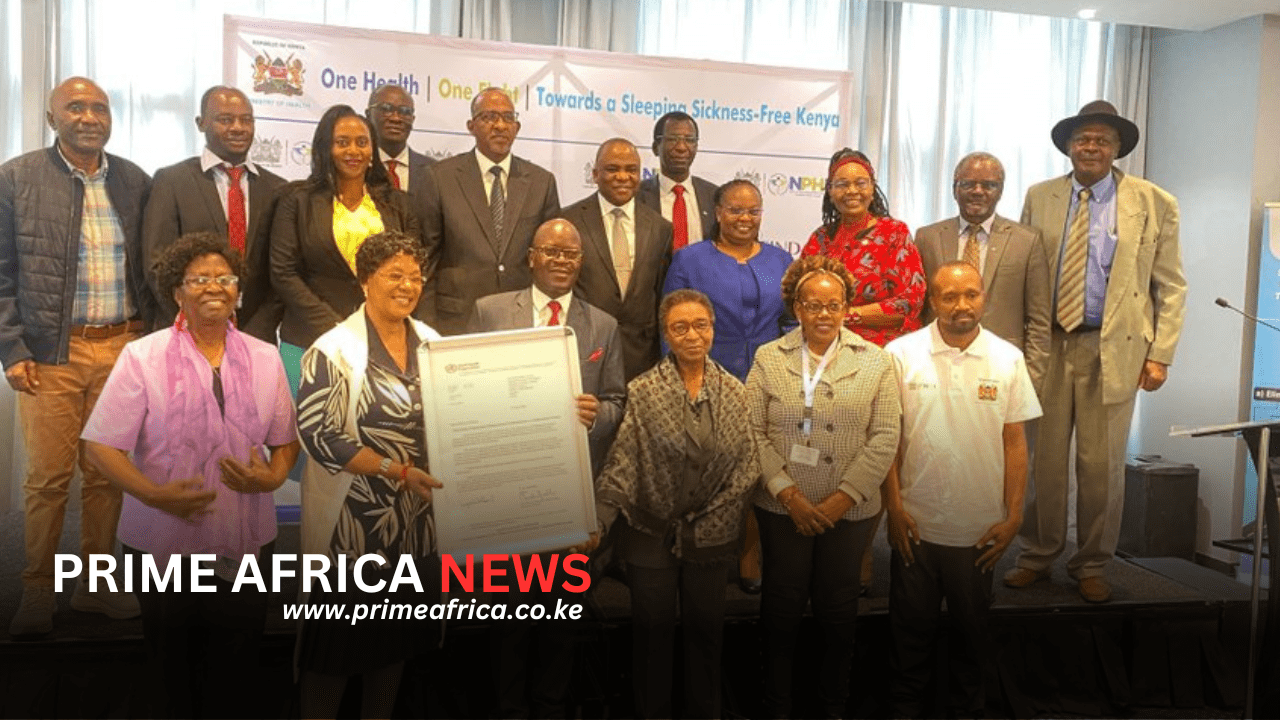
The award comes at a historic moment for Kenya. On June 16, 2025, the country’s elimination of sleeping sickness was validated, and on August 8, 2025, the World Health Organization (WHO) officially declared Kenya free of the disease as a public health problem.
Once a devastating illness in the early 20th century, sleeping sickness — or human African trypanosomiasis (HAT) — ravaged rural communities. Sustained surveillance and treatment efforts have turned the tide: no new local cases have been reported in more than a decade, with the last indigenous case recorded in 2009. Kenya now becomes the tenth country globally and only the second in Africa to achieve this milestone.
For Kenya, DNDi’s recognition carries deep symbolism given its origins in collaboration with KEMRI.
“As one of DNDi’s founding partners, KEMRI is immensely proud to see DNDi recognized for its outstanding contributions, and for our shared commitment to addressing neglected diseases,” said Prof. Elijah Songok, Director General of KEMRI. “It demonstrates that when African institutions lead research initiatives, we achieve global impact. This prize validates the critical role African research institutions play in advancing global health equity.”
DNDi’s impact extends well beyond HAT. It spearheaded the world’s first clinical trial for mycetoma, a chronic and debilitating infection of the skin and bone, advanced treatments for leishmaniasis (kala-azar), and developed child-friendly HIV medicines in simpler, easier-to-administer formulations.
The Hideyo Noguchi Africa Prize, awarded every three years by the Government of Japan, is regarded as Africa’s most prestigious medical accolade. Established in memory of Japanese bacteriologist Dr. Hideyo Noguchi (1876–1928), who died while studying yellow fever in Africa, the prize honours individuals and institutions that have made transformative contributions to public health and medical research on the continent.
Laureates are selected through a rigorous process involving the Japan Society for the Promotion of Science (JSPS) and WHO Africa (AFRO), with final approval by the Prime Minister of Japan.
This year’s award marks not just a global endorsement of DNDi’s pioneering model of patient-driven innovation, but also a historic milestone for Kenya’s leadership in global health.
About The Author

