
JUBA – South Sudan has launched an intensified Ebola preparedness campaign backed by a $7.3 million emergency response plan amid growing concerns over the spread of the deadly virus from neighboring countries already battling confirmed outbreaks.
The preparedness initiative is being implemented jointly with the World Health Organization, the Africa Centres for Disease Control and Prevention, and the Centers for Disease Control and Prevention as authorities race to prevent the virus from crossing into South Sudan through porous border points shared with Uganda and the Democratic Republic of the Congo.
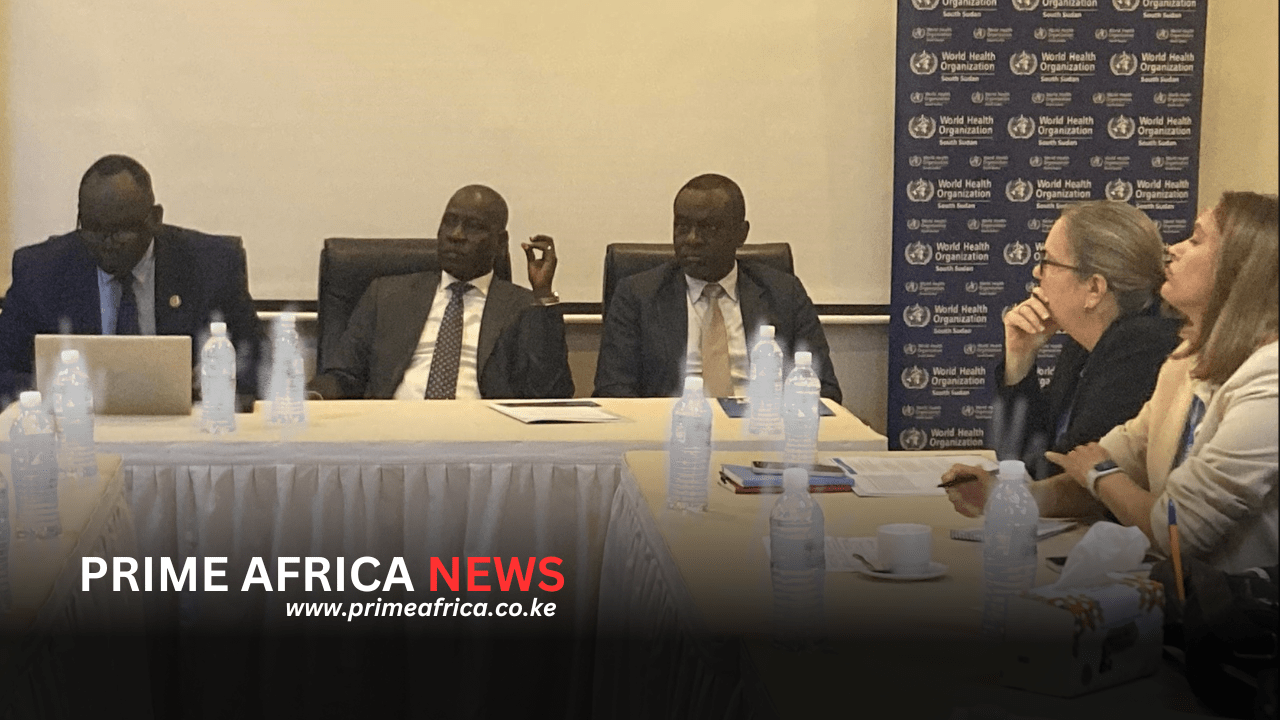
Speaking during a high-level media briefing in Juba, Executive Director of the National Public Health Institute Dr. Kediende Chong said South Sudan remains on high alert despite having no confirmed Ebola cases so far.
He noted that the country’s Ministry of Health is operating under a full preparedness framework designed to ensure rapid response if any suspected infection is detected.
“Our borders remain vulnerable because of constant movement between neighboring countries. That is why South Sudan has joined regional partners under one coordinated preparedness and response strategy,” Dr. Chong said.
Under the new plan, South Sudan will finance 30 percent of the total budget through domestic resources, while international partners coordinated by Africa CDC and WHO will support the remaining costs.
Authorities say the preparedness package includes expanded disease surveillance, deployment of rapid response teams, laboratory strengthening, infection prevention measures, training of frontline health workers, and intensified public awareness campaigns across high-risk counties.
Assessment teams from the National Public Health Institute and WHO have already been dispatched to key border points considered vulnerable to cross-border transmission.
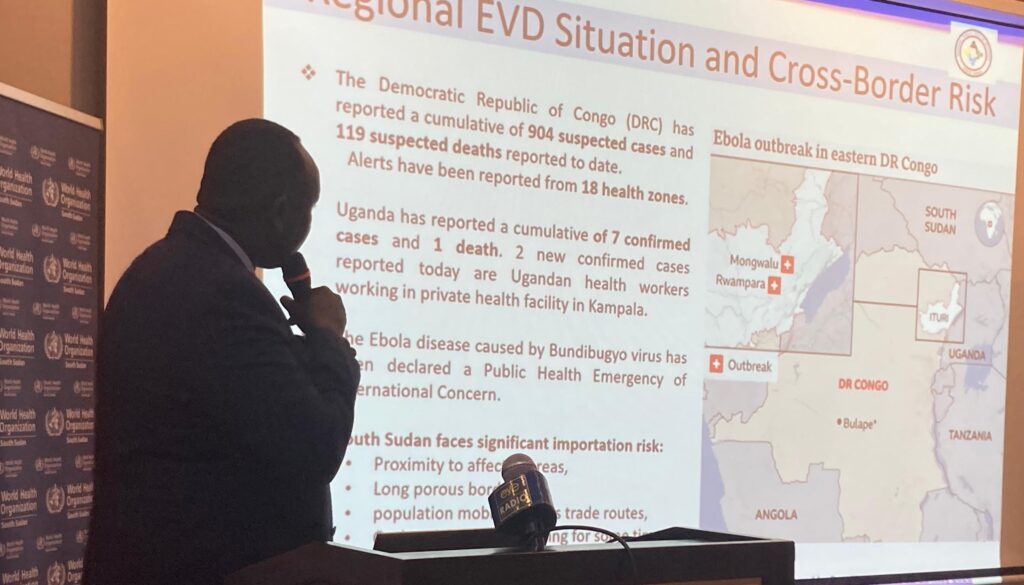
Dr. Chong emphasized that the country’s preparedness strategy is closely aligned with regional response plans involving Uganda and the DRC to ensure coordinated action in the event of cross-border infections.
“Uganda and the DRC are already responding to active outbreaks while South Sudan is focusing on preparedness to ensure we are not caught off guard,” he added.
Health authorities also raised concern over insecurity in parts of the country, warning that conflict could severely undermine Ebola response efforts if the virus enters South Sudan during ongoing violence.
“If Ebola spills into South Sudan while insecurity continues, the situation could become catastrophic,” Dr. Chong cautioned, while appealing for continued international support toward peace and humanitarian interventions.
Despite the risks, officials expressed confidence in South Sudan’s laboratory capacity to detect and confirm Ebola infections.
Dr. Chong said the National Public Health Laboratory has the technical capability to safely handle highly infectious samples and rapidly identify Ebola strains.
“Ebola is not new to this region. Our laboratory personnel are trained and capable of responding quickly,” he noted.
The country is also linked to regional reference laboratories through WHO-supported arrangements to facilitate rapid confirmation and sequencing of samples when necessary.
Meanwhile, WHO Representative to South Sudan Dr. Humphrey Karamagi said the organization has already redirected existing resources toward Ebola preparedness following the declaration of the outbreak as a Public Health Emergency of International Concern.
“We are repurposing funds to strengthen surveillance, move supplies to high-risk areas, and support border screening operations,” Dr. Karamagi said.
However, he warned that current resources remain insufficient considering the scale of the threat facing the region.
According to WHO, at least 15 counties in South Sudan have already been classified as high-risk due to their proximity to border crossings and population movement routes.
Health officials say thermal scanners and screening systems are operational at several entry points including Juba and the border town of Nimule, while additional surveillance systems are being expanded to other vulnerable areas such as Yei.
WHO has also discouraged border closures, arguing that strengthening screening systems and early detection mechanisms offers more effective public health protection.
Public awareness campaigns are now expected to form a central pillar of South Sudan’s preparedness strategy as authorities seek to counter misinformation and public fear surrounding Ebola.
Dr. Chong referenced previous incidents in the DRC where misinformation reportedly led to attacks on health facilities during Ebola response operations.
“We have seen how misinformation can fuel fear and resistance. Community engagement and public awareness will therefore remain critical in our preparedness efforts,” he said.
Health experts continue to warn that Ebola remains one of the world’s deadliest viral diseases, capable of overwhelming fragile health systems if outbreaks are not detected and contained early.
Officials say the success of South Sudan’s latest preparedness plan will depend heavily on regional cooperation, sustained funding, strong surveillance systems, and public cooperation in reporting suspected cases early.
About The Author