
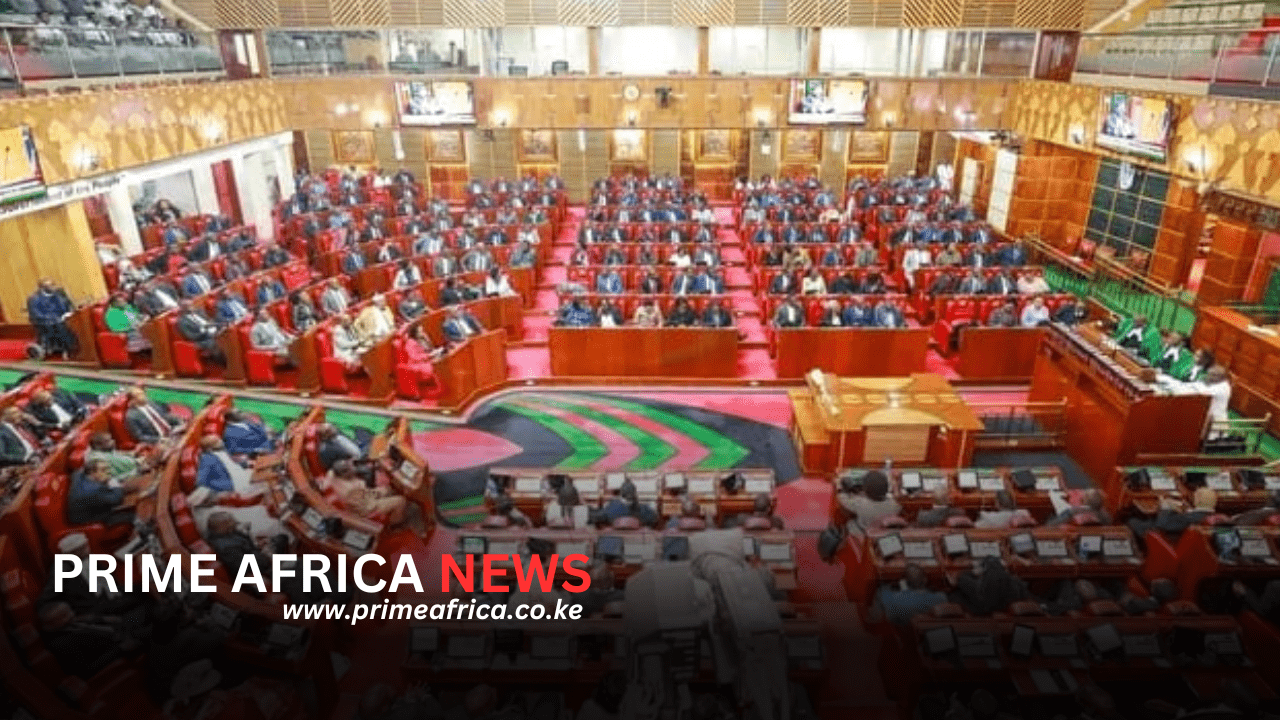

Across Africa’s legislative chambers, some of the most consequential decisions are shaped far from the glare of plenary debates and live television coverage. They are forged instead in structured parliamentary retreats—quiet, strategic spaces where lawmakers step back from partisan contestation to reflect, realign, and reset national legislative priorities.
[spacer height=”20px”]
As Kenya’s National Assembly begins a five-day retreat in Nakuru County ahead of the Fifth Session of the 13th Parliament, the moment draws attention to a governance tradition deeply embedded in modern parliamentary practice across the continent.
[spacer height=”20px”]
The Purpose of Parliamentary Retreats
[spacer height=”20px”]
Parliamentary retreats serve as strategic platforms for lawmakers to evaluate institutional performance, interrogate national priorities, and synchronize legislative agendas before formal sittings resume. In Africa—where parliaments balance representation, oversight, and law-making amid complex political, social, and economic dynamics—retreats provide rare space for deliberate, forward-looking engagement.
[spacer height=”20px”]
Unlike regular House sittings, which are governed by strict procedures and often shaped by party positioning, retreats encourage open dialogue with policy experts, constitutional offices, and executive agencies. They promote consensus-building, institutional learning, and long-term planning—critical ingredients for effective legislation.
[spacer height=”20px”]
Countries such as South Africa, Rwanda, Ghana, Tanzania, and Uganda have institutionalized parliamentary retreats, particularly at the beginning or close of parliamentary terms, to align national development objectives with legislative output.
[spacer height=”20px”]
The Cost of Skipping Retreats
[spacer height=”20px”]
Without such reflective forums, legislatures risk becoming reactive rather than strategic. Policy debates may grow fragmented, oversight weakened by daily political pressures, and legislative coherence undermined. The absence of collective reflection also erodes institutional memory, limits cross-party collaboration, and diminishes Parliament’s ability to set clear national agendas.
[spacer height=”20px”]
In transitional democracies, retreats play an additional stabilizing role—strengthening institutional cohesion, reinforcing constitutional mandates, and insulating legislatures from executive overreach or populist influence.
[spacer height=”20px”]
Roots in Parliamentary Tradition
[spacer height=”20px”]
The concept of parliamentary retreats traces its origins to Westminster traditions, where caucus strategy meetings and policy conferences shaped legislative direction behind the scenes. Across Africa, the practice gained prominence in the late 1990s and early 2000s following constitutional reforms that expanded parliamentary oversight powers.
[spacer height=”20px”]
Regional and global parliamentary bodies, including the Inter-Parliamentary Union (IPU) and the African Parliamentary Union (APU), have since promoted retreats as tools for capacity-building, governance reform, and legislative modernization. Today, they are a formal feature of parliamentary calendars, especially during critical transition periods.
[spacer height=”20px”]
Kenya’s National Assembly: Preparing for the Final Stretch
[spacer height=”20px”]
Against this continental backdrop, Kenya’s National Assembly convenes in Nakuru County from Monday, January 26, 2026, for a five-day retreat as the 13th Parliament enters its final session.
[spacer height=”20px”]
Held under the theme “Securing Parliamentary Legacy: Delivering the Fifth Session’s Agenda and Preparing for Transition,” the retreat brings together the Speaker, House leadership, and all Members of Parliament to review performance over the past four sessions and chart a focused agenda for the remaining legislative term.
[spacer height=”20px”]
Speaker of the National Assembly, Hon. Moses Wetangula, described the retreat as both an accountability exercise and a renewal moment.
“This retreat is a moment of reflection and renewal. We must assess what we have accomplished over the past four sessions and refine our legislative priorities as we prepare for transition,” he said.
[spacer height=”20px”]
Elections, Education, Health and the Economy in Focus
[spacer height=”20px”]
Electoral preparedness will feature prominently. MPs are expected to engage the Chair of the Independent Electoral and Boundaries Commission (IEBC), Mr. Erastus Edung Ethekon, on voter registration, boundary delimitation, and readiness for the next General Election.
[spacer height=”20px”]
Political party financing will also be under scrutiny, with the Registrar of Political Parties, Mr. John Cox Lorionokou, briefing Members on proposed reforms to the Political Parties Act, including tighter campaign finance regulations and management of the Political Parties Fund.
[spacer height=”20px”]
In the education sector, attention will turn to the implementation of the Competency-Based Education (CBE) system. More than a decade after its introduction, lawmakers continue to raise concerns around infrastructure gaps and teacher-to-learner ratios.
[spacer height=”20px”]
“Members will have a chance to evaluate the current status of CBE implementation and tackle its challenges, aiming to identify policy and legislative solutions for sustainable curriculum delivery,” Speaker Wetangula noted, referencing the Education Cabinet Secretary’s report to Parliament in November 2025.
[spacer height=”20px”]
Health Reforms and Universal Coverage
[spacer height=”20px”]
Health sector reforms will also take centre stage. Health Cabinet Secretary Hon. Aden Duale is expected to address concerns surrounding the Social Health Authority (SHA) and the Social Health Insurance Fund (SHIF), particularly issues of access, affordability, and service delivery.
[spacer height=”20px”]
Discussions will focus on advancing Universal Health Coverage through sustainable financing, health workforce expansion, infrastructure development, digital health solutions, and improved intergovernmental coordination.
[spacer height=”20px”]
Economic Stewardship and Fiscal Accountability
[spacer height=”20px”]
Economic governance is another major pillar of the retreat. National Treasury Cabinet Secretary Hon. John Mbadi will brief MPs on the state of the economy, public debt sustainability, pending bills, and fiscal policy direction.
[spacer height=”20px”]
“The National Assembly is central to budget-making and financial accountability,” Speaker Wetangula said. “This retreat will allow Members to engage with the Treasury on the economic outlook and identify legislative measures to strengthen Kenya’s economic stability.”
[spacer height=”20px”]
Following the enactment of the Government-Owned Enterprises Act, 2025, MPs will also deliberate on Parliament’s oversight role in privatization to ensure transparency, fiscal prudence, and public value.
[spacer height=”20px”]
Digital Governance and Parliamentary Legacy
[spacer height=”20px”]
As digital transformation reshapes governance, the retreat will examine data protection, cybersecurity, and privacy legislation to ensure Kenya’s legal framework keeps pace with technological change.
[spacer height=”20px”]
The Nakuru retreat will conclude with the development of a legislative and budget roadmap for the 2026/2027 financial year, setting the tone for the final full fiscal cycle of the current administration—and defining the enduring legacy of the 13th Parliament.
[spacer height=”20px”]
About The Author

