
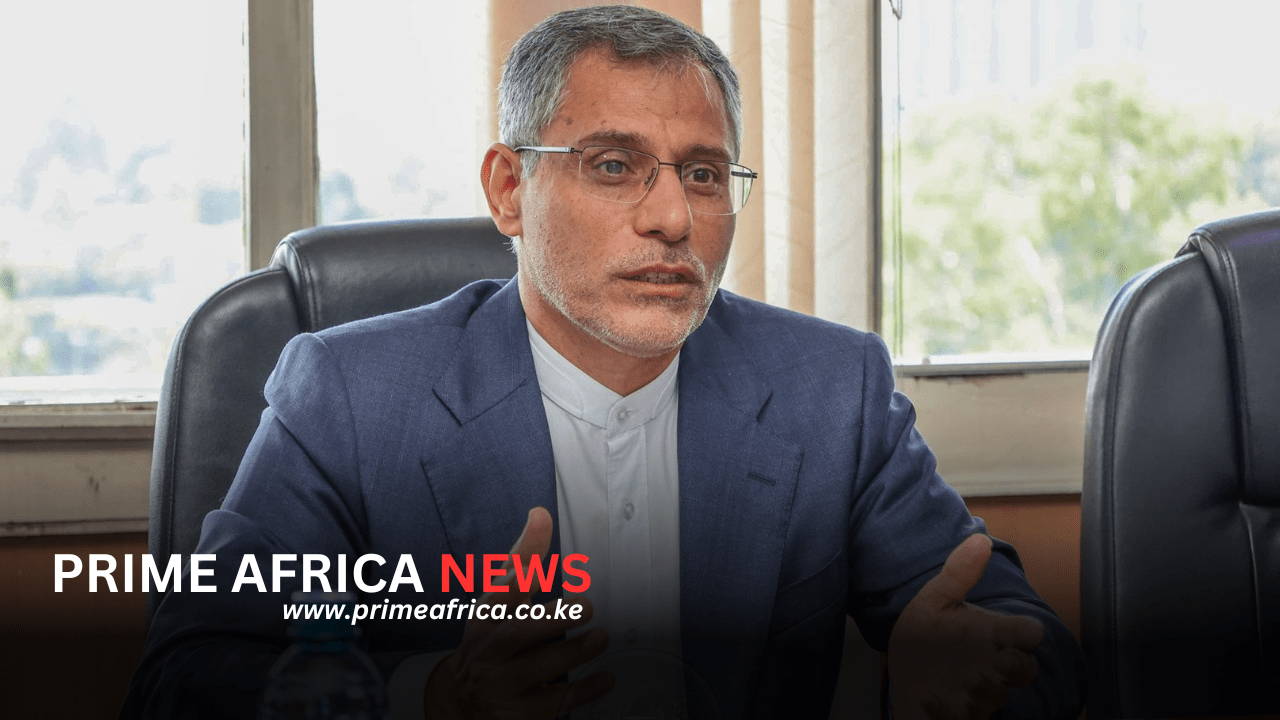

Nairobi, Kenya – The Embassy of the Islamic Republic of Iran in Nairobi on Monday issued a forceful condemnation of recent U.S. and Israeli strikes on Iranian territory, warning of serious consequences while calling on the international community to act swiftly to prevent further escalation.
Speaking during a press conference in the Kenyan capital, Iran’s ambassador described the attacks as a violation of sovereignty and international law, citing the United Nations Charter’s prohibition on the use of force against a sovereign state. The envoy also confirmed the death of Supreme Leader Ali Khamenei, characterizing it as a national tragedy that would not weaken Iran’s resolve.
According to the statement, the strikes targeted both defensive infrastructure and non-military facilities in several Iranian cities. Tehran maintains that such actions constitute aggression and has invoked Article 51 of the UN Charter, affirming what it calls its legitimate right to self-defense.
The embassy warned that the United States and Israel would bear “full and direct responsibility” for any ensuing escalation, signaling that Iran may respond militarily while leaving the door open for diplomatic intervention.
From Nairobi, Iran’s diplomatic mission called for an emergency meeting of the United Nations Security Council, urging binding measures to halt further attacks and uphold international law. The statement also appealed to regional governments, the Islamic world, and members of the Non-Aligned Movement to show solidarity, warning that failure to respond could undermine global institutions.
The envoy emphasized that the timing of the strikes — during the holy month of Ramadan and on the eve of Nowruz, the Persian New Year — amplified their symbolic and emotional impact on the Iranian people.
Kenyan officials have expressed concern over the escalating tensions, urging all parties to exercise restraint and pursue diplomacy through United Nations mechanisms. Nairobi is monitoring the situation closely amid fears of broader regional instability that could affect trade, travel, and energy prices.
Analysts warn that a prolonged confrontation could have global repercussions, including volatility in oil markets, disruptions to international air routes, and increased geopolitical polarization.
While Iran’s message from Nairobi underscores defiance and a demand for accountability, Western officials maintain that the strikes were aimed at military targets amid long-standing tensions over Iran’s regional posture and weapons programs.
As the situation evolves, diplomatic efforts are expected to intensify in an attempt to prevent further escalation in a crisis that observers warn could expand beyond the Middle East.
About The Author

