

In Summary
- “As was his last wish, let’s celebrate his life and his work. Rîa ratha na rîa thŭa. Tŭrî aira!”—a Gikuyu phrase loosely translating to “With joy and sorrow. We are proud.”
- Plans for memorial services and public tributes are expected to be announced by the family in the coming days.
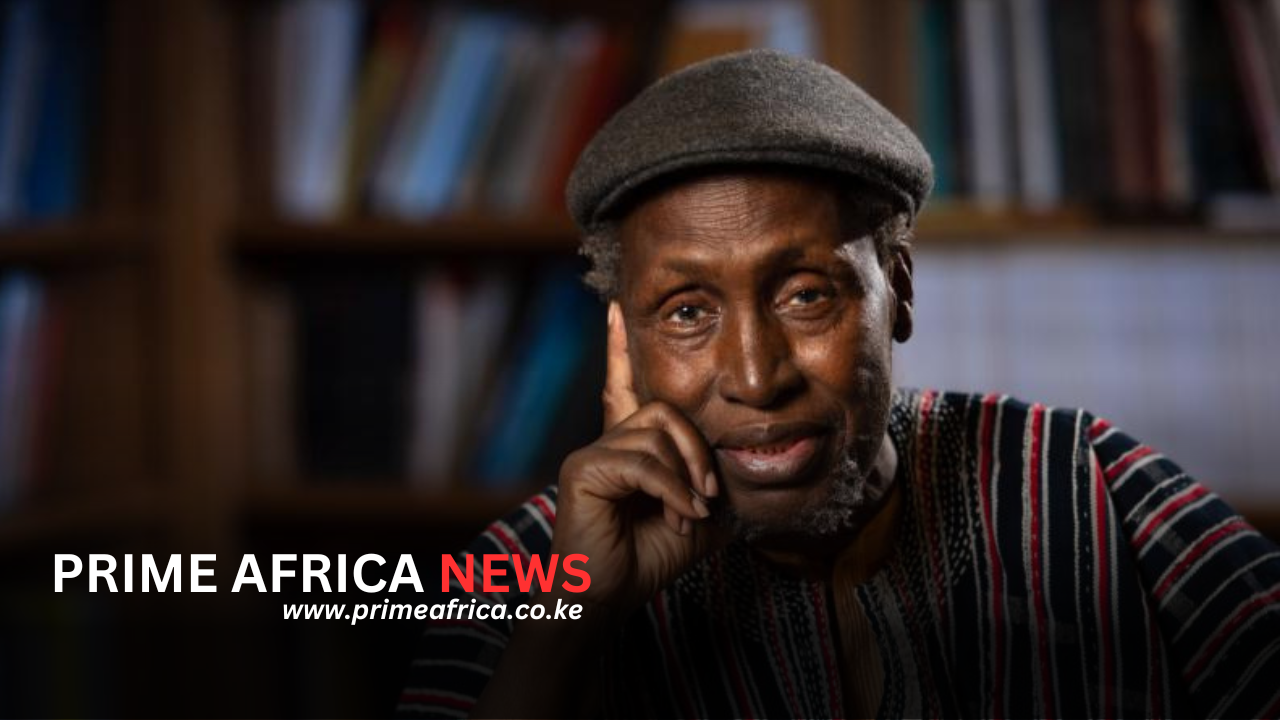
Ngũgĩ wa Thiong’o, the renowned Kenyan author, scholar, and activist, has passed away at the age of 87. His family confirmed the news on Wednesday evening, May 28, 2025, with his daughter, Wanjiku wa Ngũgĩ, sharing a heartfelt message on Facebook:
“It is with a heavy heart that we announce the passing of our dad, Ngũgĩ wa Thiong’o. As was his last wish, let’s celebrate his life and his work. Rîa ratha na rîa thŭa. Tŭrî aira!”—a Gikuyu phrase loosely translating to “With joy and sorrow. We are proud.”
Plans for memorial services and public tributes are expected to be announced by the family in the coming days. The family’s spokesperson, Nducu Wa Ngũgĩ, will provide further details soon.
A Legacy of Literary Excellence
Born James Githuka Ngugi on January 5, 1938, in Kamiriithu, Limuru, Kenya, Ngũgĩ was a towering figure in African literature. His influence spanned continents, languages, and generations. Ngũgĩ’s notable works include Weep Not, Child (1964), The River Between (1965), A Grain of Wheat (1967), Petals of Blood (1977), and Devil on the Cross.
His commitment to using African languages in literature was evident when he abandoned writing in English after his 1977 play Ngaahika Ndeenda (I Will Marry When I Want) was banned by the Moi regime. The play, performed entirely in Gikuyu, led to his detention without trial and marked a pivotal moment in his career.
Ngũgĩ spent decades in exile, lecturing at major universities abroad, including Yale and the University of California, Irvine. Despite the distance, he remained deeply connected to Kenya through his language, activism, and unwavering critique of injustice. His short story The Upright Revolution: Or Why Humans Walk Upright was translated into over 100 languages, showcasing his global impact.
Tributes Pour In
Tributes have begun pouring in from around the world, honoring Ngũgĩ’s literary genius and commitment to justice. Homa Bay Governor Glady Wanga expressed:
“Sad to learn of the passing on of a literary giant whose words shaped African thought and inspired generations. Prof. Ngũgĩ wa Thiong’o’s works challenged oppression and celebrated the power of indigenous voices with courage, globally advocating for African languages. Though he has left us, his legacy lives on in every story, every struggle, and every dream of a just world. Rest in power, Prof. Ngũgĩ. Heartfelt condolences.”
The Kong’amano la Mapinduzi also paid tribute, stating:
“Thiong’o words, he gave voice to the oppressed. Through his courage, he challenged systems. He taught us the power of language, memory and resistance. His stories live on in books, classrooms and in the hearts of generations. Rest in Power comrade!”
Ngũgĩ is survived by his children and grandchildren, many of whom have followed in his footsteps as writers, academics, and activists. As the world mourns, it also celebrates his life and legacy, which will continue to inspire and resonate for generations to come.
About The Author

