
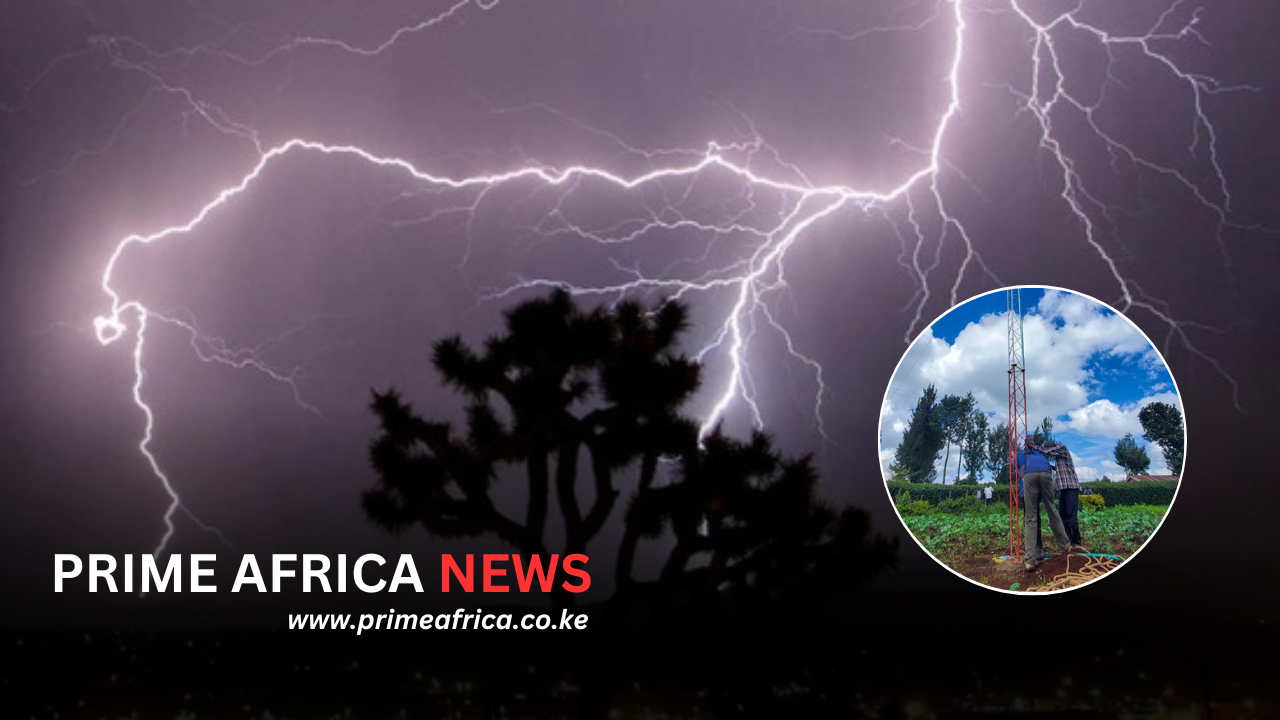

Nyamira County, Kenya — As relentless rains continue to pound the Gusii Highlands, residents of West Mugirango in Nyamira County are facing the growing threat of deadly lightning strikes. In a recent tragic incident, two young people lost their lives and another was injured after lightning struck them while they sought shelter under an open structure.
[spacer height=”20px”]
The fatal strike, which occurred amid intense rainfall, has reignited fears over the increasing severity and frequency of storms in the region — a trend that climate experts attribute to the escalating impacts of global warming.
[spacer height=”20px”]
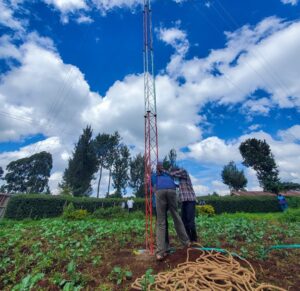
In response to the ongoing loss of life and property, West Mugirango MP Stephen Mogaka has fast-tracked a comprehensive mitigation initiative aimed at protecting high-risk areas by installing lightning arresters. The first phase of the project is being rolled out in Kenyenya village, one of the regions most affected by thunderstorms, and is funded through the National Government Constituency Development Fund (NG-CDF) for the 2024/25 fiscal year.
Once completed, the lightning arrester in Kenyenya is expected to offer protection within a radius of up to four kilometers, covering dozens of homes, schools, and public facilities.
“This is not just a disaster response strategy — it’s about building climate resilience,” said MP Mogaka. “We are committed to ensuring no more lives are lost to lightning.”
[spacer height=”20px”]
The initiative follows the success of a similar project at Bundo DOK Primary School, which aimed to safeguard the entire Township Ward and parts of neighboring wards. The pilot has since become a blueprint for broader implementation across the constituency.
[spacer height=”20px”]
Nyamira County has a long history of lightning-related tragedies, especially during the rainy season. The region’s high elevation and frequent dense cloud cover — typical of equatorial climates — make it especially prone to lightning activity.
[spacer height=”20px”]
However, the rising frequency of these events is not just a local concern. Scientists warn that global warming is intensifying storm systems worldwide, including in Kenya. Warmer air retains more moisture and energy, fueling stronger storms and increasing the likelihood of lightning.
[spacer height=”20px”]
Local leaders are now urging both national and county governments to prioritize lightning protection as part of their climate adaptation strategies. “Climate change is no longer a distant threat. It is here, and it is claiming lives,” a local official emphasized. “We need resources, policy interventions, and increased public awareness.”
[spacer height=”20px”]
As the community mourns its latest losses, the rollout of lightning arresters offers a glimmer of hope — a proactive step toward safeguarding lives in a world increasingly shaped by climate uncertainty.
[spacer height=”20px”]
For continued updates on environmental developments across Africa, stay tuned to Prime Africa News.
About The Author

