
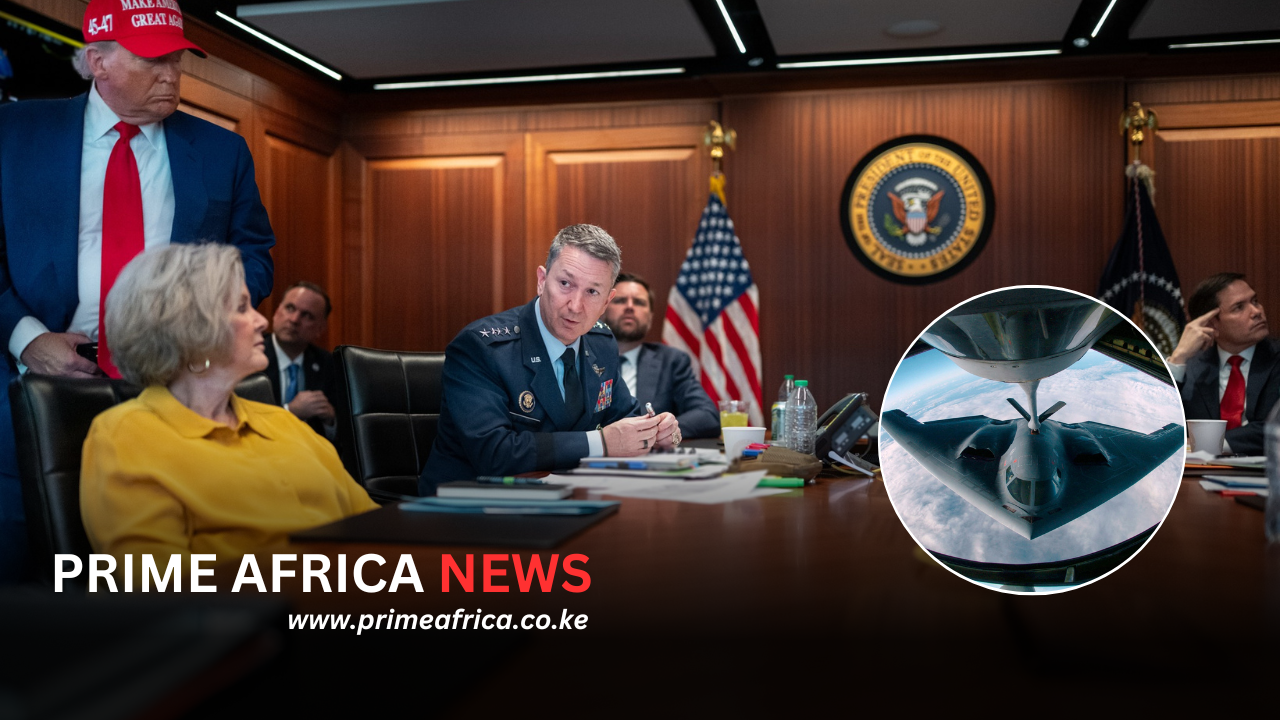

Washington / Tehran– In a dramatic escalation of tensions in the Middle East, U.S. President Donald Trump on Saturday night announced that American forces had launched coordinated airstrikes on Iran’s major nuclear enrichment facilities, claiming they were “completely and totally obliterated.”
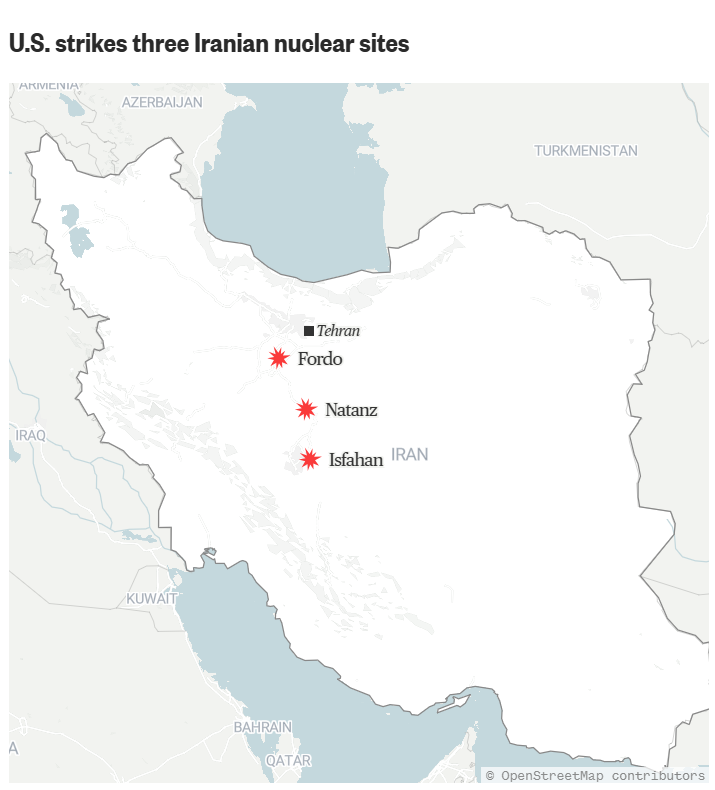
The strikes, which hit Fordo, Natanz, and Isfahan — key sites in Iran’s nuclear infrastructure — were the first direct U.S. military assault on Iranian soil, marking a significant turning point in the widening conflict between Iran and Israel that began earlier this month.
U.S. Navy submarines reportedly launched 30 Tomahawk cruise missiles, while B-2 stealth bombers dropped what are believed to be GBU-57 “bunker buster” bombs, designed to penetrate heavily fortified underground structures like the Fordo facility.
Flanked by Vice President J.D. Vance, Defense Secretary Pete Hegseth, and Secretary of State Marco Rubio, Trump declared during a live address from the White House:
“There will be either peace or there will be tragedy. Remember, there are many targets left. If peace does not come quickly, we will go after those other targets with precision, speed and skill.”
Trump posted on Truth Social minutes before the address:
“ANY RETALIATION BY IRAN AGAINST THE UNITED STATES OF AMERICA WILL BE MET WITH FORCE FAR GREATER THAN WHAT WAS WITNESSED TONIGHT. THANK YOU!”
Netanyahu Praises Trump’s “Bold Decision”
Israeli Prime Minister Benjamin Netanyahu swiftly praised the U.S. strike, calling it a “bold decision to target Iran’s nuclear facilities with the awesome and righteous might” of the American military. He added that Israel and the U.S. had worked “as a team.”
The U.S. and Israeli militaries have grown increasingly aligned since June 13, when Israeli forces launched their first major strikes against Iranian territory following accusations that Tehran was fast-tracking nuclear weapon development.
Trump, who had previously expressed reluctance to support unilateral Israeli strikes, reportedly changed course after a classified June 8 briefing by U.S. military officials. Since then, his public tone has hardened. On Tuesday, he demanded Iran’s “UNCONDITIONAL SURRENDER!” and by Wednesday, signaled that U.S. strikes were imminent.
Uncertain Fallout and Risk of Retaliation
While Trump hailed the mission as a “great success” during a phone interview with NBC’s Kristen Welker, independent verification of the strikes’ impact remains unavailable.
Military analysts warn that Iran, though weakened, retains significant retaliatory capabilities. These include long-range ballistic and cruise missiles, proxy militias in Iraq, Syria, and Yemen, and the ability to disrupt maritime trade through the Strait of Hormuz — a global chokepoint for oil exports.
Though key Iranian proxies such as Hezbollah and Hamas have reportedly been degraded by recent Israeli operations, Iranian officials maintain that the country reserves the right to self-defense and could retaliate against U.S. or allied forces across the region.
The New York Police Department issued a statement indicating increased security measures across the city, citing an “abundance of caution” in the wake of the attack.
Strategic Gamble or Beginning of a Broader War?
Trump’s decision to launch airstrikes — and to do so without a formal congressional declaration of war — is seen as a significant gamble. His administration believes that a decisive blow to Iran’s nuclear ambitions could force Tehran to negotiate from a weakened position, without triggering a prolonged U.S. military entanglement in the region.
But critics caution that the situation could spiral. Iran has long relied on asymmetric warfare and proxy actors to respond to more powerful adversaries. Historical precedents, such as the 1983 Marine barracks bombing in Beirut, underline the risks of underestimating Iran’s resolve or reach.
With oil markets bracing for disruption and diplomatic channels on edge, the world now watches Tehran’s next move.
Africa’s Response
So far, African Union officials have not commented on the escalation. However, analysts warn that the ripple effects of a broader U.S.-Iran conflict could be felt across Africa, particularly in energy prices, regional security partnerships, and the safety of African diaspora communities in the Middle East.
About The Author

