
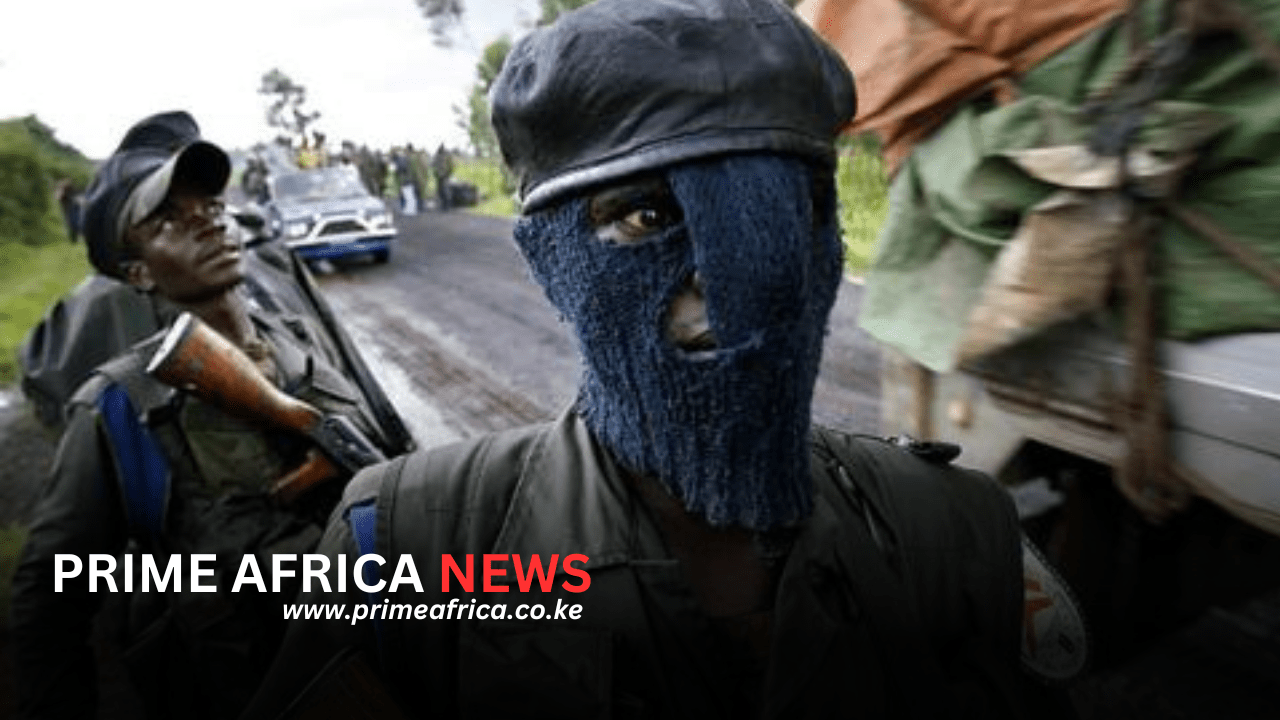

Fresh fighting in eastern DR Congo has triggered a worsening humanitarian and security crisis, with military and security sources confirming that M23 rebels have pushed southward from areas near the Burundian border. The advance comes amid growing international alarm over the escalating conflict and the risk of regional destabilisation.
In an interview with UN-backed Radio Okapi, South Kivu’s military governor, General Fall Sikabwe Purusi, dismissed claims that Uvira had fallen to M23 fighters, insisting the strategic lakeside city remained under full government control.
The United States, the European Union, and eight European countries have issued a strongly worded joint statement accusing Rwanda of backing the M23 offensive. The group expressed “profound concern” over the violence, warning that the conflict carried “destabilising potential for the whole region.”
They called on the Rwanda Defence Force (RDF) to “immediately halt offensive operations” in eastern DR Congo and withdraw its troops from Congolese territory.
A US State Department spokesperson warned that Rwanda “continues to provide support to M23 [and] must prevent further escalation.”
Kigali has firmly denied the allegations. In a post on X, Rwanda’s foreign ministry accused DR Congo and its ally Burundi of violating the ceasefire by “systematically” bombing villages near the Rwandan border. Kigali said any blame for the renewed instability “cannot be placed on Rwanda.”
However, UN experts maintain that Rwanda’s army exercises “de facto control of M23 operations,” a claim Rwanda continues to dispute.
According to the United Nations, the latest wave of clashes has forced nearly 200,000 people from their homes since early this month. At least 74 civilians have been killed, while 83 others have been treated for conflict-related injuries.
A Burundian administrative official told AFP that more than 8,000 people are crossing into Burundi each day, with 30,000 arrivals in just one week, as desperate families flee advancing rebel forces.
Rwanda has also reported that more than 1,000 civilians have crossed into its territory, fleeing bombings near the border.
The surge in violence comes almost a year after M23 rebels briefly seized Goma and Bukavu, the two largest cities in eastern DR Congo. The group is not part of the recent US-brokered peace deal and is instead engaged in separate negotiations mediated by Qatar.
In a televised national address, President Félix Tshisekedi accused Rwanda of “deliberate violations” of the peace accord, describing the renewed fighting as a proxy war targeting Congolese sovereignty.
“This is a proxy war aimed at challenging our sovereignty over a highly strategic area, rich in critical minerals and economic potential,” Tshisekedi said.
For three decades, eastern DR Congo has been engulfed in cycles of conflict involving dozens of armed groups competing for power, influence and control of mineral-rich territories — a situation rooted in the 1994 Rwandan genocide and decades of failed peace agreements.
As the security situation deteriorates and diplomatic tempers flare, humanitarian agencies warn that the region is once again on the brink of a major crisis, with the next steps by regional actors likely to determine whether the conflict can be contained or spirals further out of control.
About The Author

