
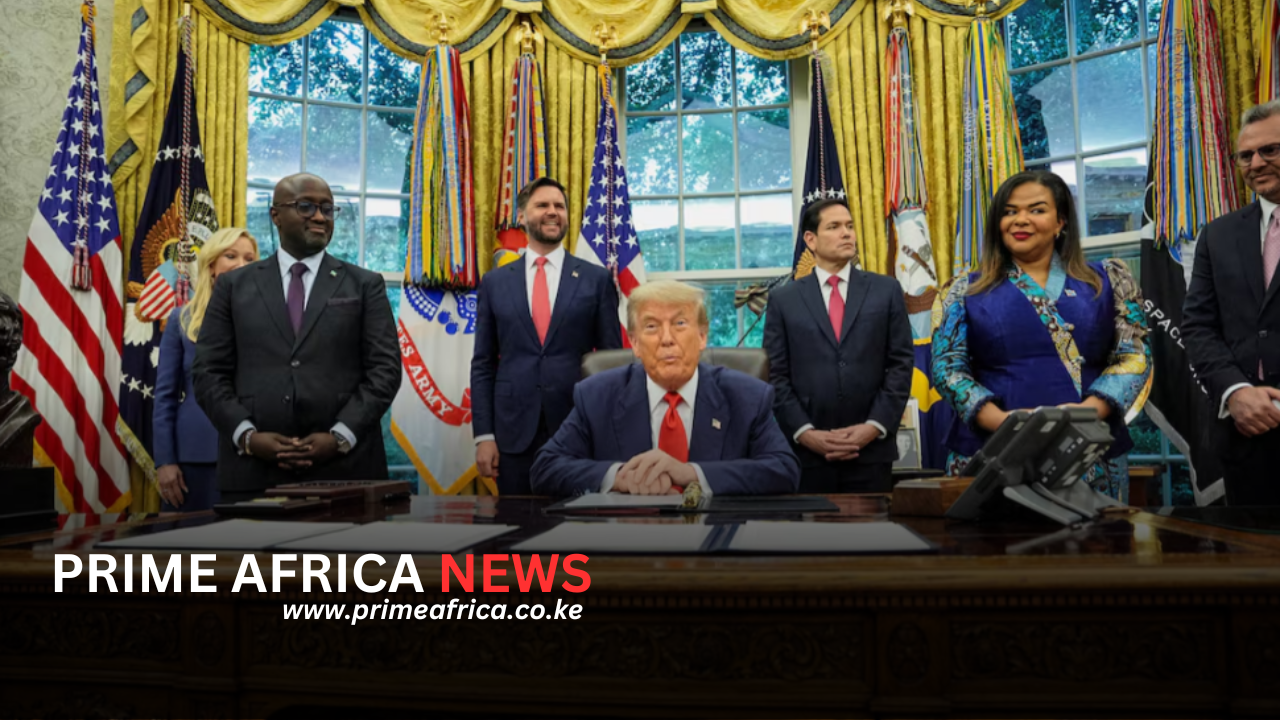

Washington, D.C. — In a landmark move set to reshape the security and economic landscape of Central Africa, Rwanda and the Democratic Republic of Congo (DRC) have signed a U.S.-brokered peace agreement, raising hopes for an end to years of violence that have killed thousands and displaced hundreds of thousands in the mineral-rich eastern Congo.
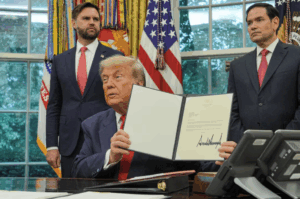
The deal was signed on Friday at a high-level ceremony in Washington, D.C., in the presence of U.S. Secretary of State Marco Rubio and senior officials from both African nations. The agreement — hailed as a diplomatic triumph by former U.S. President Donald J. Trump — commits both countries to key security and economic measures, including the withdrawal of Rwandan troops from eastern Congo within 90 days.
“They were going at it for many years — and with machetes. It is one of the worst wars anyone has ever seen. And I just happened to have somebody that was able to get it settled,” Trump said, moments before meeting the foreign ministers in the Oval Office.
The agreement builds on a 2024 accord, now formalized under what Trump’s senior Africa adviser Massad Boulos has dubbed the “Washington Accord.” Among its core provisions:
-
A joint security coordination mechanism to be launched within 30 days.
-
Monitoring and verification of Rwandan troop withdrawal within three months.
-
Finalization of Congolese operations against the FDLR, a rebel group linked to Rwanda’s 1994 genocide.
-
A new economic integration framework within 90 days to spur foreign trade and attract billions in investment across critical mineral sectors.
Both parties have also committed to de-risking and jointly developing mineral supply chains that power the global green economy — including tantalum, lithium, cobalt, copper, and gold.
U.S. Role as Mediator and Investor
The United States, as principal broker and strategic stakeholder, secured key economic incentives through the accord. Trump confirmed that “the U.S. is getting a lot of the mineral rights from the Congo as part of it.”
Secretary Rubio emphasized that the upcoming summit between President Felix Tshisekedi of Congo and President Paul Kagame of Rwanda — scheduled in Washington in the coming weeks — would finalize the broader regional investment framework.
A separate agreement on economic cooperation is expected to be signed by the two heads of state at the White House. A source close to the process told Prime Africa News that the signing depends partly on progress in ongoing Qatar-hosted negotiations involving Congo and the M23 rebel group.
The Washington Accord explicitly voices support for the Doha talks, signaling that regional peace and economic transformation must proceed hand-in-hand.
Despite the fanfare in Washington, analysts remain cautiously optimistic.
“This is the best chance we have at a peace process for the moment despite all the challenges and flaws,” said Jason Stearns, a leading expert on the Great Lakes region.
“But similar formulas have been tried before. The U.S. now has the responsibility to ensure compliance from both sides.”
Congo’s foreign minister, Therese Kayikwamba Wagner, warned that disengagement must follow swiftly for the deal to hold. Her Rwandan counterpart, Olivier Nduhungirehe, called the agreement a “turning point” and urged continued American involvement to ensure full implementation.
Political analyst Tresor Kibangula of Congo’s Ebuteli Institute said the pact’s central innovation lies in linking peace with prosperity:
“The strategic message is clear: securing eastern Congo also means securing international investments.”
He cautioned, however, that economic logic alone may not be enough to end the violence.
With American diplomatic muscle and financial stakes now deeply embedded in the region, observers say this deal could mark the most serious bid in years to stabilize one of Africa’s most volatile frontiers.
About The Author

