


Washington D.C., United States – The leaders of the Democratic Republic of Congo (DR Congo) and Rwanda have signed a historic peace agreement aimed at ending decades of conflict in the eastern region of DR Congo, even as fresh fighting continues to displace civilians back home.
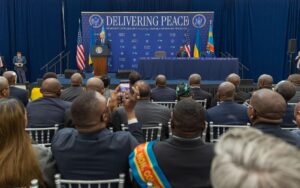
The deal was signed at a high-level summit convened by US President Donald J. Trump at the newly renamed Donald J. Trump Institute of Peace in Washington, D.C. The ceremony brought together African and global leaders in what Trump described as a “great day for Africa and the world”.
Ahead of the summit, clashes escalated in mineral-rich eastern DR Congo, where government forces and the M23 rebel group – which Kinshasa accuses Rwanda of backing – exchanged accusations of violating earlier ceasefire understandings. DR Congo’s army claimed rebels attempted to “sabotage” the peace efforts, while the M23 insisted that government troops launched fresh offensives.
The M23 insurgency has surged since early this year, seizing large territories including major urban centres such as Goma and Bukavu, leading to the deaths of thousands and forcing many more from their homes.
A Diplomatic Turning Point
The agreement was formally signed by DR Congo’s President Félix Tshisekedi and Rwanda’s President Paul Kagame, whose countries have frequently blamed each other for fueling the conflict. Trump, who earlier facilitated the signing of a preliminary accord by both nations’ foreign ministers in June, hailed the breakthrough as a “glorious triumph”.
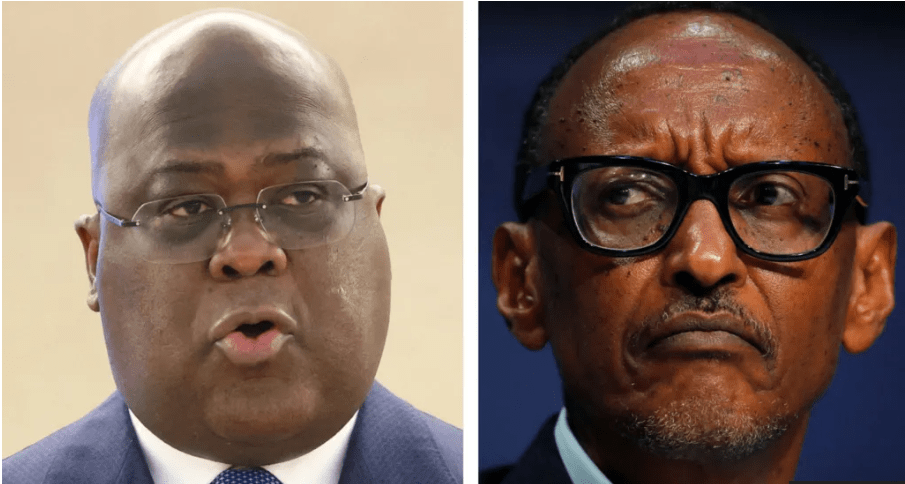
“I have a lot of confidence in both leaders,” Trump said during the ceremony. “I know they’re going to follow through and create a much brighter future for the people of their countries.”
African Leaders Praise the Deal
Kenyan President William Ruto was among the invited leaders who witnessed the signing. He welcomed the pact as “a monumental diplomatic milestone” and an essential step toward restoring stability in the Great Lakes Region.
“This conflict has destroyed livelihoods, destabilised our region, and threatened the future of the entire African continent,” President Ruto said.
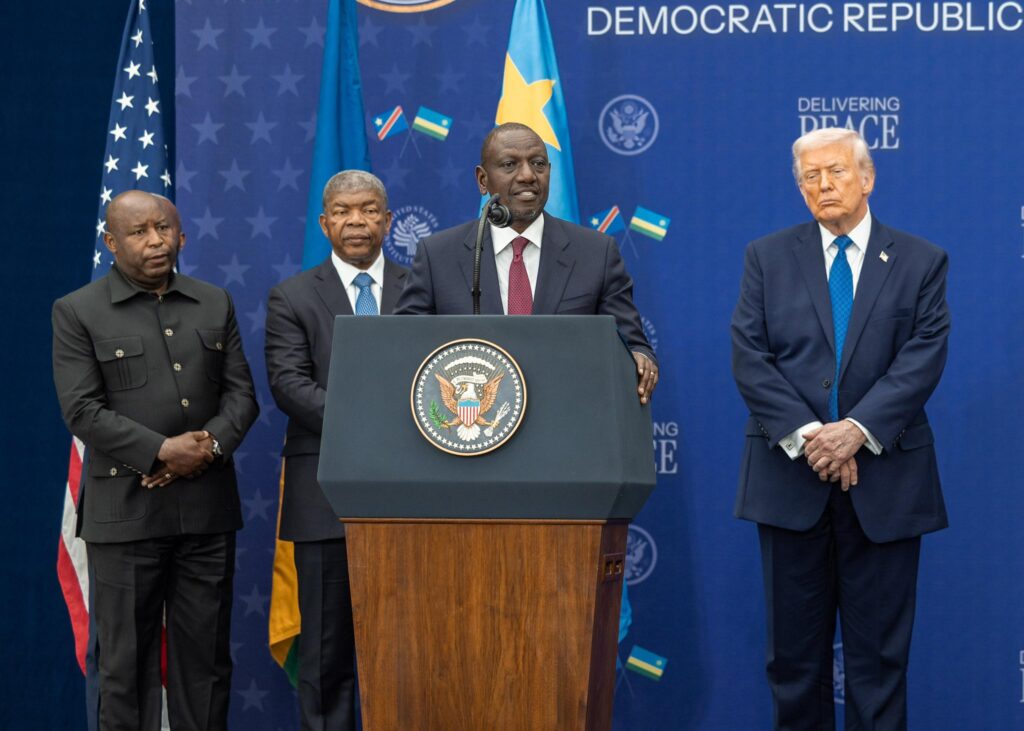
Other leaders in attendance included Presidents João Lourenço (Angola), Évariste Ndayishimiye (Burundi), and Faure Gnassingbé (Togo), alongside African Union Commission Chairperson Mahmoud Ali Youssouf and representatives from Qatar and the United Arab Emirates.
Notably absent from the ceremony were representatives of the M23, who are engaged in a separate Qatar-led negotiation track with the Congolese government.
US Positions for Strategic Influence
The Trump administration has spearheaded direct talks between Kigali and Kinshasa, hoping that resolving tensions will unlock opportunities for US economic engagement in the resource-abundant region.
At the signing, Trump announced that American companies would soon begin major investments in both countries.
“We’re going to take out the rare earth, take out some of the assets, and pay,” he said. “Everybody’s going to make a lot of money.”
Scepticism Over Lasting Peace
Despite the diplomatic fanfare, experts warn that the peace agreement faces significant hurdles.
Bram Verelst, a DR Congo researcher at the Institute for Security Studies, told Prime Africa that the M23 rebellion continues to expand its territorial control.
“There is currently no ceasefire in place, and the signing ceremony is unlikely to alter this situation,” he said. “But there is some hope it might increase accountability on both sides.”
Fresh fighting was reported on Thursday in South Kivu, where DR Congo’s army accused rebels of launching a new offensive on villages near Uvira, close to the Burundian border. The M23, however, claimed the government had attacked them in coordination with Burundian forces — an allegation Bujumbura has not responded to.
Burundi has deployed several thousand troops in eastern DR Congo to support Congolese government forces.
With the M23 holding strategic towns and violence continuing despite diplomatic pressure, the effectiveness of the Washington deal will hinge on whether both Kigali and Kinshasa can enforce its terms on the ground.
For millions affected by the 30-year crisis, the agreement offers a glimmer of hope — but peace remains elusive as battles rage across eastern Congo.
About The Author

