
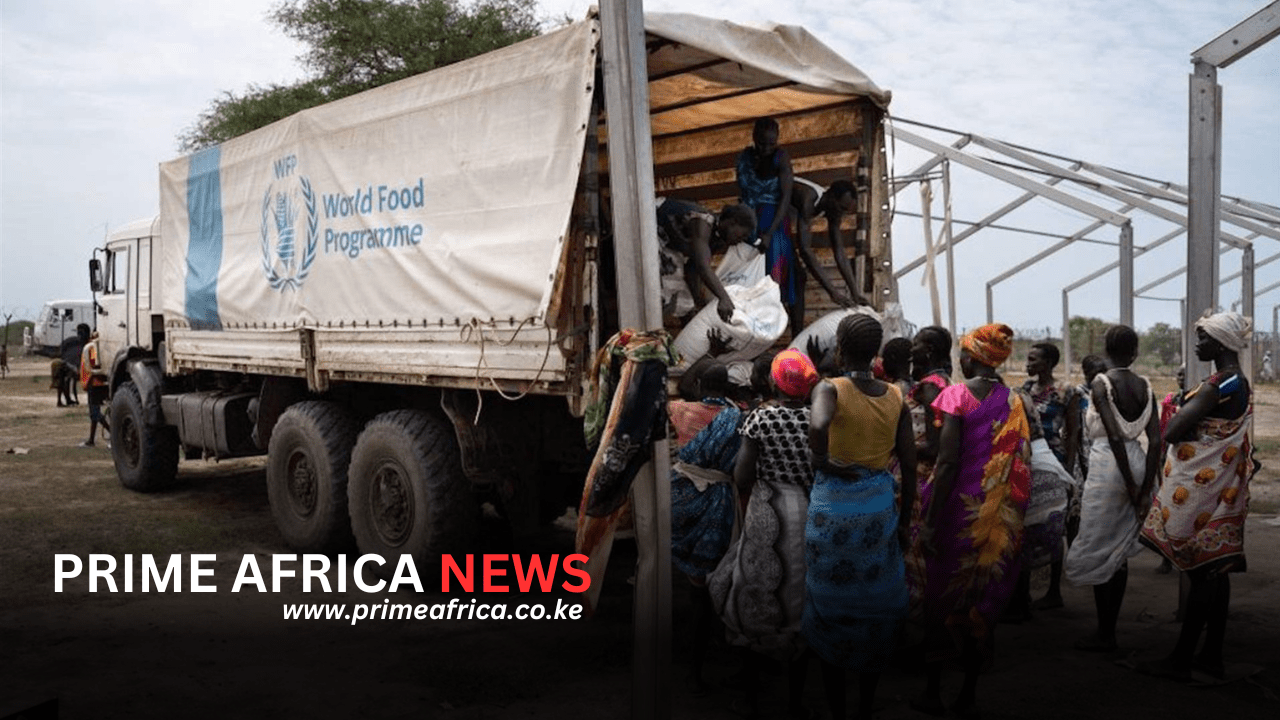

The United Nations World Food Programme (WFP) has issued a stark warning that millions of famine-stricken Sudanese will face reduced food assistance beginning in January, as the agency grapples with a severe funding shortfall that threatens to cripple its operations by April.
Speaking to reporters on 12 December, WFP Director of Emergency Preparedness and Response Ross Smith said the agency has been left with no option but to slash rations for communities already enduring famine and those on the brink of starvation.
“We will be having to reduce from January to 70 percent rations for communities that are facing famine, and 50 percent for those that are at risk of famine,” Smith said via video link from Rome.
Smith warned that without an urgent injection of new funding, WFP operations in Sudan will reach a breaking point within months.
“As of April we will fall off a cliff when it comes to funding,” he cautioned.
WFP said the planned cuts are driven by acute funding shortages at a time when humanitarian needs in Sudan continue to rise sharply. The agency is appealing to international donors to close the funding gap and avert what it described as potentially catastrophic consequences for vulnerable populations.
Sudan is already facing one of the world’s worst humanitarian crises, with widespread hunger, displacement, and collapsing basic services after nearly two years of war. Aid agencies warn that further reductions in food assistance could rapidly push more communities into famine-like conditions.
The funding crisis unfolds against the backdrop of Sudan’s ongoing conflict, which has been marked by mass civilian harm and grave human rights violations. A recent report by the Strategic Initiative for Women in the Horn of Africa (SIHA) documented 1,294 cases of sexual and gender-based violence across 14 Sudanese states since fighting erupted in April 2023.
According to SIHA, 87 percent of identified perpetrators were linked to the Rapid Support Forces (RSF), a paramilitary group accused of widespread abuses. The report described the violations as “widespread, repeated, intentional, and often targeted.”
Rape accounted for more than three-quarters of the documented cases, including at least 225 involving children.
SIHA said the violence frequently accompanied RSF territorial advances, beginning with home invasions and sexual assaults, followed by attacks in public spaces, and later prolonged detention involving torture, gang rape, and forced marriage.
Women and girls from non-Arab communities in Darfur were described as being directly targeted, while witnesses in Al-Gezira state reported RSF fighters selecting young women as “trophies.”
As clashes shift toward Kordofan, the United Nations has warned of “another wave of mass atrocities.” Since late October, at least 269 civilian deaths have been documented in the region, though the UN says the real toll is likely far higher due to widespread communications blackouts.
UNICEF estimates that Sudan’s war has displaced between 10 and 12 million people, roughly half of them children. Of these, at least 3.3 million have fled the country as refugees.
More than 30 million people are now in need of humanitarian assistance, with children and women particularly exposed to famine, siege conditions, deadly attacks, and pervasive sexual violence.
In response to the escalating abuses, the United Kingdom has announced sanctions against four senior RSF commanders over what it described as “heinous” crimes committed in El-Fasher, including mass killings and sexual violence.
British officials said the measures include asset freezes and travel bans. However, the sanctions do not target RSF leader Mohammed Hamdan Dagalo, nor the United Arab Emirates, which has been accused by rights groups of backing the RSF but denies providing support.
UK Foreign Secretary Yvette Cooper said the atrocities “scar the conscience of the world,” citing “the systematic and calculated use of rape as a weapon of war.”
Sudanese rights groups and diaspora organisations welcomed the sanctions but stressed that meaningful accountability must also address external supply lines and international actors accused of sustaining the violence.
As the war drags on and aid funding dries up, humanitarian agencies warn that Sudan is approaching a deadly tipping point — one where hunger, violence, and impunity threaten millions of lives unless urgent international action is taken.
About The Author

