
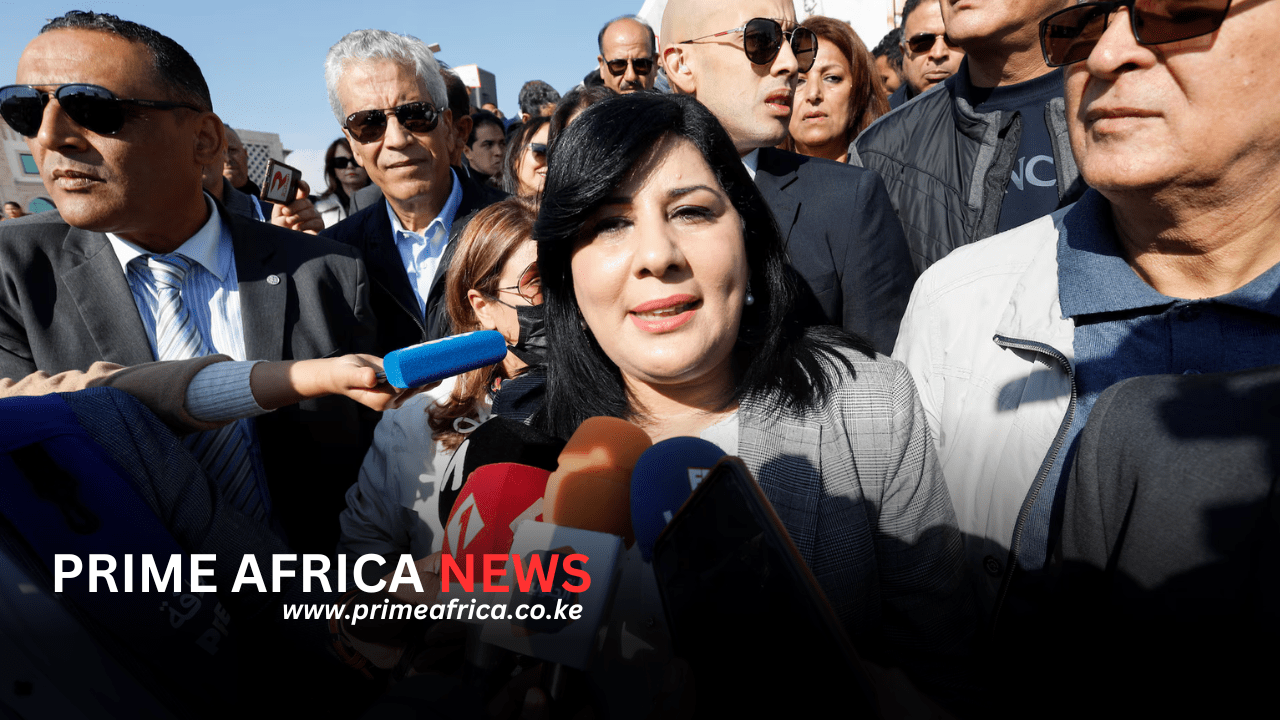

A Tunisian court has sentenced prominent opposition figure Abir Moussi to 12 years in prison, her lawyer said on Friday, in a move that rights groups say deepens President Kais Saied’s consolidation of power and erosion of political freedoms.
Moussi, the leader of the Free Constitutional Party, has been in detention since 2023 after police arrested her at the entrance of the presidential palace. Authorities accused her of assault and attempting to cause chaos—charges her supporters and legal team say were fabricated to silence dissent.
“The ruling is unjust and is not a judicial decision but a politically motivated order,” Moussi’s lawyer, Nafaa Laribi, told Reuters following the verdict.
Moussi has consistently rejected the charges, saying she was exercising her constitutional right to criticism and legal opposition. From prison, she vowed to continue resisting what she described as “abuse, torture, and political and moral violence.”
Her sentencing comes amid a sweeping crackdown that has seen dozens of politicians, journalists, activists, civil society leaders, and lawyers jailed or prosecuted. Last month, an appeals court handed prison terms of up to 45 years to a group of opposition leaders, business figures, and lawyers on charges of conspiring to overthrow President Saied.
Human rights organisations and political opponents argue that the judiciary has lost its independence since President Saied dissolved the elected parliament in 2021 and began ruling by decree. In 2022, he dissolved the Supreme Judicial Council and dismissed dozens of judges—moves widely condemned by opposition groups and rights advocates as a coup against democratic institutions.
President Saied has denied accusations that he is governing as a dictator or weaponising the courts against his critics. He insists his actions are necessary to cleanse Tunisia of what he calls “traitors.”
However, observers warn that the continued imprisonment of opposition figures like Moussi signals a shrinking space for political pluralism in Tunisia, once hailed as the lone democratic success of the Arab Spring.
About The Author

