
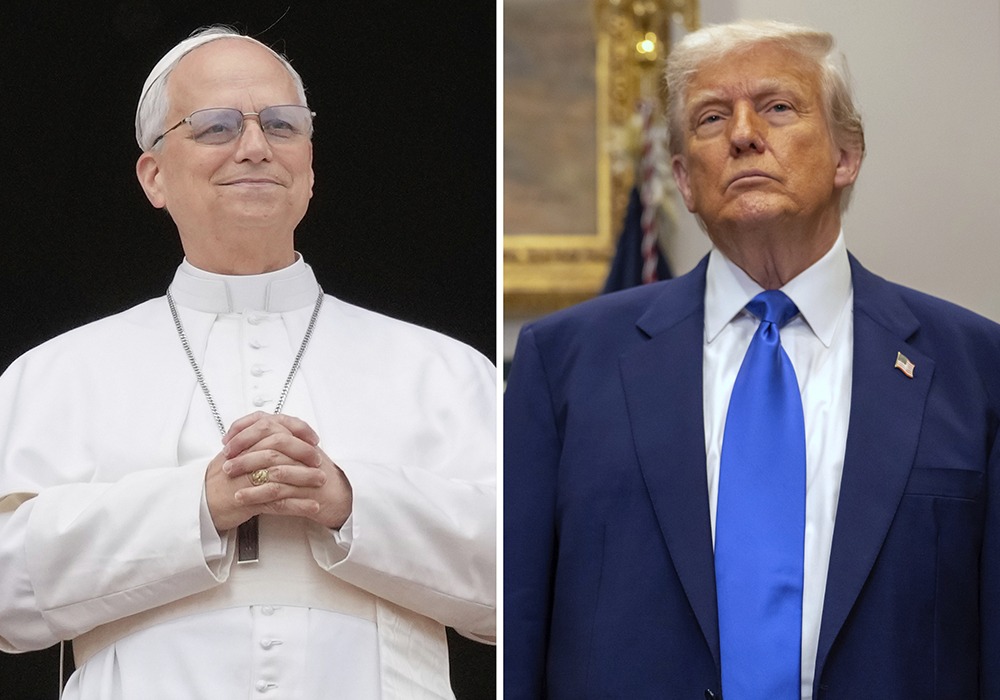

Vatican City / Washington, D.C. — A fresh diplomatic rift has emerged between U.S. President Donald Trump and Pope Leo XIV over the ongoing conflict involving Iran, reviving a long history of tensions between American presidents and leaders of the Holy See.
The disagreement escalated after Pope Leo XIV delivered a strong appeal for peace during a vigil at St. Peter’s Basilica, calling for an immediate end to violence. Without directly naming the United States or Israel, the pontiff warned that a “delusion of omnipotence” was fueling the conflict and urged world leaders to pursue dialogue and diplomacy.
“Enough of war,” the pope declared, emphasizing the human cost of continued hostilities and advocating for multilateral solutions.
Alberto Pizzoli/EPA/Shutterstock
President Trump responded sharply via social media, criticizing the pope’s stance and questioning his leadership. “I don’t want a Pope who thinks it’s OK for Iran to have a Nuclear Weapon,” Trump wrote, also describing the pontiff as “weak on crime” and ineffective on foreign policy. He later reinforced his criticism, telling reporters, “I’m not a fan of Pope Leo.”
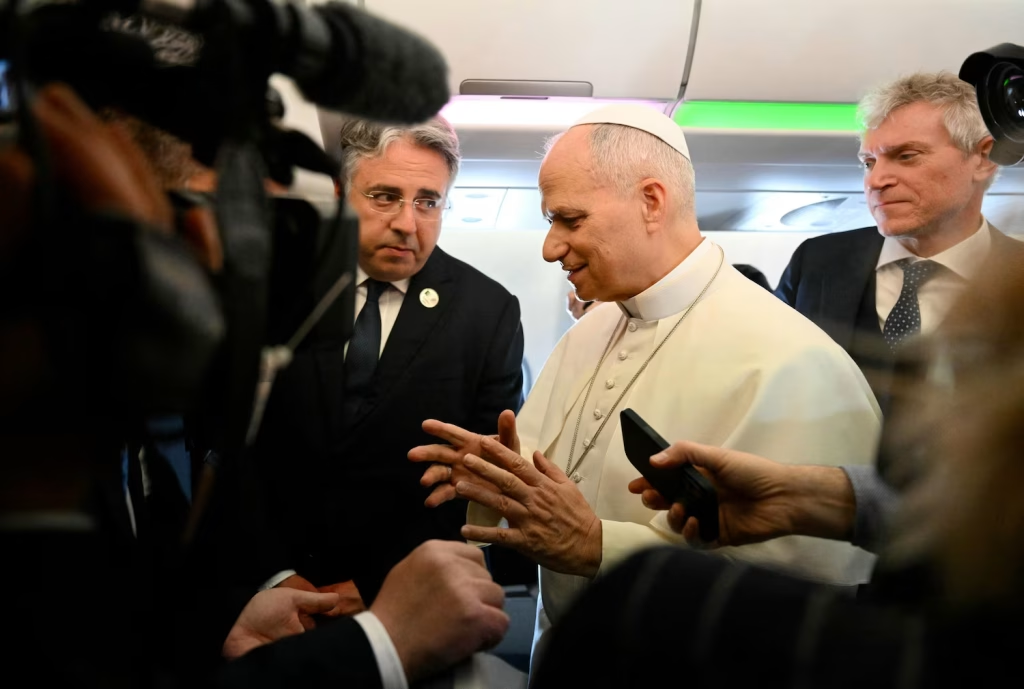
In a rare direct rebuttal, Pope Leo XIV addressed the remarks while speaking to journalists en route to Algeria, stating he had “no fear” of the Trump administration and would continue to speak out against war. He clarified that his comments were not personal attacks but rooted in the teachings of the Gospel.
“I will continue to promote peace, dialogue, and just solutions,” the pope said. “Too many innocent people are being killed.”
While disagreements between U.S. presidents and popes are not new, Trump’s public and personal tone marks a notable departure from past diplomatic norms.
During his 2016 presidential campaign, Trump clashed with Pope Francis over immigration policy, particularly his proposal to build a wall along the U.S.-Mexico border. Pope Francis criticized the idea, suggesting that prioritizing walls over bridges was incompatible with Christian values.
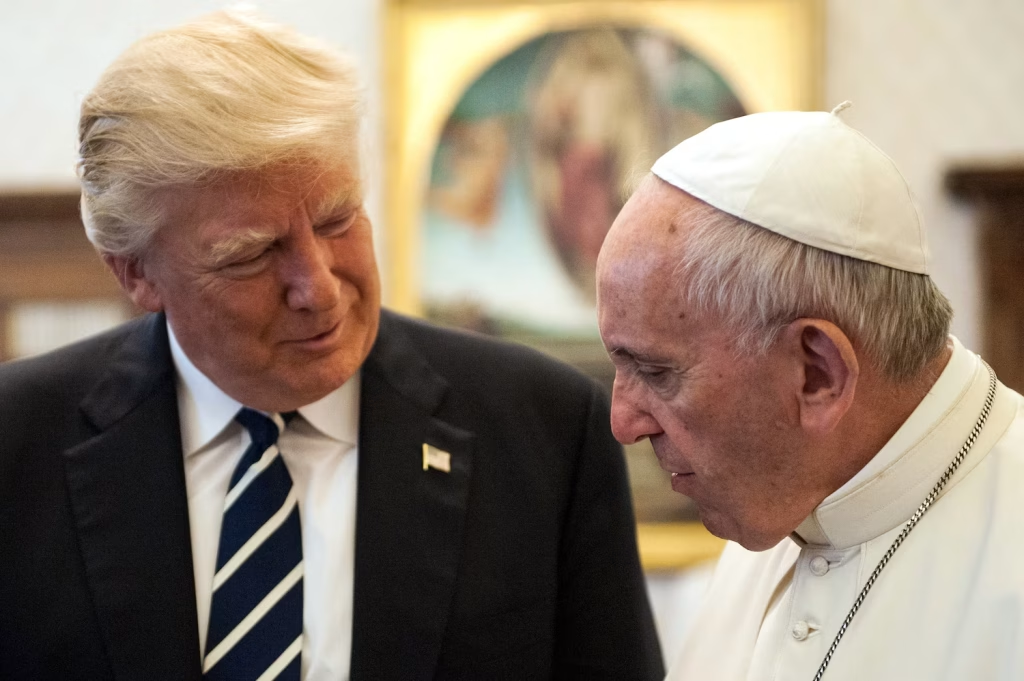
Trump responded by calling the remarks “disgraceful,” asserting that no religious leader should question another person’s faith.
Tensions between the two persisted throughout Trump’s presidency. In 2025, Pope Francis condemned mass deportation policies in a letter to U.S. Catholic bishops, warning they undermined human dignity and left vulnerable populations at risk.
Earlier administrations also experienced policy clashes with the Vatican, though often with more restrained public rhetoric.
In 1993, President Bill Clinton disagreed with Pope John Paul II over abortion. While Pope John Paul II strongly advocated for the “right to life,” Clinton maintained his position that abortion should be “safe, rare, and legal.” Despite the disagreement, Clinton adopted a diplomatic tone, praising the pope’s global moral leadership.
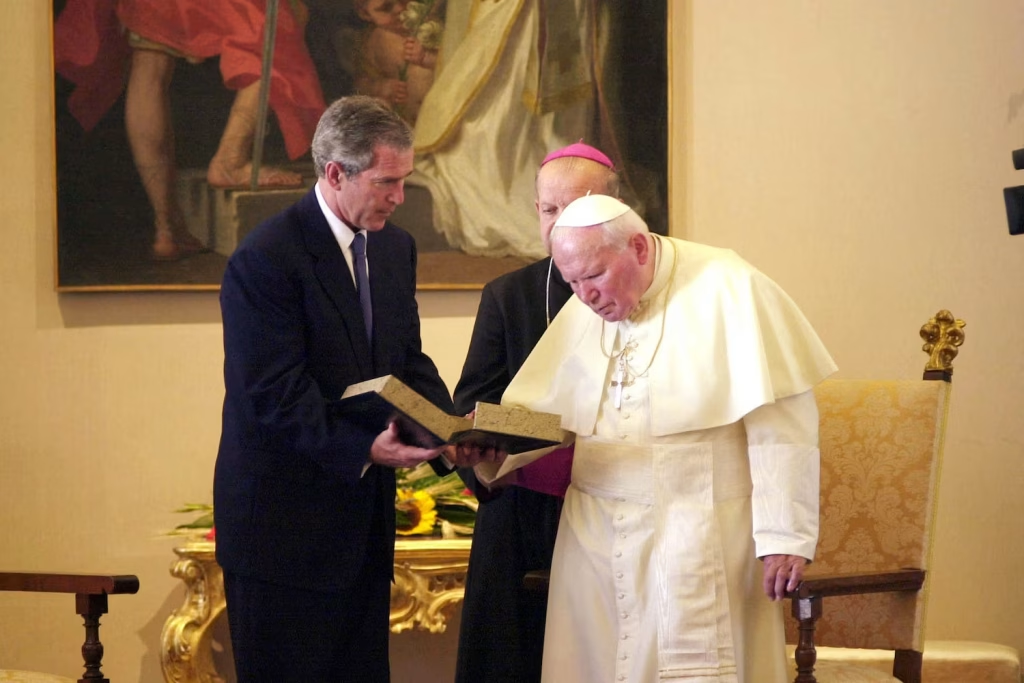
Similarly, President George W. Bush diverged from Pope John Paul II on embryonic stem cell research in 2001. The pope urged a complete rejection of the practice on moral grounds, but Bush authorized limited federal funding, citing its potential to treat serious diseases such as Parkinson’s and Alzheimer’s.
The latest clash between Trump and Pope Leo XIV underscores the enduring tension between political authority and religious moral leadership on global issues such as war, migration, and human rights.
While previous disputes often remained within diplomatic boundaries, the current exchange highlights a more confrontational dynamic—one that reflects broader divisions over international policy, ethics, and the role of faith in political discourse.
As the conflict involving Iran continues, both leaders appear unlikely to soften their positions, signaling that the intersection of religion and geopolitics will remain a contentious space on the world stage.
About The Author

Prime Africa Reporter
Africa’s premium destination for exploration and adventure TV station based in Kenya .
