Kenya’s President William Ruto has no shortage of names — or opinions. From “Hustler” to “Zakayo,” the flood of nicknames he has acquired reflects not only his complex political journey but also the shifting moods of a restless nation.
Addressing a recent rally in Nairobi, Ruto himself poked fun at the phenomenon:
“You have given me so many names. I had the name William Kipchirchir Samoei Ruto. You added Survivor… Zakayo… now you are at Kasongo. Will you stop at 10, or should I prepare for more?”
The crowd responded with laughter — and even more names.
Nicknames as Political Capital
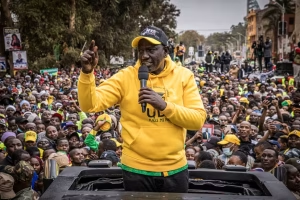
Before ascending to the presidency in 2022, Ruto’s street-smart image earned him favorable tags like Hustler — a term in Kenyan slang for someone who struggles and strives against odds — and Chicken Seller, a nod to his modest beginnings hawking poultry.
“These were very positive [names],” says political analyst Prof Herman Manyora. “They sold him to the public in terms of votes… Names really stick with Ruto.”
Indeed, they helped package Ruto as a self-made leader — a man of the people.
But the gloss of grassroots appeal has dulled for many, and in its place a more satirical and critical lexicon has emerged.

A Turn Toward Critique
Perhaps the most biting label in circulation is Zakayo — Swahili for Zacchaeus, the Biblical tax collector. It has become shorthand for what many see as Ruto’s aggressive tax agenda that has left Kenyans feeling squeezed and betrayed.
“The moment he became president, the tone changed,” says Prof Manyora. “He failed to deliver.”
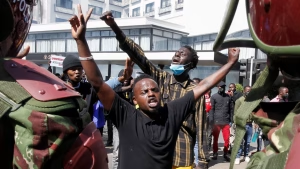
From planned levies on digital services to fuel price hikes, public frustration exploded into weeks of youth-led protests in Nairobi. The chant “Ruto Must Go” even transformed into another moniker — Must Go.
Others have taken a more comedic, if cutting, tone. Vasco da Gama — reworked into Vasco da Ganya — merges the name of the Portuguese explorer with danganya, Swahili for “lie”, in response to Ruto’s frequent foreign trips and accusations of dishonesty.
Then there’s Kaunda Uongoman, blending his preference for the Kaunda-style suit with uongo, the Swahili word for lies, drawing parallels with the late Congolese singer Kanda Bongoman.
Mockery or Message?
To some, these nicknames are harmless fun. To others, they are acts of protest — and a gauge of public sentiment in an era of rising economic pain.
Margaret Wairimu Kahura, a 24-year-old student, says the satire is symptomatic of deeper distress:
“Kenyans are in a lot of pain… The names are a way to let the president know how people are feeling.”
And while past leaders were not immune — former President Uhuru Kenyatta was dubbed Kamwana, Jayden, and Wamashati — the scale and creativity of Ruto’s branding is unprecedented.
“This is unique — but in a bad way,” adds Ms. Kahura.
Government Reacts — and Sometimes Retracts
Despite the ridicule, the Office of the President appears largely unfazed.
“They don’t raise concerns,” said government spokesman Isaac Mwaura. “It’s normal for any leader to have many nicknames. It signifies his various attributes and initiatives.”
Mwaura insists tax hikes are necessary to reduce Kenya’s deficit and boost development. But some critics argue that behind the humor lies real risk.
Recent attempts to suppress online satire — including reports of abductions targeting creators of satirical images and memes — have drawn accusations of government overreach and intolerance.
Prof Manyora cautions against dismissing the names merely as jokes. “This is catharsis. It’s a way for people to release tension,” he notes.
The El Chapo Chapati Machine
Sometimes, the line between criticism and absurdity blurs entirely. One of the more bizarre names — El Chapo — emerged after Ruto promised a machine that could cook one million chapatis (chapo in local slang) daily for schoolchildren. It didn’t take long before comparisons were made to the notorious Mexican drug lord.
Yet, even some of his supporters like 23-year-old university student Lachon Kiplimo recognize the disconnect:
“Some promises were unrealistic. But the way the president embraces the names shows strength.”
The Verdict: A Mirror to the Masses
Whether viewed as a badge of honor or a slap in the face, Ruto’s nicknames have become a national mirror — reflecting hope, disillusionment, humor, and resistance in a time of economic hardship.
In the age of social media and meme politics, the battle for narrative isn’t just fought in Parliament or press briefings — it’s waged in hashtags, TikTok trends, and a growing list of aliases.
And for now, President Ruto remains the most renamed man in Kenya — each name a testament to a population watching, reacting, and never holding back.
About The Author