
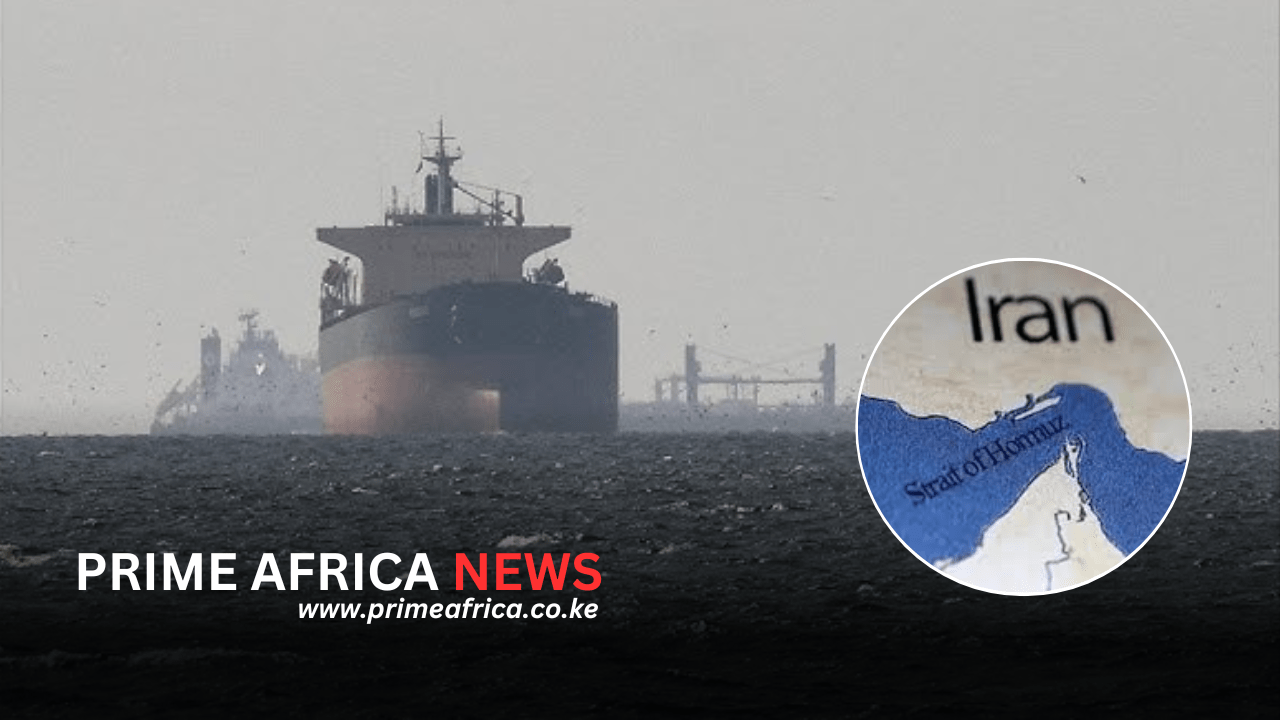

Prime Africa Editorial Desk – The unfolding crisis in the Strait of Hormuz is more than a regional confrontation—it is a stark reminder of how a single maritime corridor can shape the fate of the global economy. What was once a dependable artery for nearly a fifth of the world’s oil and LNG has, in a matter of weeks, become a symbol of geopolitical volatility and systemic vulnerability.
The escalation involving the United States and Iran has effectively choked commercial movement through the strait, sending shockwaves far beyond the Gulf. Shipping traffic has collapsed, energy flows disrupted, and confidence in global trade routes shaken.
From an editorial standpoint, the implications are profound.
First, the crisis underscores the dangerous overreliance on narrow maritime chokepoints. When vessels are forced to reroute around the Cape of Good Hope, adding up to two weeks in transit time, the ripple effects are immediate—higher freight costs, delayed cargo, and strained supply chains. These are not abstract disruptions; they translate directly into rising fuel prices, food insecurity, and inflationary pressure in economies already under stress.
Second, the economic shock is both immediate and structural. The surge in global oil prices, the fertilizer supply crunch driven by natural gas shortages, and the reluctance of insurers and financiers to support maritime operations in high-risk zones point to a system under duress. Emergency interventions, such as the release of strategic reserves by the International Energy Agency, may offer temporary relief, but they do not address the underlying fragility.
Third, and perhaps most concerning, is the human cost within the maritime sector. Seafarers—often the invisible backbone of global trade—are bearing the brunt of this crisis. Reports of stranded crews, extended contracts, and mounting uncertainty highlight a workforce caught in geopolitical crossfire.
Elijah Mbaru, CEO of the Kenya Ships Agents Association and a leading voice in regional maritime affairs, offers a sobering perspective. He notes that the scale of disruption is unprecedented in recent history, with hundreds of vessels stranded and insurance mechanisms breaking down under the weight of escalating risk.

“What we are witnessing is not just a disruption—it is a near paralysis of a critical global trade artery,” Mbaru observes. “When insurers withdraw, banks hesitate, and shipowners cannot guarantee safe passage, the entire logistics chain begins to fracture.”
His concerns are echoed by regional maritime stakeholders across East Africa, who warn that the consequences are already being felt in local economies. Increased shipping times and costs are feeding into higher prices for imported goods, while uncertainty in energy markets threatens to undermine economic stability.
From the vantage point of Africa—and particularly trade-dependent economies such as Kenya—the Hormuz crisis is a wake-up call. It highlights the urgent need to diversify energy sources, strengthen regional supply chains, and invest in resilient maritime infrastructure.
Yet, beyond economics, this is ultimately a test of global governance. The inability to secure safe passage through one of the world’s most vital waterways raises serious questions about international cooperation, conflict resolution, and the enforcement of maritime norms.
The brief moments of de-escalation—when ships resumed movement and markets steadied—demonstrate that stability is possible. But the rapid return to hostilities shows just how fragile that stability remains.
The world cannot afford prolonged uncertainty in the Strait of Hormuz. The stakes are too high, the consequences too far-reaching.
This is not merely a regional dispute. It is a global crisis—one that demands coordinated diplomatic action, renewed commitment to maritime security, and a rethinking of how the world safeguards its most critical trade routes.
Until then, the waters of Hormuz will remain not just contested, but consequential—for every nation, every market, and every consumer connected to the lifelines of global trade.
About The Author

Fred Kai
Fredrick Kai is a renowned Kenyan Broadcast Journalist based in Mombasa, Kenya. He majors on human interest stories , special features and documentaries.
