
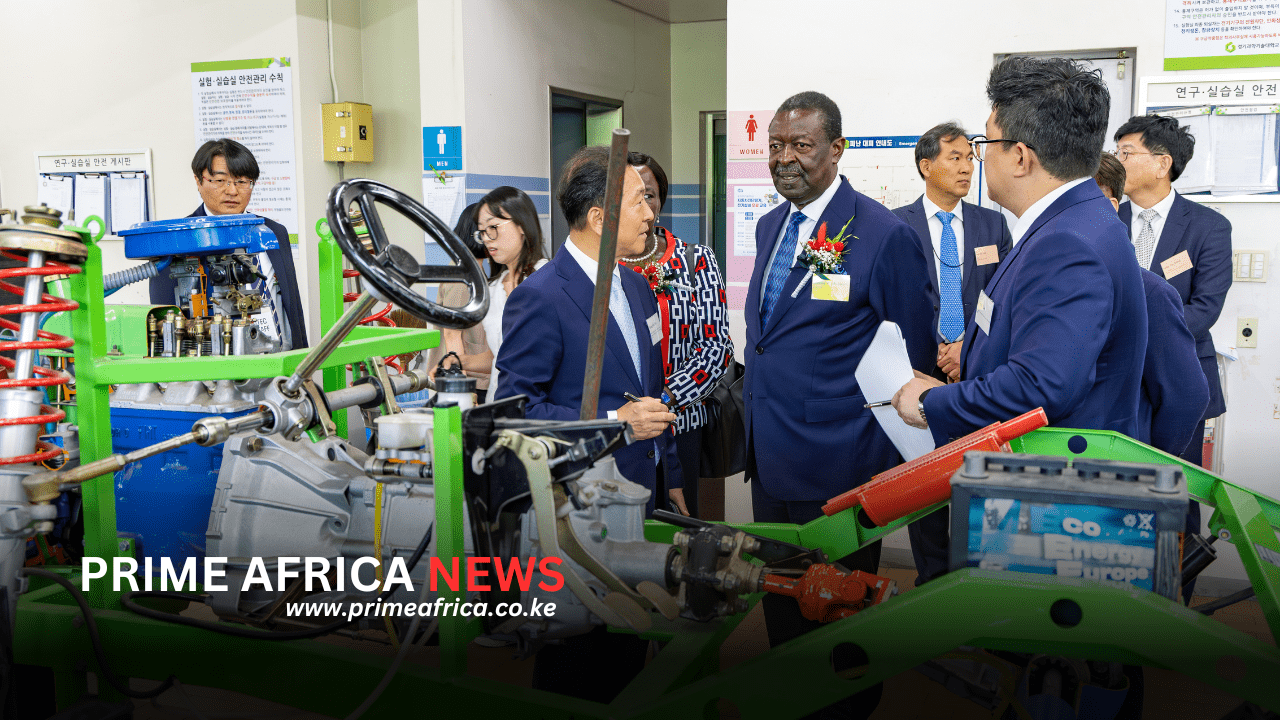

SIHEUNG, SOUTH KOREA – Kenya has intensified its push to attract South Korean investment, positioning itself as a strategic gateway to East Africa and a hub for industrial growth, innovation, and technology-driven development.
Prime Cabinet Secretary and Cabinet Secretary for Foreign and Diaspora Affairs Musalia Mudavadi said Kenya is ready to forge transformative partnerships with South Korean companies across key sectors, including manufacturing and industrial technology, automotive and mobility solutions, electronics and ICT, renewable energy and green technologies, as well as construction, engineering, and smart city development.
Speaking during a meeting with representatives of Korean industry and civil society at the Gyeonggi University of Science and Technology (GTEC) in Siheung City, Gyeonggi Province, Mudavadi reaffirmed Kenya’s commitment to creating a conducive environment for investment and structured collaboration.
“Kenya is a gateway to a market of over 500 million people in the East African region, supported by a stable democracy, a skilled workforce, and rapidly modernizing infrastructure. Kenya and Korea share a common belief that human capital, innovation, and technology are the engines of national transformation,” said Mudavadi.
He noted that South Korea has emerged as a global benchmark for industrial excellence and innovation, adding that Kenya is keen to leverage Korean expertise to accelerate its industrialization agenda and build a future anchored on technology, skills development, and shared prosperity.
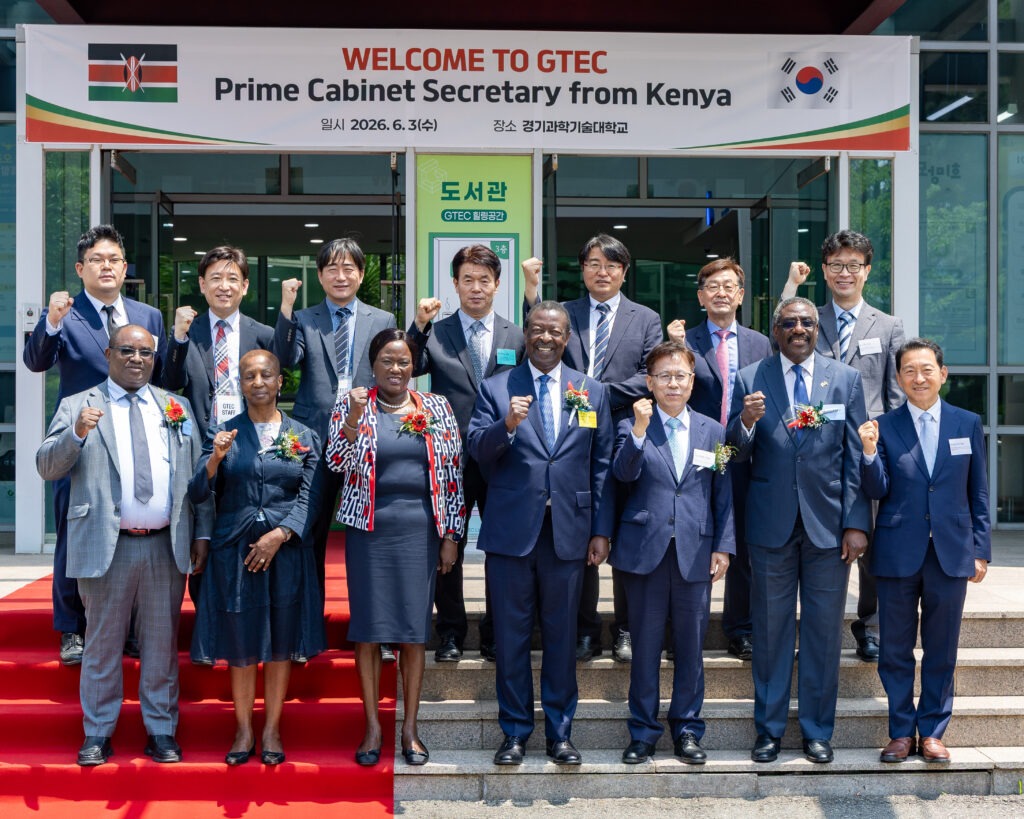
“Kenya is not just open for business—we are eager for partnerships that create jobs, transfer skills, and build industries that will define the future. We value Korean companies for their reputation in quality, innovation, and long-term commitment,” he said.
Mudavadi called for stronger people-to-people, institutional, and industrial ties between the two countries, emphasizing that deeper cooperation would deliver mutual benefits and long-term economic transformation.
“Let us continue to strengthen the bridges between our peoples, our institutions, and our industries. Together, we can shape a partnership that is not only mutually beneficial but transformative,” he added.
The Prime Cabinet Secretary also underscored the critical role of higher education partnerships in preparing Kenya’s future workforce. He said the government is banking on strategic collaborations with Korean institutions of higher learning to help train the next generation of Kenyan engineers, technicians, and innovators.
According to Mudavadi, Kenya is implementing ambitious reforms to expand Technical and Vocational Education and Training (TVET) institutions, modernize curricula, and strengthen collaboration between academia and industry.
“I am encouraged by the ongoing collaborations between GTEC and Kenyan institutions, and I welcome the possibility of expanding these partnerships through student exchanges, faculty cooperation, joint research, and technology transfer. Kenya is ready to learn from Korea’s remarkable experience in linking education to industrial growth,” he noted.
Mudavadi also acknowledged the contribution of non-governmental organizations and civil society organizations in advancing social and economic development. He said civil society remains a key partner in strengthening communities, supporting vulnerable populations, and complementing government efforts in education, healthcare, and technology access.
“We look forward to deeper collaboration with organizations that share our vision of inclusive development and empowerment,” he said.
The visit forms part of Kenya’s broader efforts to deepen economic and diplomatic ties with South Korea, attract foreign direct investment, and create opportunities for skills transfer and industrial development that will support the country’s long-term growth ambitions.
About The Author

