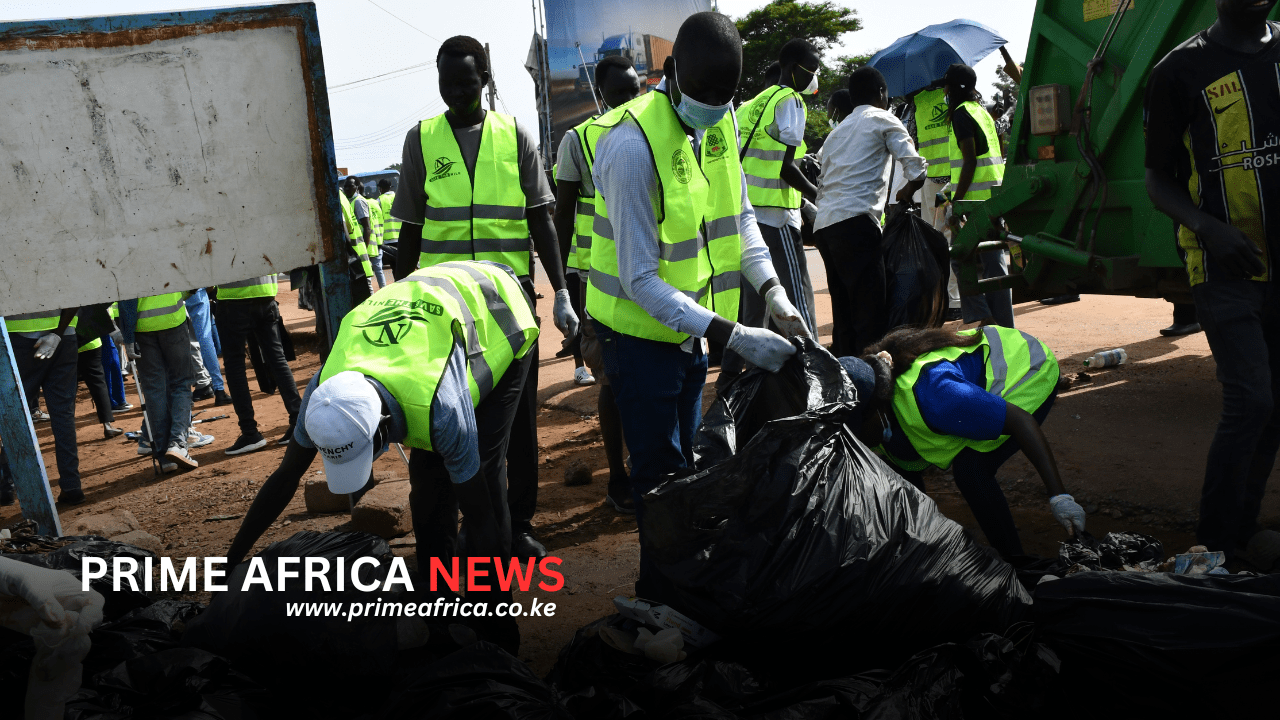

JUBA, South Sudan — As the world marked World Environment Day, more than 120 young people from across Juba united under the banner of the youth-led environmental movement Save the Nile to combat plastic pollution and raise awareness about protecting the River Nile, South Sudan’s most vital water source.
The campaign brought together youth volunteers, environmental activists, local authorities, and community members in a collective effort to highlight the growing threat plastic waste poses to the Nile and the millions of people who depend on it for water, food, transportation, and livelihoods.
For many residents of Juba, plastic bottles and litter scattered along roadsides have become a familiar sight. For environmental activist and Save the Nile founder Makur Majeng, however, those discarded plastics sparked a troubling question: Where do they end up?
That simple question became the foundation of a movement.
Founded in 2025, Save the Nile emerged from Majeng’s research into the impact of plastic pollution in Juba. During his daily commute to school, he observed increasing amounts of plastic waste accumulating in neighborhoods, streets, and public spaces.
“Every day, I saw plastic bottles lying on the roads and around neighborhoods,” Majeng recalled. “I started asking myself where these plastics went after being thrown away. As I researched further, I discovered that much of the waste eventually finds its way into the River Nile through drainage channels, especially during the rainy season.”
The findings revealed a growing environmental challenge. As South Sudan’s primary water source, the Nile sustains millions of people and supports key economic activities including fishing, agriculture, and transport. Yet increasing pollution continues to threaten the health of the river and the communities that rely on it.
Determined to make a difference, Majeng transformed his research project into a grassroots campaign focused on environmental education, responsible waste management, and community action.
“What started as research became a movement,” he said. “We realized that many people were not aware of the consequences of littering. Save the Nile was established to educate communities and help people understand how their daily actions affect the environment.”
The strong turnout during the World Environment Day campaign reflected growing environmental awareness among South Sudan’s youth. Volunteers participated in clean-up exercises and public awareness activities, encouraging residents to dispose of waste responsibly and prevent plastics from reaching waterways.
According to Majeng, environmental protection begins with individual responsibility.
“The message we want to send to all South Sudanese is that protecting our environment also means protecting our rivers,” he said. “People can start from their homes, schools, and neighborhoods. When communities keep their surroundings clean, they help prevent waste from reaching the Nile.”
He warned that pollution of water sources can contribute to serious public health risks, including cholera, diarrhea, and other waterborne diseases that continue to affect vulnerable communities.
The initiative received support from local authorities, with Juba City Council’s Deputy Mayor for Environment and Waste Management, Stephen Lomude, commending the youth for taking the lead in safeguarding the country’s natural resources.
“The Nile is our lifeline,” Lomude said. “It provides water, fish, and livelihoods for our communities. Protecting it is a shared responsibility.”
He urged residents to adopt proper waste disposal practices and encouraged young people to serve as ambassadors for environmental conservation.
“When you see someone littering on the streets or near the river, advise them,” he said. “If we continue spreading awareness and changing our habits, we can keep the Nile free from pollution and preserve it for future generations.”
As communities around the globe commemorate World Environment Day, the message from Juba’s youth resonates far beyond South Sudan’s borders: protecting Africa’s longest river begins with individual action, collective responsibility, and a shared commitment to preserving the environment for generations to come.
About The Author