


NAIROBI, Kenya — As the world marks International Minority Rights Day, Nominated Senator Crystal Asige is drawing national attention to what meaningful inclusion looks like in everyday practice, shifting the conversation from symbolism to sustained, intentional action.
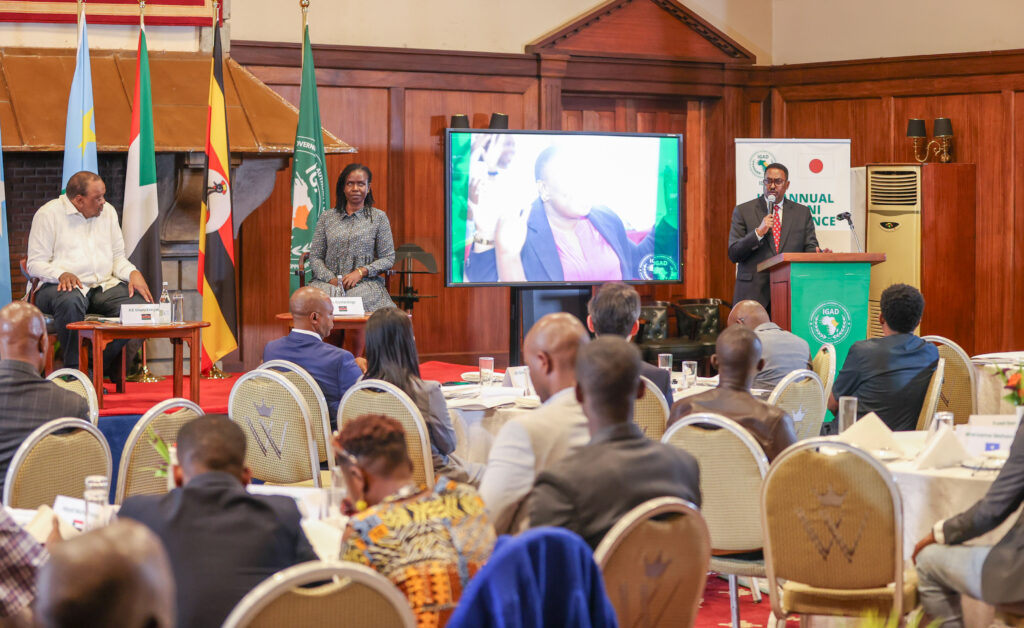
A recently shared clip from the Intergovernmental Authority on Development (IGAD) Annual Alumni Conference has sparked widespread discussion after former President H.E. Uhuru Kenyatta was seen offering a brief visual description of himself before addressing the audience. The practice, uncommon in most public forums, was adopted from Senator Asige and is aimed at normalising inclusive communication for persons with disabilities, particularly those with visual impairments.
The moment has been widely praised as a subtle but powerful demonstration of inclusive leadership—one that acknowledges diverse audiences and embeds accessibility into routine public engagement rather than treating it as an afterthought.

During the high-level conference, Senator Asige consistently emphasised that inclusion is not about performance or optics, but about intention. She highlighted the need for leaders to understand how systems, spaces and communication norms affect people differently, noting that small, deliberate actions often carry more impact than sweeping declarations.
International Minority Rights Day offers a timely lens for this conversation. Across societies, minority groups are frequently excluded not through deliberate malice, but through long-standing systems that were never designed with them in mind. Inclusive practices such as visual self-description signal a shift away from token gestures towards leadership that actively considers who is present—and who has historically been left out.
As Kenya continues to debate representation and inclusion, particularly for persons with disabilities, the conversation sparked by this moment extends beyond social media. It raises broader questions about what the country chooses to normalise in public leadership, and whose experiences are actively considered in shaping national spaces.
For advocates like Senator Asige, the path to inclusion lies not in grand statements, but in everyday actions that quietly redefine what equitable leadership looks like in practice.
About The Author

John Matava
A digital journalist and bilingual story teller with expertise in both broadcast and Public relations. johnmatavah@gmail.com
