
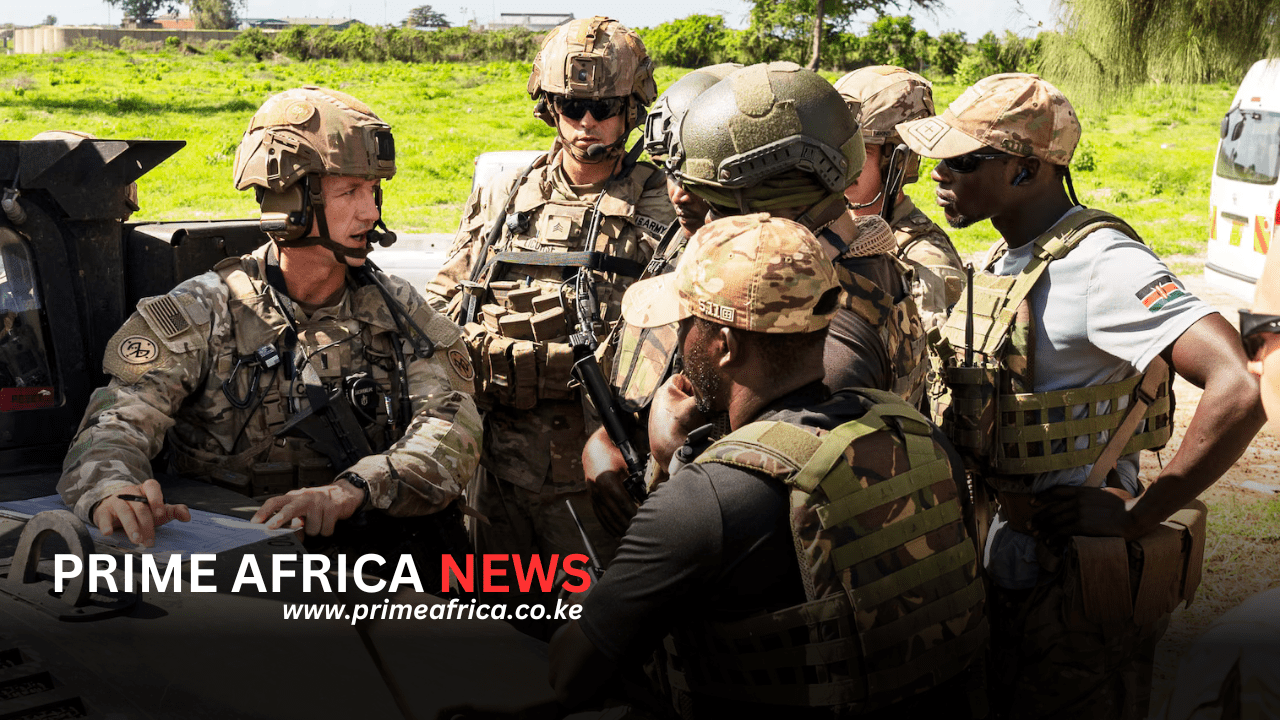

NAIROBI, KENYA — As the conflict between the United States, Israel, and Iran enters a volatile new phase in 2026, the geopolitical tremors are being felt thousands of miles away in East Africa. While the world’s attention has remained fixed on the Persian Gulf, a recent intelligence alert from the Israeli Embassy in Nairobi has sent shockwaves through the region: Iran’s missile reach now officially extends into the heart of Africa.
[spacer height=”20px”]
With the recent attempted strike on the joint U.S.-UK base at Diego Garcia—located approximately 3,800 km from Tehran—military analysts warn that the “radius of threat” has expanded. For Kenya, a “Major Non-NATO Ally” hosting critical U.S. counterterrorism assets, the “Imminent Threat” is no longer theoretical.
[spacer height=”20px”]
Why Africa, Why Now?
[spacer height=”20px”]
The Israeli report suggests that Iran has successfully tested or modified missiles capable of a 4,000 km strike range. This puts Addis Ababa, Mogadishu, and Juba squarely within the crosshairs. Nairobi and the coastal hub of Lamu sit precariously at the very edge of this arc.
Why shift focus to Africa?
[spacer height=”20px”]
Experts suggest a “Strategy of Attrition.” While European nations have largely distanced themselves from the direct conflict to protect their own energy interests and diplomatic ties with Tehran, Africa remains a high-value, lower-consequence theater for Iran.
-
Vandalizing Investment: By targeting U.S. “Cooperative Security Locations” (CSLs) in Africa, Iran can degrade U.S. global dominance without triggering the immediate, massive NATO retaliation that an attack on a European capital would provoke.
-
Political Pressure: Systematic strikes on multi-million dollar African facilities are designed to create a “drain on resources” narrative, fueling domestic pressure on President Trump back in Washington to withdraw from foreign entanglements.
[spacer height=”20px”]
Tehran’s Long-Range Arsenal: The “Global” Threat
[spacer height=”20px”]
According to the Israel Defense Forces (IDF) and recent regional observations, Iran’s “strategic depth” relies on three primary long-range systems:
| Missile Type | Estimated Range | Status/Capability |
| Khorramshahr-4 | 2,000–3,000 km | Liquid-fueled; high payload capacity. Historically their longest-range “standard” missile. |
| Sejjil-2 | 2,500 km+ | Solid-fueled; rapid launch capability. Difficult to detect before firing. |
| “Haj Qasem” (Modified) | Up to 4,000 km | An evolved variant suspected in the Diego Garcia attempt; uses advanced staging to reach East Africa. |
[spacer height=”20px”]
Defense of the Coast: Guarding Camp Simba
[spacer height=”20px”]
As the primary U.S. footprint in Kenya, Camp Simba at Manda Bay (Lamu) is arguably the most vulnerable target. Following the 2020 Al-Shabaab attack, the facility underwent a $70 million upgrade completed in early 2026. However, defending against a localized militant raid is vastly different from intercepting a ballistic missile.
[spacer height=”20px”]
Current Anti-Missile Infrastructure at Manda Bay:
[spacer height=”20px”]
Current intelligence suggests the U.S. has quietly reinforced the coast with a multi-layered shield:
-
THAAD (Terminal High Altitude Area Defense): Designed to intercept short, medium, and intermediate-range ballistic missiles in their terminal phase.
-
C-RAM (Counter Rocket, Artillery, and Mortar): Specifically for “point defense” to protect personnel from smaller projectiles and drones.
-
AEGIS Integration: U.S. Navy destroyers patrolling the Indian Ocean are equipped with the Aegis Combat System, providing a maritime “outer ring” of protection that was reportedly used to down one of the missiles headed for Diego Garcia last week.
[spacer height=”20px”]
The Silent Government
[spacer height=”20px”]
Despite the Israeli Embassy’s public warnings, the Kenyan government has remained tight-lipped. Observers believe Nairobi is walking a diplomatic tightrope—balancing its strategic alliance with the U.S. against the risk of becoming a “proxy battlefield” for Middle Eastern powers.
[spacer height=”20px”]
As the 2026 conflict “Operation Epic Fury” continues to escalate, one thing is certain: the Indian Ocean is no longer a buffer, but a bridge for a new era of long-range warfare.
[spacer height=”20px”]
About The Author

