

NAIROBI, Kenya — East African countries are strengthening cross-border surveillance and response mechanisms, including the One-Stop Border Post approach, as part of coordinated efforts to prevent the spread of the Ebola virus and other infectious disease outbreaks across the region.
[spacer height=”20px”]
The approach has been identified as one of the mechanisms supporting early detection and rapid response following the 17th Ebola outbreak reported in 2026, according to insights from health organization Village Reach.
[spacer height=”20px”]
Speaking during a virtual engagement with journalists, Village Reach President and Chief Executive Officer Dr Ahmed Ogwell Ouma said effective outbreak preparedness depends heavily on systems that are already functioning before a health emergency is detected.
[spacer height=”20px”]
“The infrastructure that stops outbreaks is the same one that operates before an outbreak is detected,” Ouma said.
[spacer height=”20px”]
Village Reach, which works with governments and health partners across more than 15 African countries, has been supporting efforts to strengthen disease surveillance, community health systems and emergency preparedness.
[spacer height=”20px”]
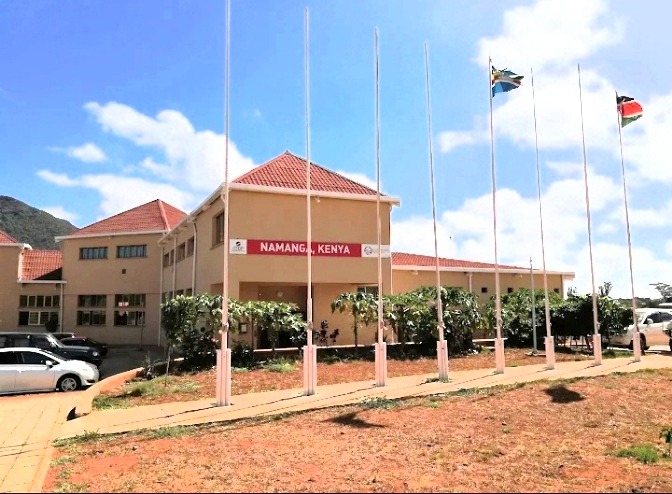
At the Namanga One-Stop Border Post between Kenya and Tanzania, surveillance and response mechanisms are being aligned with the 7-1-7 framework, which calls for a public health threat to be detected within seven days, notified to the relevant authorities within one day, and an effective response initiated within seven days.
[spacer height=”20px”]
Health experts say the effectiveness of such systems is not only dependent on technical capacity but also on how close surveillance mechanisms are to communities and potential points of disease transmission.
[spacer height=”20px”]
Village Reach Senior Manager and Tanzania Country Lead Wema Kamuzora attributed the organization’s progress on the continent, particularly in Tanzania, to flexibility and close engagement with governments.
[spacer height=”20px”]
“I proudly say that our achievements are attributed to government engagements that make us become flexible and align with policies which keep on changing now and then,” Kamuzora said.
[spacer height=”20px”]
East Africa’s surveillance systems have increasingly been positioned to detect public health threats before they escalate into emergencies.
[spacer height=”20px”]
According to Village Reach, event-based surveillance frameworks are now operating in about two-thirds of African Union member states, while national public health institutes in parts of West, East and Central Africa have developed integrated surveillance systems that were largely absent a decade ago.
[spacer height=”20px”]
The systems combine information from health facilities, communities and other sources to identify unusual health events and trigger investigations before transmission becomes widespread.
[spacer height=”20px”]
Village Reach says community participation remains central to the effectiveness of surveillance.
[spacer height=”20px”]
Dr Ouma argues that surveillance is strongest when communities are integrated into the system and can identify and report potential threats at an early stage.
[spacer height=”20px”]
When the first warning signal reaches health authorities only after an outbreak has gained momentum, a threat that could have been contained locally can quickly become a national or international emergency.
[spacer height=”20px”]
The current Ebola threat presents an additional challenge because the Bundibugyo virus species is among the four Ebola virus species known to cause disease in humans.
[spacer height=”20px”]
Unlike some other Ebola species, Bundibugyo Ebola has faced limitations in the availability of licensed rapid diagnostic tools and approved medical countermeasures, including vaccines and therapeutics specifically targeting the strain.
[spacer height=”20px”]
This places greater emphasis on early detection, isolation, contact tracing, infection prevention and control, community engagement and rapid response.
[spacer height=”20px”]
VillageReach maintains that many of the systems being used to detect and contain such threats are increasingly being developed and operated by African institutions and health workers.
[spacer height=”20px”]
Despite progress in strengthening preparedness, stakeholders are raising concerns over declining investment in health emergency preparedness.
[spacer height=”20px”]
Available figures cited in the discussion indicate that funding declined from approximately US$25.8 billion in 2021 to about US$13 billion in 2025.
[spacer height=”20px”]
Health experts warn that reduced investment in preparedness could leave countries more exposed when new outbreaks emerge.
[spacer height=”20px”]
The argument is that sustained investment in surveillance, laboratories, community health systems, border health infrastructure and emergency response capacity can help countries identify and contain threats before they develop into costly health crises.
[spacer height=”20px”]
For East Africa, the One-Stop Border Post model offers an opportunity to integrate public health surveillance with the movement of people and goods across borders.
[spacer height=”20px”]
With regional trade and travel continuing to expand, health authorities face the challenge of ensuring that borders remain gateways for commerce without becoming weak points in the continent’s disease-control systems.
[spacer height=”20px”]
The emerging preparedness model therefore places greater emphasis on detecting threats early, sharing information quickly and responding before outbreaks cross borders and overwhelm national health systems.
[spacer height=”20px”]
About The Author

