
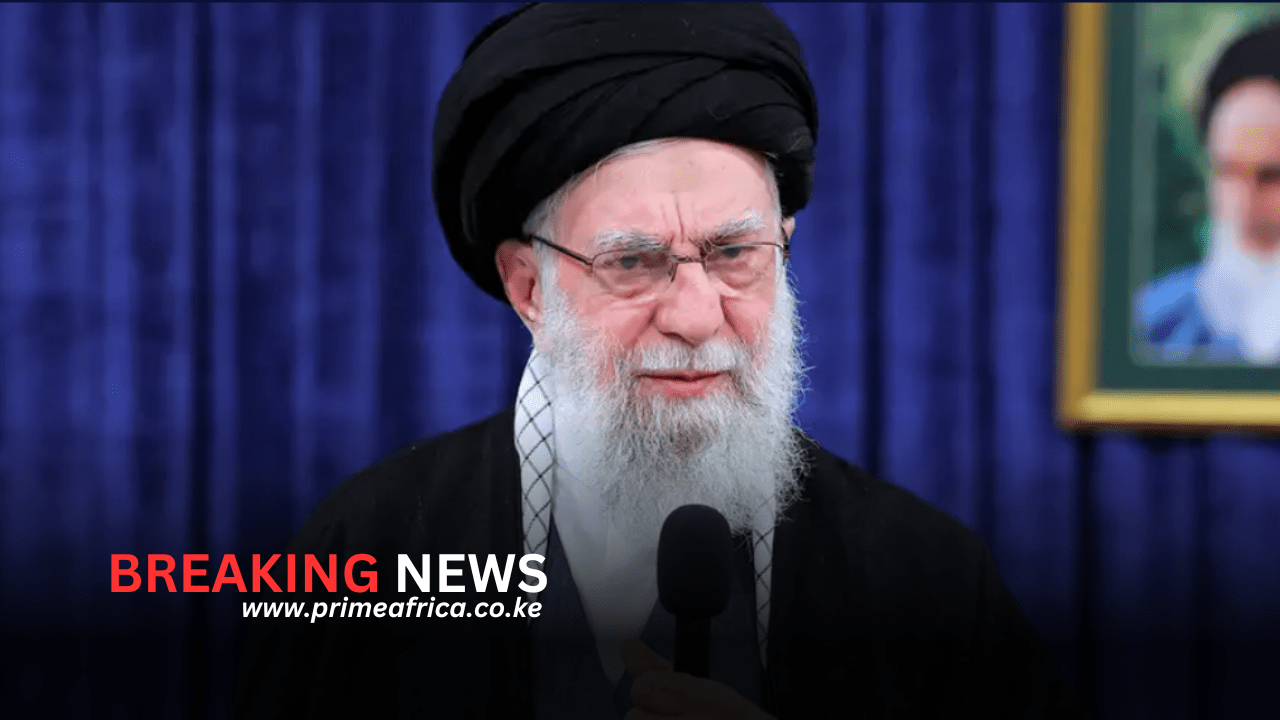

Iranian state-run television has confirmed the death of Supreme Leader Ali Khamenei, who was reportedly killed early Saturday at his office in Tehran. He was 86. The broadcasts announced that the Islamic Republic will observe 40 days of national mourning following the death of the long-serving leader, who had ruled Iran since 1989.
Hours before the official confirmation, U.S. President Donald Trump stated that Khamenei had been killed in an Israeli strike carried out Saturday morning, escalating tensions across an already volatile Middle East.
Khamenei assumed power in 1989 after succeeding Ruhollah Khomeini, the founding Supreme Leader of the Islamic Republic established in 1979. Over nearly four decades, Khamenei became the most powerful figure in Iran, shaping its political, military, and ideological direction.
During his tenure, Iran pursued controversial nuclear ambitions and expanded its regional influence through support for Shiite-aligned groups across the Middle East. These included Hezbollah in Lebanon, the Houthi movement in Yemen, and Kata’ib Hezbollah in Iraq.
Iran also provided funding and military training to Hamas, which took control of the Gaza Strip in 2007 and carried out the October 7, 2023 attacks on Israel.
Khamenei’s rule was marked by repeated crackdowns on anti-government protests and dissent. Iranian security forces, acting under the authority of the Supreme Leader, were frequently accused by international rights groups of using excessive force against demonstrators opposing the Islamic Republic.
The reported Israeli strike and confirmation of Khamenei’s death are likely to have far-reaching consequences for regional stability, Iran’s leadership structure, and global security dynamics. Analysts warn that a power vacuum in Tehran could intensify tensions across the Middle East, particularly among Iran-aligned groups.
Iran has not yet announced succession arrangements, though the Assembly of Experts is constitutionally mandated to appoint a new Supreme Leader.
About The Author

