

MERU, Kenya – Infertility is emerging as a growing public health concern in Kenya, with health experts warning that the increasing number of couples struggling to conceive is placing emotional and financial strain on families across the country.
According to reproductive health specialists, nearly two in every ten couples in Kenya are facing fertility challenges and require medical intervention in order to have children. The trend mirrors global estimates by the World Health Organization, which indicate that close to 180 million people worldwide are affected by infertility.
Despite the growing demand for fertility treatment, access to care remains out of reach for many Kenyans due to the high cost of treatment and the limited number of specialised fertility centres in the country.

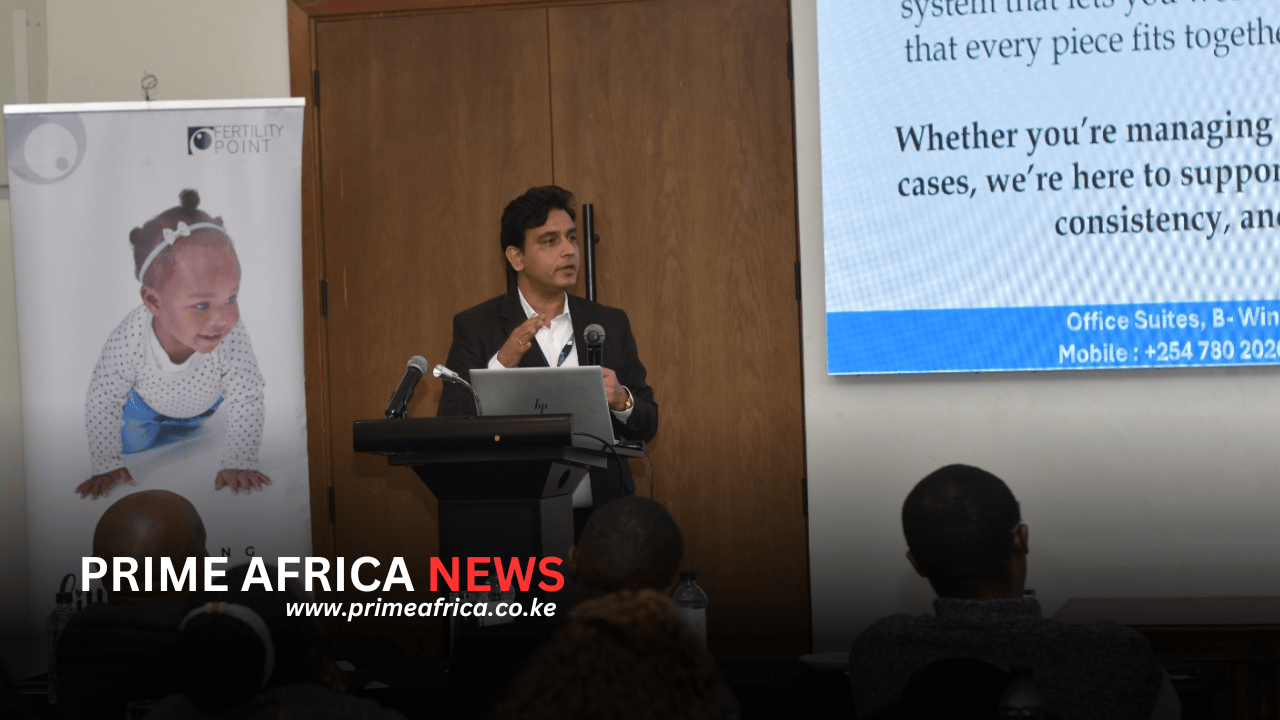
The concerns were raised during a Reproductive Health Symposium held in Meru and organised by Fertility point where doctors and reproductive health experts called on the government to subsidise fertility treatment and strengthen partnerships with private healthcare providers to improve access to services.
Speaking during the symposium, Fertility Point Chief Operating Officer Dr Swapnil Shastri said infertility currently affects one in every six couples globally, with Kenya experiencing a similar trend.
He attributed the growing cases to lifestyle-related conditions such as obesity, diabetes, hypertension, smoking, alcohol consumption and sexually transmitted infections, all of which negatively impact reproductive health.
Dr Shastri noted that advanced fertility procedures including In Vitro Fertilisation (IVF), genetic testing and specialised patient evaluation remain unaffordable for many families because of the high costs involved.
“Apart from accessibility, affordability is another major challenge. Some patients spend more than Sh100,000 on transport and accommodation while seeking treatment in Nairobi,” said Dr Shastri.

He explained that most fertility centres are concentrated in major urban areas such as Nairobi, Mombasa and Kisumu, making it difficult for patients from rural regions to access specialised reproductive healthcare.
To help ease the burden on patients, Fertility Point has partnered with insurance companies to provide partial or full medical cover for fertility treatment, while some patients are also allowed to pay in instalments.
Gynaecologist and fertility specialist Dr Nganga Maguzu said infertility cases are also being driven by genetic factors in addition to lifestyle habits and infections.
“There are families that inherit genes associated with infertility, and this can affect both men and women,” said Dr Maguzu.
He urged the government to introduce funding and subsidies for fertility treatment to ensure lower-income Kenyans are not excluded from accessing reproductive healthcare services.
“My appeal to the government is to support and finance fertility treatment because infertility is becoming a major global challenge. Every Kenyan deserves an equal opportunity to access treatment and start a family,” he added.
Meru County Health Executive Dr Dennis Mugambi acknowledged the growing demand for fertility services in Meru and the larger Eastern region, saying collaboration between the government and private healthcare providers would help improve access to modern fertility treatment.
“Modern medicine has introduced interventions capable of helping childless couples conceive and have children,” said Dr Mugambi.
Health experts at the symposium further emphasised the need for increased public awareness, early screening and investment in reproductive healthcare infrastructure to address what they described as a silent but rapidly growing crisis affecting thousands of families in Kenya.
About The Author
