
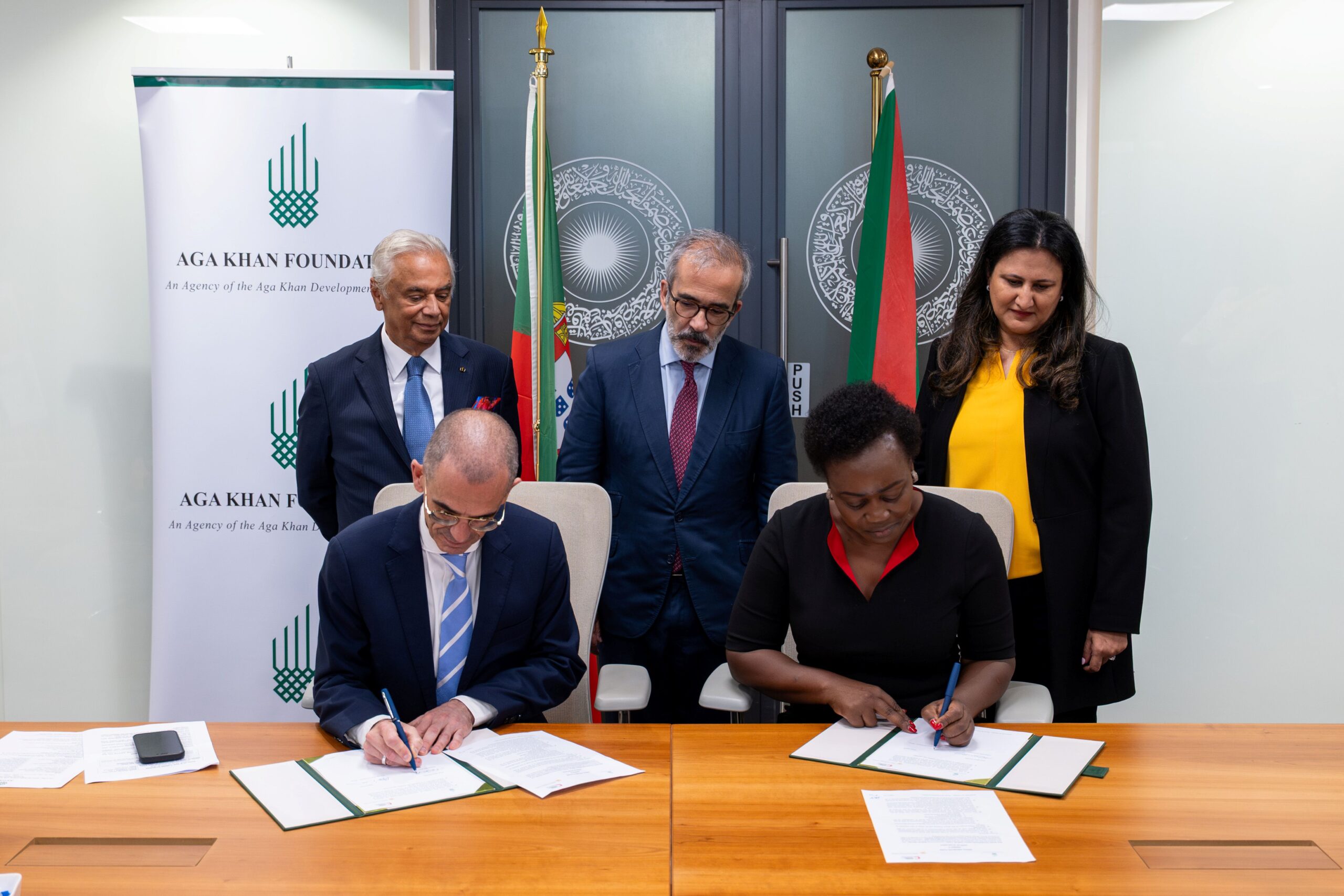

KWALE, Kenya — A new partnership between the Aga Khan Foundation (AKF) and the Camões Institute is set to boost coastal restoration and eco-tourism in Kenya, with over 65,000 mangrove seedlings expected to be grown and nurtured under the Gazi Bay Coastal Restoration and Eco-Tourism (G-CORE) initiative.
The agreement, signed during an official visit to Kenya by Paulo Rangel, marks a significant step in advancing climate resilience and community-led development along the country’s coastline.
Speaking during the signing, Amin Mawji, Diplomatic Representative of the Aga Khan Development Network in East Africa, reaffirmed the network’s commitment to environmental sustainability and inclusive growth.
“The Aga Khan Development Network remains committed to working with partners across sectors to advance climate resilience, environmental stewardship, and inclusive development,” Mawji said. “This collaboration reflects a shared commitment between Portugal, Kenya, and AKDN to sustainable development and economic growth.”
The initiative will focus on restoring degraded mangrove ecosystems in Gazi Bay, a vital coastal habitat that has suffered years of environmental degradation due to deforestation, coastal erosion, and the impacts of climate change, including rising sea levels and extreme weather events.
Through the G-CORE programme, AKF and its partners aim to plant approximately 65,000 mangrove seedlings across six hectares, contributing to a broader target of restoring 226 hectares of mangrove forest in collaboration with the Kenya Forest Service.
Beyond ecological restoration, the project emphasizes community empowerment by:
- Training local residents in conservation practices
- Upgrading eco-tourism infrastructure, including the Gazi Boardwalk
- Supporting small enterprises, particularly those led by women and youth
The initiative is part of AKF’s wider Indian Ocean ReGeneration programme, which integrates environmental restoration with sustainable economic opportunities. By strengthening eco-tourism and conservation-based livelihoods, the project seeks to create long-term resilience for coastal communities.
Mangroves play a critical role in protecting shorelines, supporting marine biodiversity, and acting as carbon sinks—making their restoration key to Kenya’s climate adaptation strategy and blue economy ambitions.
Portugal, through the Camões Institute, will provide partial funding for the project, aligning with shared priorities on marine conservation, climate adaptation, and sustainable development.
The collaboration underscores growing international partnerships supporting Kenya’s environmental goals and highlights the importance of joint action in addressing the climate crisis.
As restoration efforts take root in Gazi Bay, stakeholders say the initiative could serve as a model for community-driven coastal conservation across the region.
About The Author

