
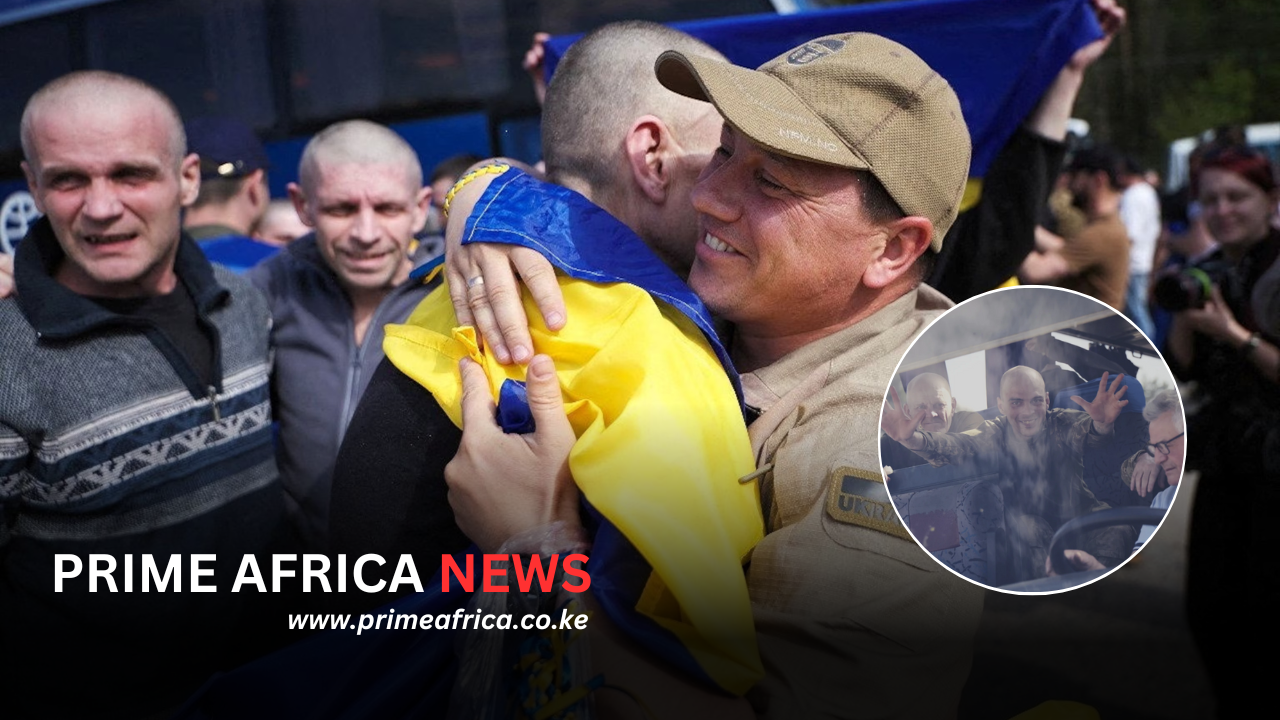

In a rare moment of cooperation during a protracted and bloody war, Russia and Ukraine began a large-scale prisoner exchange on Friday, releasing hundreds of detainees in what is being hailed as the largest swap since Russia’s invasion of Ukraine began in 2022.
[spacer height=”20px”]
Ukrainian President Volodymyr Zelenskyy announced that 390 Ukrainian soldiers and civilians were returned home in the first phase of the exchange. Russia’s Defense Ministry confirmed it received the same number of prisoners from Ukraine. Additional releases are expected over the weekend.
[spacer height=”20px”]
“It’s very important to bring everyone home,” Zelenskyy wrote on Telegram, expressing gratitude to those involved in negotiating the exchange and pledging continued diplomatic efforts to secure further releases.
[spacer height=”20px”]
The exchange followed a meeting last week in Istanbul, where Ukrainian and Russian delegations agreed to swap 1,000 prisoners each—the first direct peace talks between the two sides in over a year. Although the meeting lasted only two hours and resulted in no breakthrough, it led to this significant humanitarian gesture.
[spacer height=”20px”]
Emotional Reunions and Lingering Heartache
[spacer height=”20px”]
Scenes of jubilation unfolded in Ukraine’s Chernihiv region as buses carrying the freed men arrived at a medical facility. Dozens of waiting relatives, waving flags and holding photographs, shouted names in hopes of spotting their loved ones.
[spacer height=”20px”]
Among the emotional reunions was Nataliia Mosych, who cried out “Vanya!” upon seeing her husband, Ivan, for the first time in nearly two years.
[spacer height=”20px”]
“It is an unbelievable feeling. I am still in shock,” she said. “I am really glad, and we were not forgotten, and we still mean something for Ukraine.”
[spacer height=”20px”]
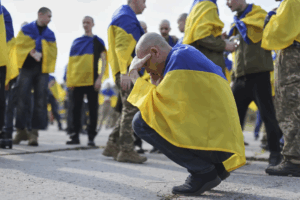
Others experienced the opposite — scanning the returning group in vain, their hopes dashed, yet clinging to the possibility that more would return in the coming days.
[spacer height=”20px”]
[spacer height=”20px”]
“Maybe my dad will come tomorrow,” a young boy sobbed, clutching a photo.
[spacer height=”20px”]
Some released POWs appeared disoriented, having lost track of time and personal memories. One joked during a video call with his girlfriend that he had aged during his captivity, to which she replied, “You’re as beautiful as ever.”
[spacer height=”20px”]
International Reaction and Diplomatic Stalemate
[spacer height=”20px”]
News of the swap gained international attention when former U.S. President Donald Trump posted on Truth Social, saying a “major prisoners swap” had just been completed and hinting it “could lead to something big???”
[spacer height=”20px”]
However, optimism for further peace remains muted. Turkish Foreign Minister Hakan Fidan described the exchange as a “confidence-building measure,” but Kremlin spokesperson Dmitry Peskov said no follow-up meeting has been scheduled. Moscow has yet to confirm a venue for further talks.
[spacer height=”20px”]
Russian Foreign Minister Sergey Lavrov later announced that Russia would present Ukraine with a draft proposal for a “sustainable, long-term, comprehensive” peace deal once the prisoner exchange concludes.
[spacer height=”20px”]
Yet, core disagreements persist. Ukraine, backed by its Western allies, insists on a temporary ceasefire as a first step toward broader negotiations. Russia, however, continues to reject a ceasefire unless Kyiv halts its mobilization efforts and Western nations cease arms deliveries.
[spacer height=”20px”]
A senior Ukrainian official said Russia introduced “unacceptable demands” during the Istanbul meeting, including the withdrawal of Ukrainian forces from occupied territories—conditions never previously discussed.
[spacer height=”20px”]
President Zelenskyy has warned that Russia’s stance signals a deliberate attempt to prolong the war, urging the international community to respond with stronger sanctions.
[spacer height=”20px”]
Continued Hostilities
[spacer height=”20px”]
Despite the prisoner swap, fighting raged on across multiple fronts. Russia’s Defense Ministry claimed it intercepted 788 Ukrainian drones between May 20 and May 23, while Ukraine reported that Russia launched 175 Shahed and decoy drones, along with a ballistic missile, since late Thursday.
[spacer height=”20px”]
As diplomacy falters, the humanitarian toll continues to rise, underscoring the urgency for sustained and meaningful negotiations.
[spacer height=”20px”]
About The Author

