
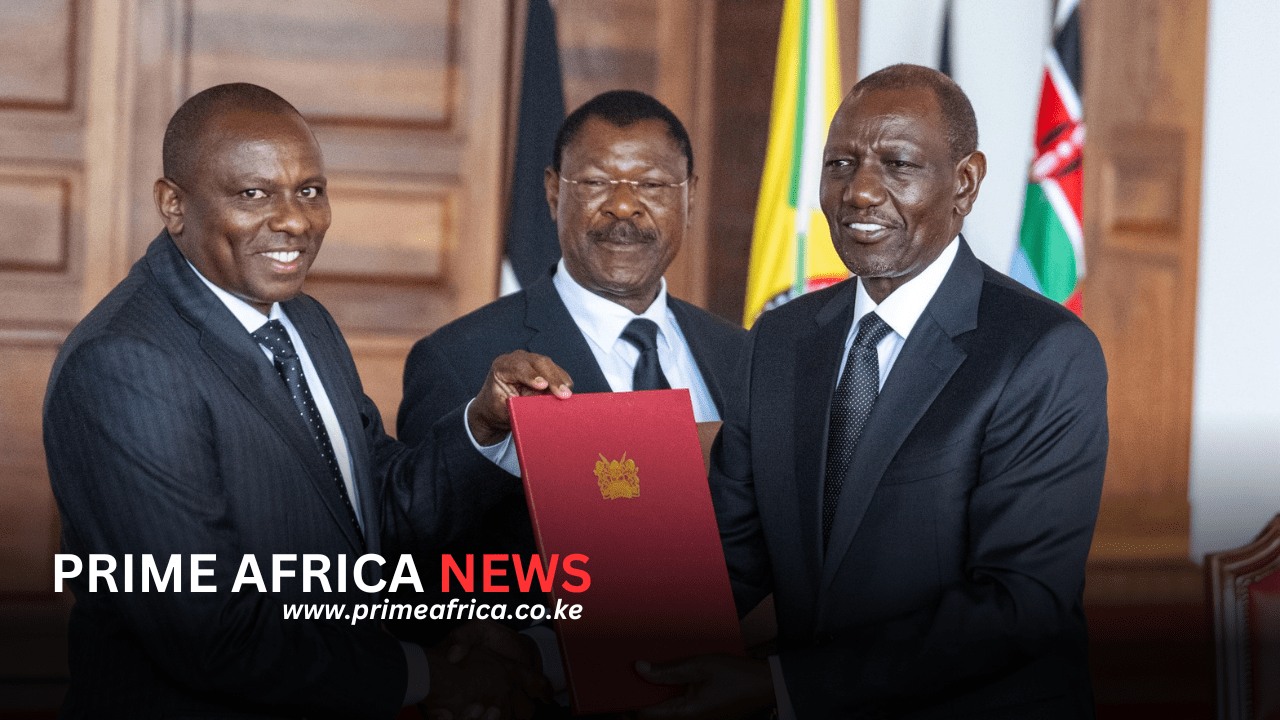

NAIROBI, Kenya – William Ruto on Wednesday assented to the Supplementary Appropriations Bill, 2026 at State House Nairobi, approving a significant expansion of the national budget aimed at addressing urgent priorities while safeguarding development spending.
The newly enacted law raises total government expenditure by KSh393 billion—from KSh4.301 trillion to KSh4.695 trillion—marking one of the largest supplementary budget increases in recent years.
The revised budget seeks to respond to pressing national needs, including enhanced security operations, disaster response mechanisms, and strategic infrastructure investments, while maintaining a strong focus on long-term development.
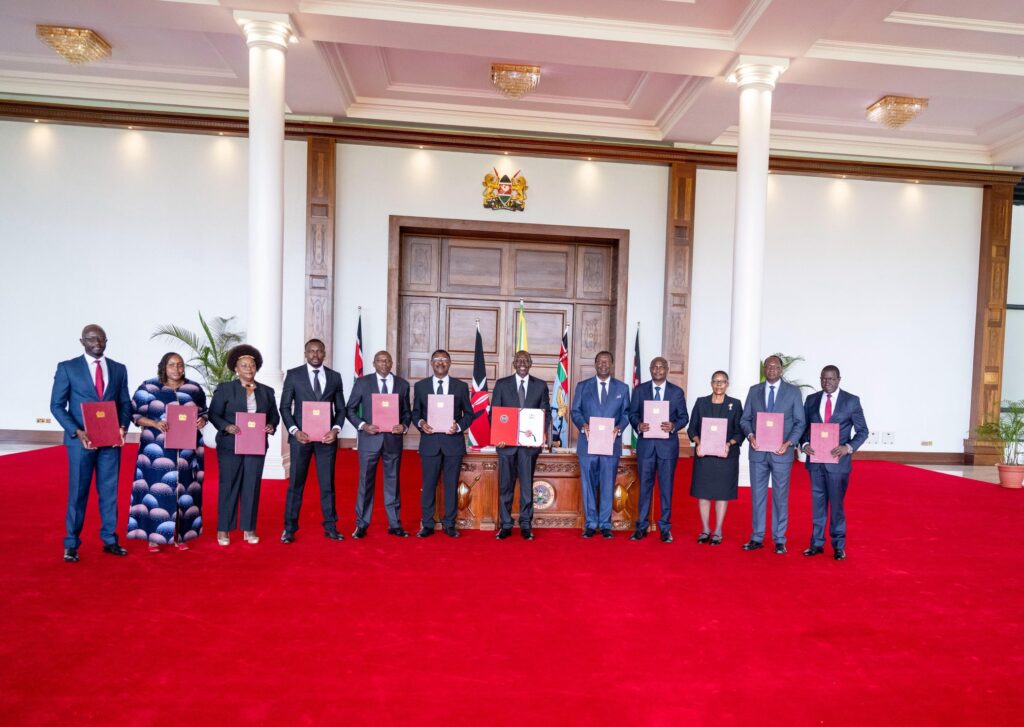
The signing ceremony was attended by senior government officials, including Prime Cabinet Secretary Musalia Mudavadi, National Assembly Speaker Moses Wetangula, National Treasury Cabinet Secretary John Mbadi, Majority Leader Kimani Ichung’wah, and Attorney-General Dorcas Oduor.
The largest allocations in the supplementary budget were directed toward the security and education sectors.
The security sector received an additional KSh60 billion, with the State Department for Internal Security and National Administration allocated KSh11.9 billion. This includes funding for security operations, modernization of police equipment, compensation for victims of demonstrations, and investment in the National Integrated Security Command and Control System.
The Independent Electoral and Boundaries Commission was also allocated KSh2.9 billion to clear pending legal obligations.
Education emerged as another major beneficiary, receiving KSh45.28 billion. Of this, the Teachers Service Commission was allocated KSh24.2 billion to address salary shortfalls and health insurance contributions for teachers.
Further allocations include KSh4.1 billion for the Higher Education Loans Board, KSh3.88 billion for university salary arrears linked to the 2017–2021 Collective Bargaining Agreement, and support for the Wings to Fly programme through TVET institutions.
Additional funding was also directed to the University Funding Board and the Kenya-China TVET Project Phase III to strengthen higher education and technical training.
In the health sector, the government allocated KSh4 billion to settle pending bills from the defunct National Health Insurance Fund and KSh675 million to upgrade Level 4 hospitals nationwide.
The doctors’ internship programme received KSh5.4 billion, bringing its total funding to KSh9.8 billion. Key institutions such as Moi Teaching and Referral Hospital were also supported, alongside KSh2.6 billion earmarked for vaccine programmes.
Infrastructure development remains a key pillar, with KSh4.5 billion allocated to the Horn of Africa Gateway projects under the State Department for Roads.
The Affordable Housing Programme received a significant KSh25 billion injection aimed at accelerating project delivery under the State Department for Housing and Urban Development.
The agriculture sector was allocated over KSh17 billion, including KSh10 billion for the fertiliser subsidy programme—bringing total funding for the initiative to KSh18 billion.
Additional allocations include support for tea and sugar sector reforms, food security programmes, and affordable credit for MSMEs through the Agricultural Finance Corporation.
The Blue Economy and Fisheries Department received KSh350 million to host an international ocean conference scheduled for June 2026 in Mombasa and Kilifi, positioning Kenya as a regional leader in marine conservation and sustainable fisheries.
Environmental conservation efforts were also boosted, with funding directed toward tree-growing campaigns, rangeland restoration, and watershed improvement projects.
To finance the expanded budget, the government is prioritizing enhanced non-tax revenue streams, including privatisation and securitisation of public assets.
An additional KSh17.6 billion allocation to the Kenya Revenue Authority is expected to strengthen tax collection efforts and reduce reliance on public borrowing.
Unlike previous years where development spending often suffered cuts due to fiscal constraints, the 2026 supplementary budget notably preserves and strengthens the development vote—signaling a shift in fiscal strategy aimed at sustaining economic growth while addressing immediate national needs.
The new budget framework underscores the government’s balancing act between fiscal discipline, service delivery, and long-term development planning.
About The Author

