
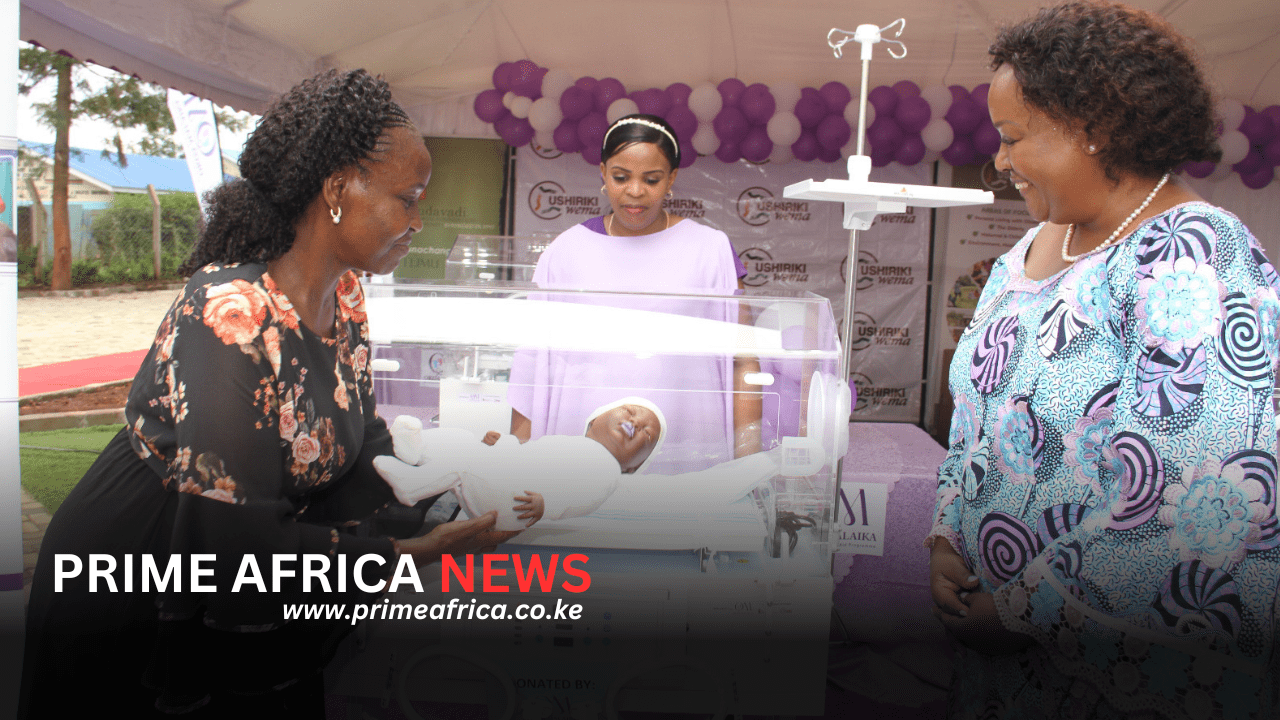

As the world marked International Women’s Day, the wife of Prime Cabinet Secretary Musalia Mudavadi, Tessie Mudavadi, called for the removal of legal and structural barriers that continue to hinder women and girls from enjoying equal rights.
Speaking during the celebrations in Chuka, Tessie said empowering women and girls is essential for building stronger families and communities.
“Women and girls deserve equal opportunities in education, health and leadership. When we empower women, we strengthen families and build a better nation,” she said.
She urged leaders and institutions to invest more in programmes that support women and girls, noting that such initiatives improve family well-being and contribute significantly to national development.
During the event, the Ushiriki Wema Foundation donated infant incubators to the Okoa Malaika Programme to help improve care for newborn babies in the region.
Tessie also called on the government, private sector and development partners to expand access to quality neonatal care across the country.
She further appealed to lawmakers to consider extending maternity leave for mothers who give birth to premature babies to allow families more time to care for vulnerable newborns.
“Mothers who give birth to premature babies need more time to care for them. Extending maternity leave would greatly support families during such a critical time,” she added.
She noted that countries such as Tanzania, The Gambia and Djibouti have already introduced longer maternity leave provisions for such cases.
Also speaking at the event, Njoki Mambo praised the resilience of mothers and the dedication of health workers who care for newborns in neonatal units.
Tessie said the donation of equipment to referral hospitals in Tharaka Nithi County, Meru County and Embu County is part of ongoing efforts to improve care for premature babies and help reduce infant deaths.
International Women’s Day is marked annually on March 8 to celebrate the achievements of women and to highlight the need to address challenges such as discrimination, violence and unequal opportunities.
About The Author
