
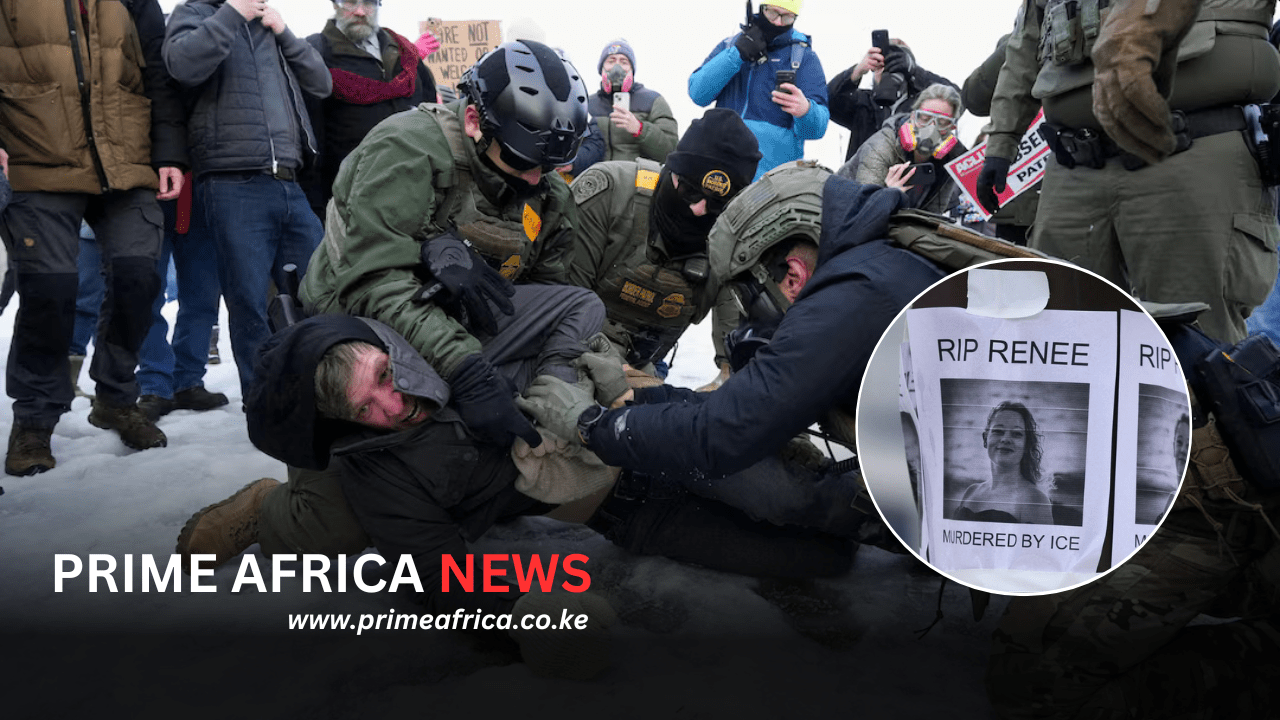

Minneapolis, United States — Tensions between Minnesota state authorities and the U.S. federal government escalated on Thursday following the fatal shooting of a 37-year-old mother of three by a U.S. Immigration and Customs Enforcement (ICE) agent in Minneapolis—an incident that has ignited mass protests and sharp political fallout across the country.
The woman, identified as Renee Nicole Good, a U.S. citizen, was shot during an encounter with masked federal officers in a residential neighborhood. Conflicting accounts from state and federal officials have fueled public outrage and raised serious questions about transparency and accountability.
The Minnesota Bureau of Criminal Apprehension (BCA) confirmed it has withdrawn from the investigation after the FBI took exclusive control, reversing an earlier agreement for a joint probe. BCA Superintendent Drew Evans said the decision effectively locked the state out of evidence, interviews, and the crime scene.
“As a result, the BCA has reluctantly withdrawn from the investigation,” Evans said.
Minnesota Attorney General Keith Ellison described the FBI’s move as “deeply disturbing,” stating that state authorities could still pursue charges independently. He added that evidence already reviewed—some not yet public—could support possible state prosecution.
However, U.S. Homeland Security Secretary Kristi Noem insisted the state lacked jurisdiction, defending the federal takeover of the investigation. Minnesota Governor Tim Walz strongly disagreed, warning that any federal probe without state involvement would be widely viewed as a “whitewash.”
Senior federal leaders, including Vice President JD Vance, defended the shooting, describing it as self-defense and accusing Good of attempting to ram officers—claims that Minneapolis Mayor Jacob Frey dismissed as “bullshit” and “garbage,” citing bystander videos that appear to contradict the federal narrative.
Video footage shows officers approaching Good’s vehicle as she attempted to leave the scene. An officer fired three shots as the car moved forward, with the final rounds discharged through the driver’s window after the vehicle appeared to have passed the officer. It remains unclear whether any contact was made between the car and the agent.
The ICE agent involved has not been publicly identified. Federal officials said the officer was briefly hospitalized and released the same day. President Donald Trump, posting on social media, claimed the woman “ran over the ICE officer,” a statement disputed by local officials.
The shooting occurred amid the deployment of 2,000 federal agents to the Minneapolis area—described by the Department of Homeland Security as the “largest DHS operation ever.” Despite calls from state and city leaders to withdraw federal forces, reports indicate more agents are being sent to the region.
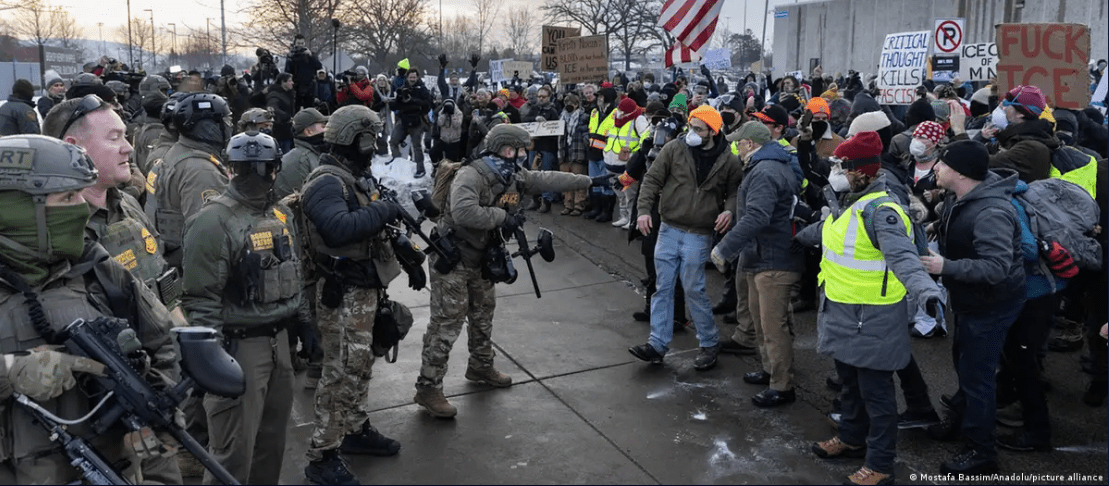
The incident has sparked widespread protests in Minneapolis and other major U.S. cities, including New York, Chicago, Los Angeles, Seattle, and Philadelphia. In Minneapolis, demonstrators clashed with armed federal officers, with tear gas and pepper balls deployed.
Governor Walz has placed the National Guard on alert, while Minneapolis public schools were closed as a precaution. Students joined protests, citing fear and anger over aggressive immigration enforcement, including reported raids at schools.
Renee Nicole Good, originally from Colorado, was a university graduate and award-winning poet. She is survived by her three children aged 15, 12, and 6.
The Minneapolis operation is part of President Trump’s broader immigration crackdown and follows a politically charged investigation into alleged fraud involving nonprofit groups in Minnesota’s Somali community—an issue that has further polarized public opinion.
As investigations continue, the shooting has intensified national debate over federal policing, immigration enforcement, and the limits of state authority—leaving Minneapolis on edge and the nation watching closely.
About The Author

