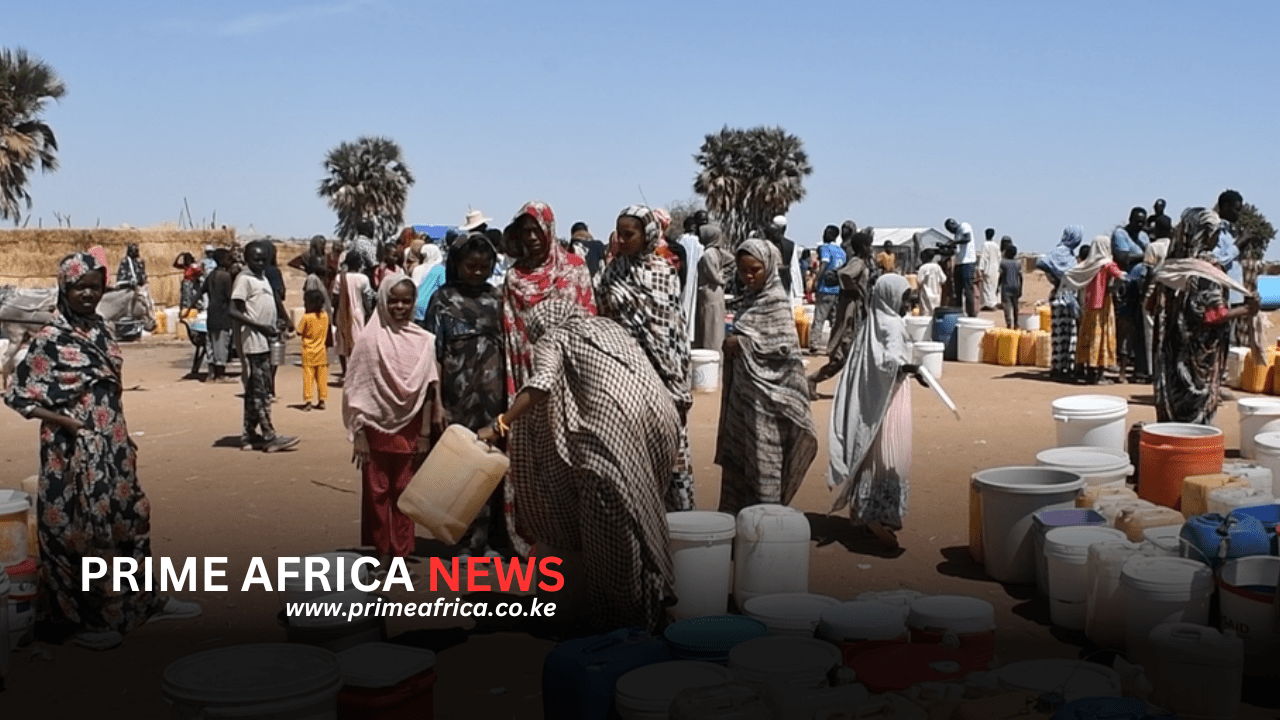

Upper Nile State, South Sudan — Thousands of Sudanese refugees sheltering in Chumedi Payam in Renk County are grappling with a worsening humanitarian crisis, as severe water shortages threaten their survival amid prolonged dry conditions linked to climate change.
Nearly three years after fleeing the outbreak of war in Sudan in April 2023, many refugees in this remote settlement—located about 48 kilometers from Renk Town—remain in precarious conditions, with limited access to basic services and dwindling natural resources.
What was initially a temporary refuge has turned into a harsh and unforgiving environment. With little to no rainfall recorded since the start of the year, water sources have dried up, pasture has disappeared, and families are increasingly dependent on inconsistent humanitarian aid.
“We suffer a lot to find water,” said Amina Abdalla, a refugee and mother of four. “Sometimes we wake up very early and walk long distances to dig in dry ground just to get a little water. Even that water is not clean, but we have no choice.”
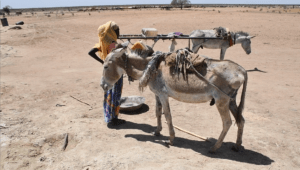
Amina’s story reflects the daily reality for thousands in Chumedi. With boreholes either insufficient or running dry, many residents resort to digging shallow pits in search of groundwater—often collecting unsafe, murky water for drinking, cooking, and washing.
Efforts by humanitarian agencies to address the crisis have been constrained by limited resources and access challenges. Water trucking services, when available, remain irregular and insufficient to meet the needs of the growing population.
The crisis is also devastating livestock, a critical source of livelihood for many families.
“Our animals are dying,” said one refugee. “There is no grass and no water. Without rain, we cannot sustain them. Losing our cattle means losing everything.”
The impact extends beyond livelihoods into essential services such as education. At Chumedi North Primary School, supported by UNICEF and its partners, the lack of water has forced administrators to cut school days short.
“We release learners early because of the water problem,” said headmistress Awadia Paulo Adwowk. “Some students walk long distances from places like Melikia, and by midday, they cannot continue without water.”
The school, which serves around 650 learners—nearly 450 of them refugees—relies on limited water stored in small containers. Once supplies are exhausted, there are no reliable alternatives.
“We used to rely on a nearby well, but now even when it has water, it is not enough for the community,” Awadia added. “Sometimes we buy water, but it is expensive and still not sufficient.”
The shortage of clean water is also raising serious public health concerns, with increased risks of waterborne diseases such as cholera and diarrhea, particularly among children.
Humanitarian organizations, including UNICEF and partners like Community in Need Aid (CINA), continue to provide support in water, education, nutrition, and child protection. However, aid workers warn that the scale of need far exceeds available resources.
They emphasize that the crisis in Chumedi underscores a growing regional challenge—the intersection of conflict and climate change.
“The refugees here are not only escaping war,” said one aid worker. “They are also facing the impacts of climate change, which makes their situation even more difficult. Without reliable rainfall, everything becomes harder.”
Women and children remain the most affected. In many households, women bear the burden of fetching water, often walking long distances under extreme heat multiple times a day.
“It is exhausting,” Amina said. “We spend hours looking for water. Sometimes we come back with very little. Our children suffer, and we feel helpless.”
Despite the hardships, the refugee community continues to demonstrate resilience. Still, local leaders and humanitarian agencies are calling for urgent and sustained intervention, including investment in water infrastructure such as new boreholes, rehabilitation of existing water points, and expansion of water trucking services.
They also stress the importance of climate-adaptive solutions to help vulnerable communities cope with increasingly unpredictable environmental conditions.
As the dry season intensifies in South Sudan, the urgency of the crisis continues to grow.
For Amina and thousands of others in Chumedi, access to safe water is no longer just a basic need—it is a matter of survival.
“We escaped the war to be safe,” she said. “But here, we are still struggling every day just to find water. We need help.”
About The Author