
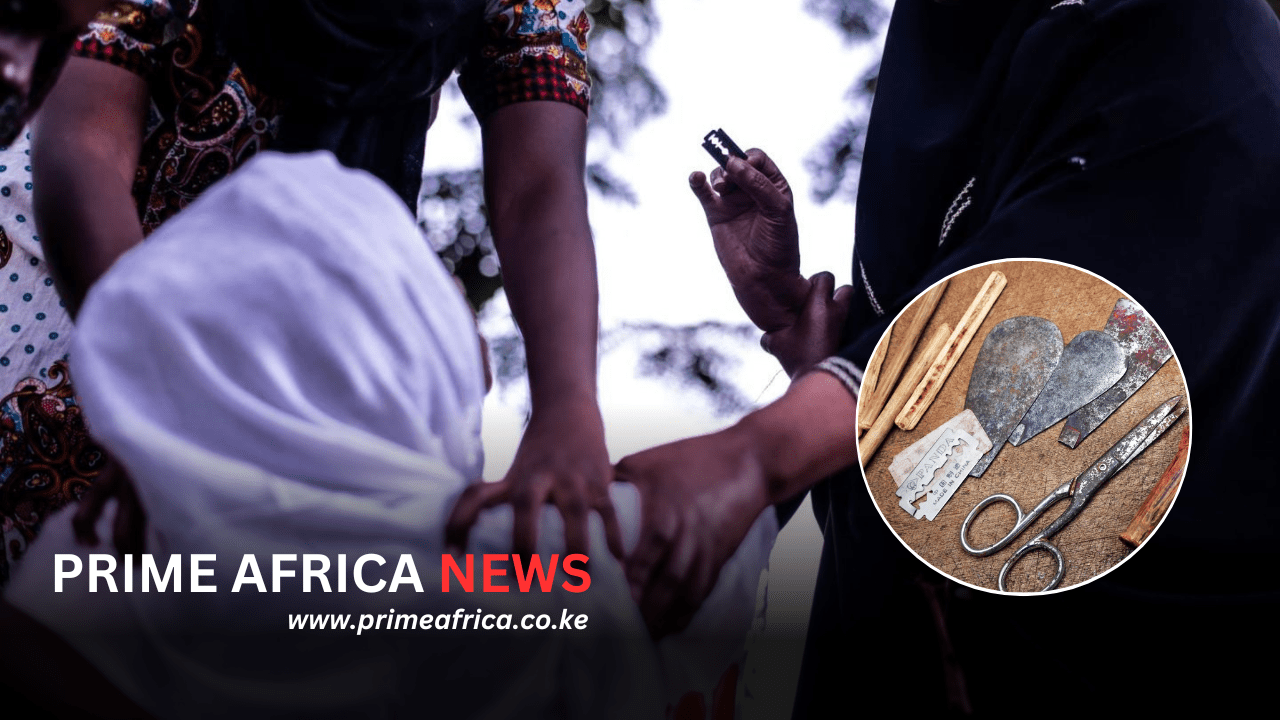

Civil society organisations across East Africa have welcomed a proposed regional law aimed at completely eliminating Female Genital Mutilation (FGM), describing it as a major milestone in the protection of the rights, health and dignity of women and girls.
In a joint statement, the HBCU Green Fund and Harambee House / Citizens for Environmental Justice praised the East African Community (EAC) Elimination of Female Genital Mutilation Bill, 2025, saying it represents a bold and necessary step towards outlawing the harmful practice and safeguarding those most at risk.
The groups emphasised that FGM has no medical benefits and causes lifelong physical and psychological harm, while violating fundamental human rights including bodily integrity, dignity and freedom from violence.
The proposed law applies to all EAC partner states — Kenya, Uganda, Tanzania, Rwanda, Burundi, South Sudan, the Democratic Republic of Congo and Somalia — and adopts a strict zero-tolerance approach. It criminalises FGM in all circumstances, declaring the practice illegal regardless of consent by a woman, parent or guardian.
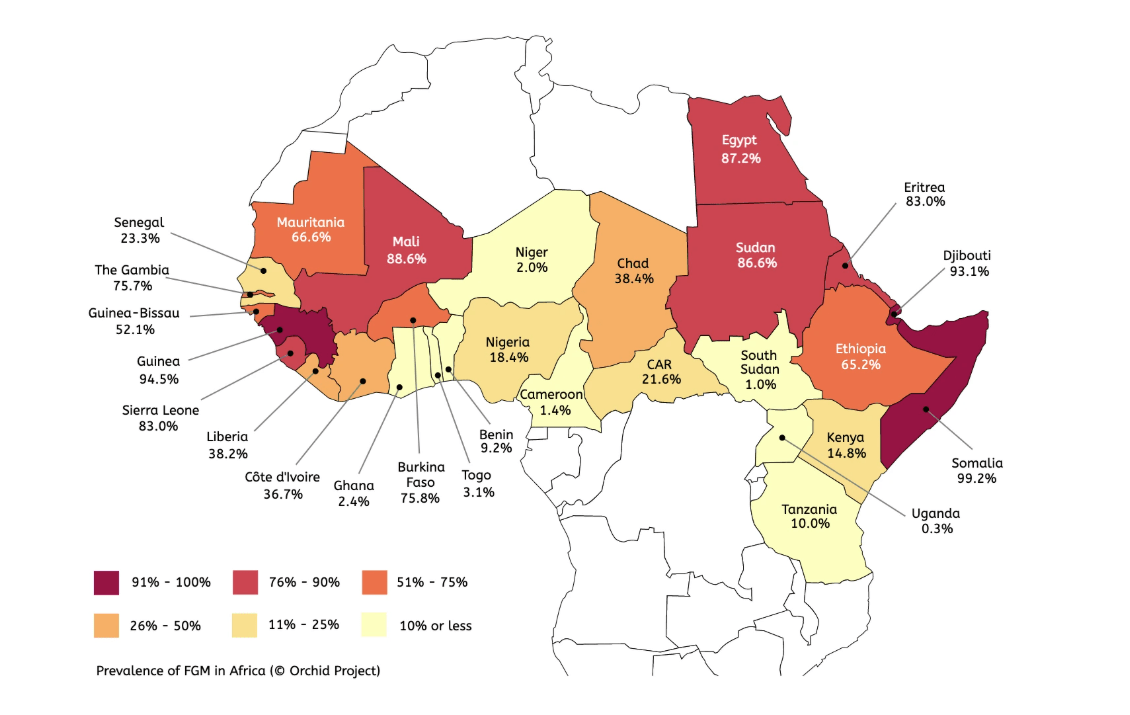
FGM/C is concentrated in at least 28 countries in a band that spans from West Africa to the Horn of Africa.
The prevalence of FGM/C varies widely across Africa – from as high as 99% (Somalia) and as low as 0.3% (Uganda). More importantly, FGM/C prevalence varies significantly within each country. FGM/C is a cultural practice particular to specific ethnic groups. These ethnic communities often spread across country borders. For example, Somali communities practice FGM/C in Somalia as well as in Kenya (especially the North East) and Ethiopia (especially in the East), while the Maasai community practice FGM/C in both Kenya and Tanzania.
Under the Bill, offenders face a minimum sentence of five years in prison or a substantial fine. Aggravated cases involving children, persons with disabilities, serious injury or death will attract life imprisonment. Parents, guardians and individuals who aid, finance, organise or facilitate FGM will also be held criminally liable.
The legislation further bans the medicalisation of FGM, warning that health professionals who perform or enable the practice will face severe penalties. At the same time, it protects doctors and health facilities that provide treatment, counselling and support services to survivors.
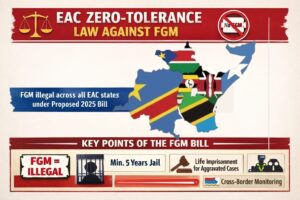
To curb cross-border FGM, EAC member states will be required to jointly monitor borders to prevent girls and women from being taken to neighbouring countries for the procedure. Courts will also be empowered to issue protection orders for individuals deemed to be at risk.
The Bill obliges teachers, health workers and community leaders to report suspected cases, while governments must ensure access to medical care, legal assistance and psychosocial support for victims. It also calls for sustained public education campaigns and school-based programmes to challenge harmful cultural practices.
Civil society groups have urged EAC lawmakers to fast-track the Bill and allocate adequate resources for its implementation and enforcement. They say eliminating FGM is critical to achieving justice, improving public health and advancing gender equality across the region.
The organisations noted that the proposed law aligns with regional, continental and global commitments to end harmful practices, including the target of eradicating FGM by 2030.
About The Author
