

NAIROBI, Kenya — Leaders of the United Alternative Government have strongly opposed the proposed National Infrastructure Fund Bill, 2026, raising concerns that the initiative could weaken financial oversight and expose Kenya to potential economic and national security risks.
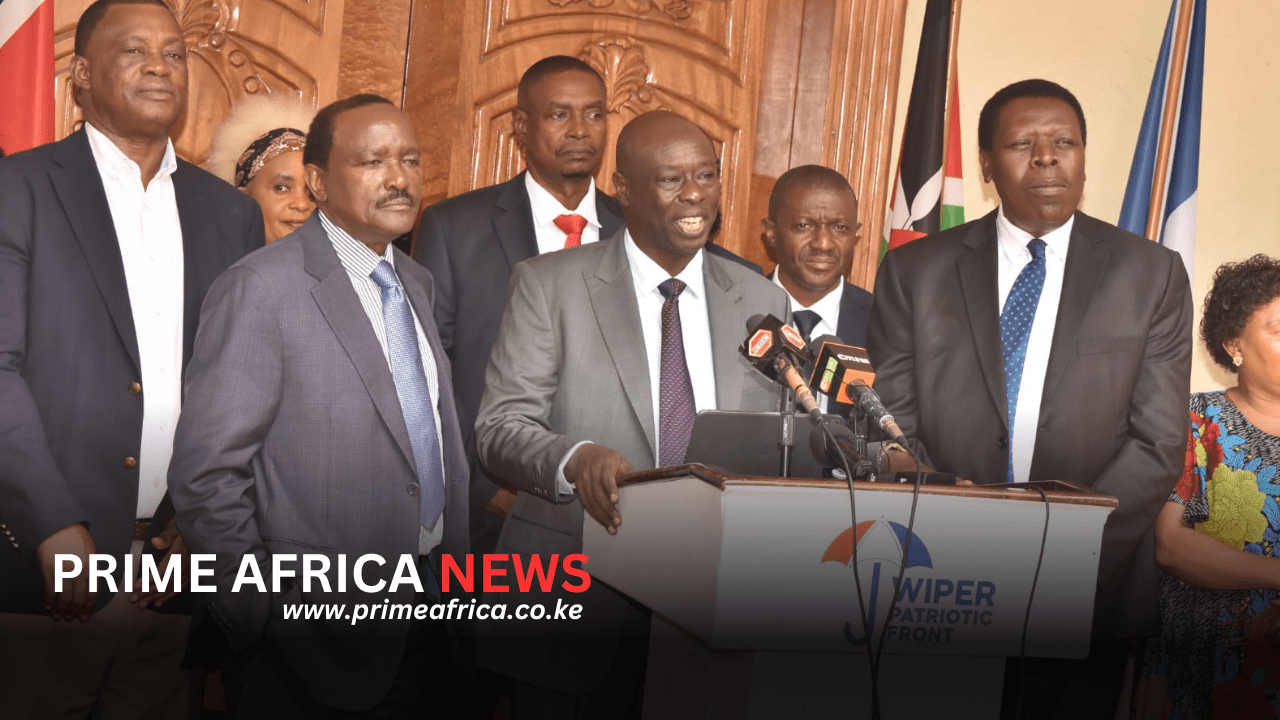
Addressing the media during a press conference at the SKM Command Center in Nairobi, opposition leaders including Kalonzo Musyoka, Rigathi Gachagua, Eugene Wamalwa and Justin Muturi accused the government of pursuing policies that could undermine transparency in the management of public resources.
The leaders rejected the proposed legislation outright, describing it as constitutionally questionable and potentially dangerous to Kenya’s public finance management system. According to the coalition, the proposed fund could evolve into an opaque financial vehicle through which billions of shillings are spent without adequate parliamentary scrutiny or public accountability.
Speaking during the briefing, Kalonzo Musyoka cautioned against making rushed decisions involving strategic national assets and public financial frameworks.
“Kenya must not mortgage its future through rushed financial decisions that lack transparency and constitutional grounding. Any attempt to dispose of strategic national assets or create funds that bypass accountability mechanisms must be stopped in the interest of the Kenyan people,” said Musyoka.
He emphasized that national development must be guided by transparency, accountability and strict adherence to constitutional safeguards designed to protect public resources.
The opposition leaders also raised alarm over reports that the government may consider selling part of its shareholding in Safaricom, one of the country’s most profitable telecommunications firms.
Rigathi Gachagua warned that disposing of government shares in the company could weaken Kenya’s control over critical digital infrastructure.
“Safaricom is not just a company; it is the backbone of Kenya’s digital economy and financial ecosystem. Selling government shares for short-term budget relief would be a grave mistake that could compromise national security and deny Kenyans long-term revenue from one of the country’s most successful enterprises,” said Gachagua.
The leaders also criticised Treasury Cabinet Secretary John Mbadi following his admission that he had misled Parliament regarding the legal status of the National Infrastructure Fund. They argued that such an admission raises serious concerns about transparency and accountability in the management of public finances.
According to the opposition, misleading Parliament on a matter involving billions of shillings undermines public trust and weakens confidence in institutions tasked with safeguarding the country’s economic stability.
The United Alternative Government leadership called for full parliamentary scrutiny, independent financial reviews and broader public participation before any major decisions involving national assets are undertaken.
They further demanded an immediate halt to any plans to dispose of state assets until transparent and lawful processes are firmly established, emphasizing that Kenya’s strategic resources must be protected for the benefit of both present and future generations.
About The Author
