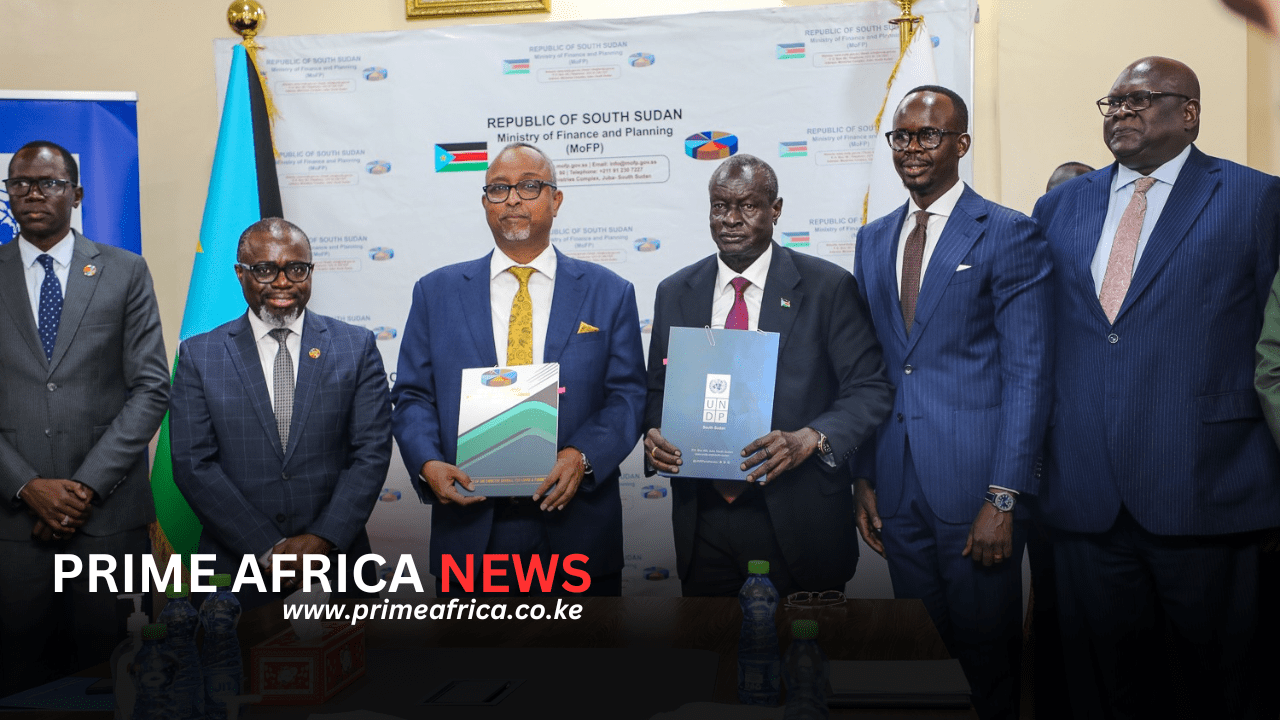

Juba, South Sudan – The Government of South Sudan has taken a significant step toward strengthening economic governance after the Ministry of Finance and Planning signed a five-year Public Finance Management Reform Strategy Support (PFMRSS) project with the United Nations Development Programme.
The 2026–2031 initiative marks a historic first for the country, becoming the first United Nations-backed project in South Sudan to be fully financed by the government itself — a move widely seen as a bold shift toward national ownership, accountability, and sustainable development.
Speaking during the signing ceremony in Juba, Undersecretary for Planning Benjamin Ayali Koyongwa described the agreement as a milestone in aligning public spending with national priorities.
“This demonstrates a strong commitment by the Government to lead reforms in public finance management while enhancing accountability and credibility,” he said. “Ultimately, this will translate into improved service delivery for our citizens.”
The PFMRSS project is designed to operationalize South Sudan’s Public Finance Management Concept Note and Roadmap, which was endorsed under Chapter Four of the Revitalized Agreement on the Resolution of the Conflict in South Sudan (R-ARCSS).
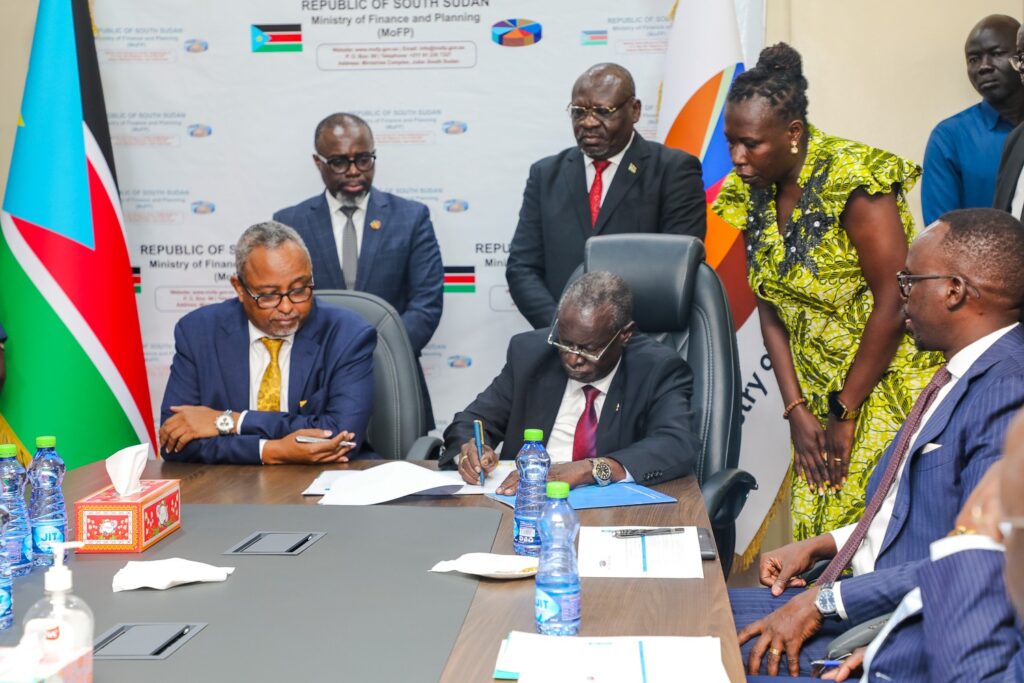
The initiative will focus on strengthening governance structures, including the PFM Oversight Committee, Technical Committee, and Working Group, ensuring coordinated implementation of eleven priority reform areas and key cross-cutting themes.
Among its core objectives are:
- Strengthening the PFM Secretariat in line with approved governance frameworks
- Enhancing coordination across reform institutions
- Building capacity within Ministries, Departments, and Agencies through training, mentoring, and knowledge-sharing
Minister of Finance and Planning Salvatore Garang Mabiordit emphasized the importance of government leadership in driving reforms.
“We are working with our partners, but the Government must lead these reforms,” he stated. “Stronger institutional coordination and capacity will improve planning, prioritization, and oversight of public resources.”
The United Nations Development Programme Resident Representative in South Sudan, Dr. Mohamed Abchir, underscored the broader impact of the initiative, noting that effective public finance systems are essential for restoring public trust and accelerating national development.
“Strengthening transparency and accountability will not only improve service delivery but also rebuild confidence in public institutions,” he said.
The PFMRSS project builds on progress made under the Governance and Economic Management Support (GEMS) programme (2019–2025) and earlier initiatives supported by regional partners, including the Intergovernmental Authority on Development (IGAD).
By reinforcing the central role of the PFM Secretariat, the project aims to deliver more predictable, efficient, and equitable public spending across government institutions.
Implementation will be carried out in close collaboration with national stakeholders, development partners, and technical experts, ensuring alignment with government priorities and maximizing long-term impact.
About The Author