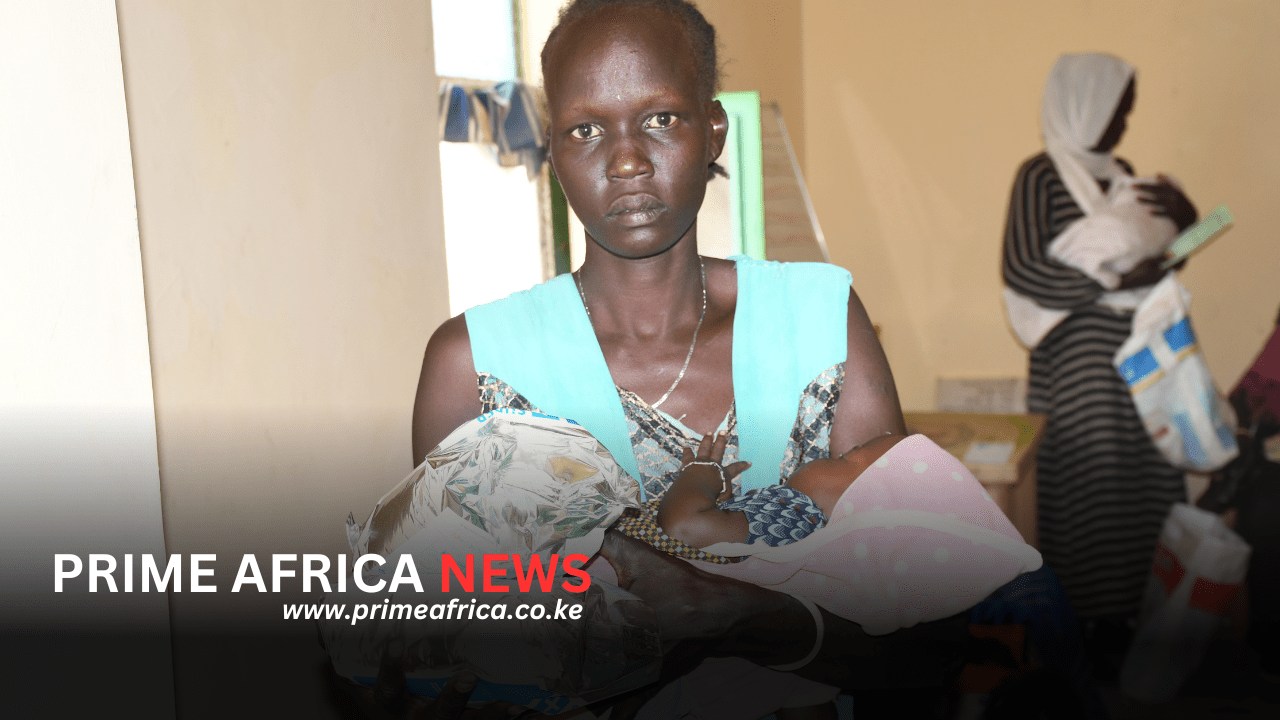

Renk, Upper Nile State – South Sudan — Rising cases of child malnutrition in Renk are exposing critical gaps in food assistance, despite scaled-up nutrition interventions targeting thousands of vulnerable families displaced by the Sudan conflict.
At Renk Transit Centre and surrounding host communities, refugees and returnees continue to face limited and inconsistent access to food. Health workers warn that the situation is directly fueling a steady increase in acute malnutrition, particularly among children under five.
Since the outbreak of the Sudan conflict (2023–present) in April 2023, Renk has become a major entry point for those fleeing violence. Thousands of families have crossed into South Sudan exhausted, often with no belongings, and in urgent need of humanitarian support. While nutrition services are available, persistent food insecurity continues to undermine recovery efforts.
Humanitarian partners led by UNICEF, in collaboration with GOAL and the State Ministry of Health, are delivering life-saving nutrition services with funding from European Commission Humanitarian Aid (ECHO). These interventions are being implemented at facilities such as Abukadra Primary Health Care Centre and Renk Transit Centre, targeting vulnerable women and children.
According to nutrition specialists, more than 1,200 children suffering from severe acute malnutrition are currently receiving treatment through outpatient therapeutic programmes, while over 3,500 children are enrolled in supplementary feeding initiatives. These include Ready-to-Use Therapeutic Food (RUTF), routine health monitoring, and caregiver nutrition counseling.
Community outreach has also expanded access to care. Trained volunteers, including mother-to-mother support groups and Boma Health Initiative workers, conduct screenings to identify malnourished children early and refer them for treatment.
However, progress remains fragile.
“I brought my child here when he was very sick,” said Nyakang Jok, a 27-year-old mother of three. “After treatment, he improved. But sometimes we come and find no supplies, and that discourages us.”
Like many others, Jok fled Sudan after months of instability. She described the harsh journey back to South Sudan and the difficult reality upon arrival.
“Back in Sudan, my child could eat regularly. Here, sometimes we manage only one meal a day,” she said.
Her story reflects a wider trend across the transit centre, where families depend on inconsistent humanitarian aid or informal work to survive. For many, nutrition treatment is the only reliable support.
Enduring Hardship: Renk Refugee Crisis Deepens as Sudan War Enters Third Year
Nyawail Gai, a mother of seven, shared similar concerns. Her child was admitted to Renk Civil Hospital in critical condition before being referred to a nutrition programme.
“I lost my husband during the Sudan crisis. Now I am alone with my children,” she said. “If there is no food at home, how can the child remain healthy?”
Her case highlights the heightened vulnerability of female-headed households with limited income opportunities.
For Sudanese refugee Najah Al Thiep, survival is a daily struggle. After fleeing Sudan while pregnant and losing her husband, she now supports her four children by working long hours in a local restaurant.
“Sometimes we eat once, sometimes not at all,” she said.
Her children, once enrolled in school in Sudan, have been out of education for months due to limited access to learning facilities in Renk.
Aid workers warn that prolonged stays in overcrowded transit centres are worsening vulnerability. Limited access to food, clean water, healthcare, and education continues to compound the crisis.
“While we are treating thousands of children, we need sustained funding to maintain supplies and expand services,” said a UNICEF nutrition specialist in the area.
Experts caution that treating malnutrition without addressing underlying issues—such as food insecurity, poor sanitation, and lack of clean water—offers only temporary relief. Without a comprehensive response, children remain at high risk of relapse.
Humanitarian agencies are calling for increased and sustained international funding to address both immediate nutrition needs and the broader drivers of food insecurity. They stress the importance of integrating food assistance, healthcare, and livelihood support to build long-term resilience.
The crisis in Renk forms part of a wider regional emergency, with more than 13 million people displaced by the ongoing Sudan conflict, including over 1.3 million who have fled into South Sudan.
As arrivals continue, pressure on already strained resources in border areas like Renk is expected to intensify. Aid agencies warn that without urgent and coordinated global support, conditions could deteriorate further.
For families like those of Jok, Gai, and Najah, the future remains uncertain. While nutrition programmes are saving lives, they are not enough to address the daily reality of hunger.
Without stronger investment in food assistance and long-term recovery, humanitarian actors warn that child malnutrition rates will continue to rise—putting thousands more young lives at risk.
About The Author