
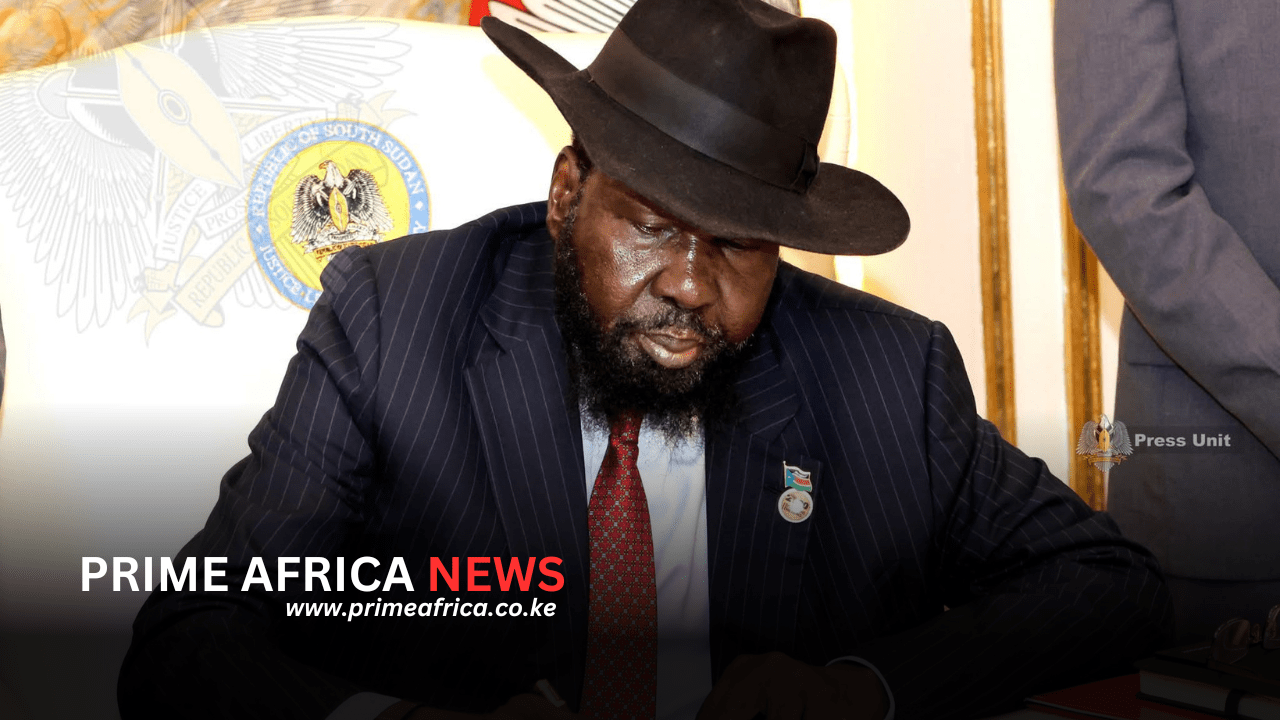

JUBA, South Sudan — Salva Kiir has signed into law the East African Community (EAC) Act 2026, a landmark piece of legislation that formally integrates the country’s regional obligations into its domestic legal system and signals renewed momentum toward economic and political cooperation in East Africa. The new law domesticates the Treaty Establishing the East African Community and its protocols, giving them full legal force within South Sudan. This means the country’s commitments under the East African Community (EAC) are now binding and enforceable by national institutions, including courts and government agencies.
The signing ceremony in Juba brought together senior government officials and legislators, underscoring the political significance of the move. By granting presidential assent, President Kiir completed the final constitutional step required to transform the legislation into law.
“This Act gives full legal effect to South Sudan’s obligations under the Treaty, making it an integral part of the country’s legal framework,” the legislation states.
South Sudan Rejects UN Report, Cites Sovereignty Concerns at Security Council
Analysts view the enactment as a decisive step in accelerating South Sudan’s long-delayed integration into the EAC. Although the country joined the bloc in 2016 as its sixth member, progress has been slow due to gaps in legal alignment and institutional capacity.
The new law is expected to bridge those gaps by enabling the implementation of key regional frameworks such as the Customs Union and Common Market protocols—cornerstones of the EAC integration agenda.
These frameworks aim to ease cross-border trade by eliminating tariffs on goods produced within member states and reducing non-tariff barriers. For South Sudan, which relies heavily on imports and faces persistent infrastructure challenges, the changes could lower the cost of goods and improve supply chain efficiency.
Government officials say aligning national laws with EAC standards will boost investor confidence and open new economic opportunities. By harmonizing regulations, South Sudan is positioning itself to better access regional markets and attract foreign direct investment.
The EAC currently includes member states such as Kenya, Uganda, Tanzania, Rwanda, Burundi, and the Democratic Republic of Congo—a combined market offering significant trade and investment potential.
Economists highlight the Customs Union as particularly transformative. By standardizing external tariffs and streamlining customs procedures, it could make it easier for businesses to operate across borders, improving efficiency and competitiveness.
South Sudan Rejects Mandate Extension Claims, Reaffirms December 2026 Elections
The law also carries diplomatic weight. In recent years, delays in implementing EAC commitments had raised concerns among partner states about South Sudan’s pace of integration. The enactment is now being seen as a strong signal of renewed political will and commitment to regional obligations.
Legal experts emphasize that domestication is essential for treaty enforcement. Without it, international agreements often remain aspirational. The EAC Act 2026 ensures that treaty provisions can now be directly applied within South Sudan’s legal system.
Beyond trade, the legislation opens the door to deeper cooperation in sectors such as infrastructure, education, health, security, and environmental management—key pillars of the EAC’s broader integration agenda.
Despite the optimism, significant hurdles remain. Implementing the treaty’s provisions will require strong institutions, sustained funding, and political stability—areas where South Sudan continues to face challenges.
Stakeholders are also calling for greater public awareness and private sector engagement to ensure businesses can fully benefit from the new regulatory environment. Civil society groups have welcomed the law but stress the importance of transparency and accountability in its implementation.
The passage of the EAC Act 2026 comes amid renewed momentum for regional integration across East Africa, as the bloc continues expanding and pursuing deeper cooperation, including long-term ambitions of a political federation.
For President Kiir’s administration, the move underscores a strategic shift toward stronger regional engagement, potentially enhancing South Sudan’s economic prospects and diplomatic standing.
While the real impact will depend on how effectively the law is implemented, the enactment marks a pivotal milestone—embedding regional integration at the heart of South Sudan’s legal and economic future.
About The Author

Ginaba Lino
Ginaba Lino is a dedicated journalist with over seven years of experience in media industry with Proven track record of delivering standard journalism across a variety of platforms, including print, online, and broadcast. Ganiba is Prime Africa’s Official Correspondent based in Juba, South Sudan.
