
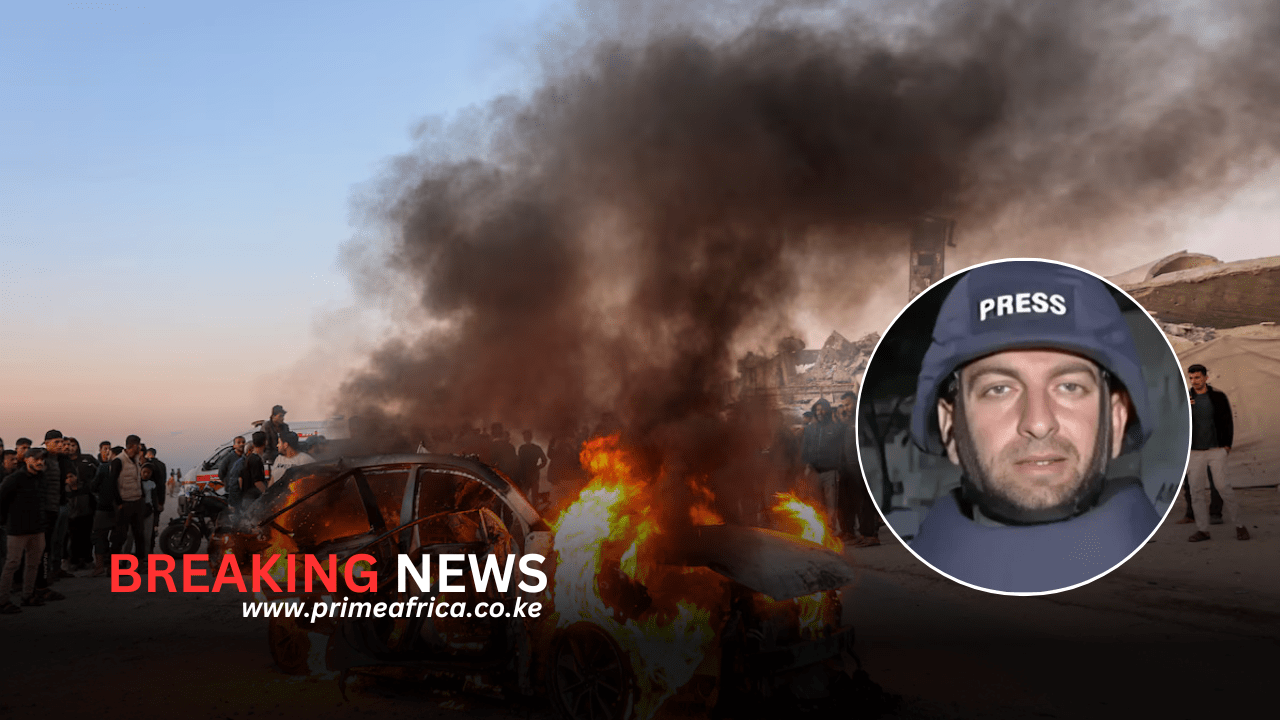

A journalist working for Al Jazeera Media Network has been killed in the Gaza Strip, further escalating concerns over the safety of media workers in conflict zones.
[spacer height=”20px”]
Mohammed Wishah, a correspondent for Al Jazeera Mubasher, died on Wednesday after an Israeli drone strike hit the vehicle he was travelling in along al-Rashid Street, a key coastal road west of Gaza City. The strike reportedly caused the car to burst into flames, according to sources cited by the network.
In a strongly worded statement, Al Jazeera condemned the killing as a “heinous crime” and a “flagrant violation of international laws and norms,” accusing Israeli forces of deliberately targeting journalists. The network emphasized that Wishah, who joined in 2018, had been covering the war since its onset.
[spacer height=”20px”]
According to the Gaza Government Media Office, at least 262 journalists have been killed since the outbreak of hostilities following the October 2023 Gaza war. The office described the killing as part of a “systematic policy” aimed at silencing media coverage of the conflict.
[spacer height=”20px”]
The latest incident comes amid continued violence despite a US-brokered ceasefire, with hundreds of casualties still being reported in recent months.
[spacer height=”20px”]
Al Jazeera’s Gaza-based reporter, Ibrahim al-Khalili, noted that Wishah’s death on a major public road highlights the worsening security situation and ongoing violations of the ceasefire agreement.
[spacer height=”20px”]
Three Journalists Killed in Israeli Strike as Calls for Media Protection Reach Fever Pitch
[spacer height=”20px”]
The dangers facing journalists are not confined to Gaza. In neighboring Lebanon, at least three journalists have recently been killed amid escalating cross-border hostilities.
[spacer height=”20px”]
Press freedom organizations warn that these incidents point to a broader regional pattern where journalists are increasingly being caught in the line of fire—or, in some cases, deliberately targeted—while reporting on armed conflicts.
[spacer height=”20px”]
International bodies, including the International Federation of Journalists and the Arab Journalists Union, have been urged to take stronger action in condemning attacks on media workers and pushing for accountability.
[spacer height=”20px”]
[spacer height=”20px”]
Press freedom advocates worldwide are intensifying campaigns to classify the targeting of journalists in war zones as war crimes prosecutable under international law.
[spacer height=”20px”]
Among those leading advocacy efforts is Kenyan journalist Bill Otieno, who has been actively engaging global platforms to call for the protection of journalists in conflict areas. Otieno has urged world leaders and international institutions to adopt binding measures that ensure the safety of war correspondents and hold perpetrators accountable.
[spacer height=”20px”]
The broader humanitarian toll in Gaza continues to rise. Health authorities report that more than 72,000 people have been killed and over 171,000 injured since October 2023. Even after the ceasefire took effect, at least 733 additional deaths and more than 2,000 injuries have been recorded.
[spacer height=”20px”]
The killing of Mohammed Wishah underscores growing fears that journalists are becoming direct targets in modern warfare. Media organizations and rights groups are now calling for urgent international intervention to safeguard press freedom and ensure that those documenting conflicts are protected—not persecuted.
[spacer height=”20px”]
As the conflict grinds on, the demand for accountability and protection of journalists continues to intensify, with global attention increasingly focused on the cost of reporting from the frontlines.
[spacer height=”20px”]
About The Author
