
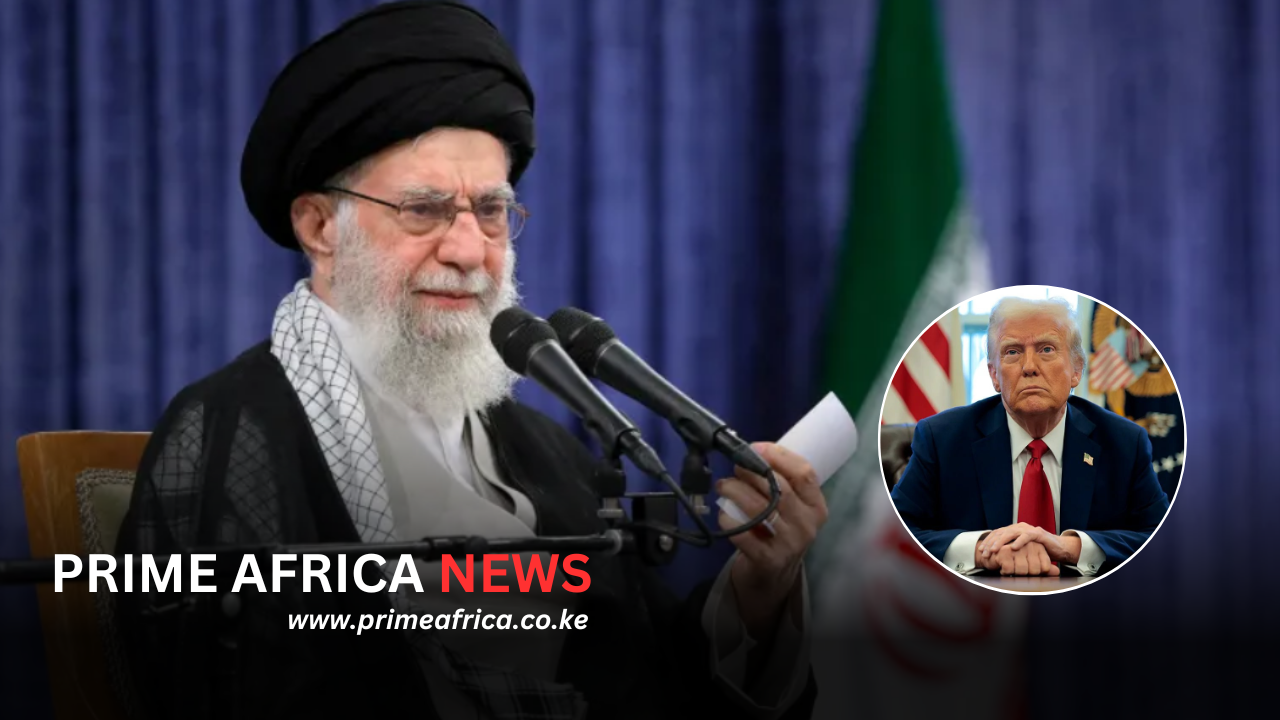

Summary
- Latest Development
- President Trump sceptical of European talks
- Israel’s Foreign Minister Saar says Iran is ‘not negotiating honestly’
Iran declared on Friday it would not engage in discussions about its nuclear program while under military attack by Israel, as European diplomats sought to revive negotiations and the United States deliberated potential involvement in the escalating conflict.
[spacer height=”20px”]
Military Escalation Continues
A week into its offensive, Israel reported striking dozens of military targets across Iran, including missile production facilities, a research center allegedly linked to nuclear weapons development in Tehran, and bases in western and central Iran.
[spacer height=”20px”]
Iranian Foreign Minister Abbas Araqchi ruled out talks with the U.S. “until Israeli aggression ceases,” but later arrived in Geneva for discussions with European counterparts aimed at reviving diplomatic efforts.
[spacer height=”20px”]
U.S. President Donald Trump signaled reluctance to pressure Israel into de-escalation, stating, “If somebody is winning, it’s a little harder to make that request.” He dismissed Europe’s mediation role, asserting, “Iran doesn’t want to speak to Europe. They want to speak to us.”
[spacer height=”20px”]
Trump also contradicted U.S. intelligence assessments, insisting Iran possesses nuclear weapons capability—a claim disputed by his own officials.
[spacer height=”20px”]
Cross-Border Strikes Intensify
Israel’s military confirmed fresh strikes on missile launch sites in western Iran, while Iranian state media reported explosions in Khuzestan province, killing at least four. In Tehran, an airstrike damaged a residential-commercial building, injuring five.
[spacer height=”20px”]
Iran retaliated with missile attacks on Beersheba and Haifa, damaging an Ottoman-era mosque and government buildings. Haifa, home to Israel’s key seaport and naval base, remains a high-value target.
[spacer height=”20px”]
Nuclear Risks and Global Alarm
The head of the International Atomic Energy Agency (IAEA), Rafael Grossi, warned that attacks on nuclear facilities risked catastrophic radioactive fallout. This followed confusion over whether Israel had struck Iran’s Bushehr nuclear plant, which Tehran denied.
[spacer height=”20px”]
U.N. Secretary-General António Guterres urged restraint, cautioning the conflict could “ignite a fire no one can control.” Russia and China called for immediate de-escalation.
[spacer height=”20px”]
Diplomatic Stalemate
A senior Iranian official told Reuters Tehran was open to discussing uranium enrichment limits but would reject any demand for “zero enrichment,” particularly under military pressure.
[spacer height=”20px”]
Casualties Mount
Per U.S.-based HRANA, Israeli strikes have killed 639 in Iran, including senior military figures and nuclear scientists. Israeli authorities report 24 civilian deaths from Iranian missile attacks.
[spacer height=”20px”]
As the conflict enters its second week, global powers scramble to prevent a wider war, with the U.S. expected to decide on intervention within two weeks.
[spacer height=”20px”]
About The Author

