
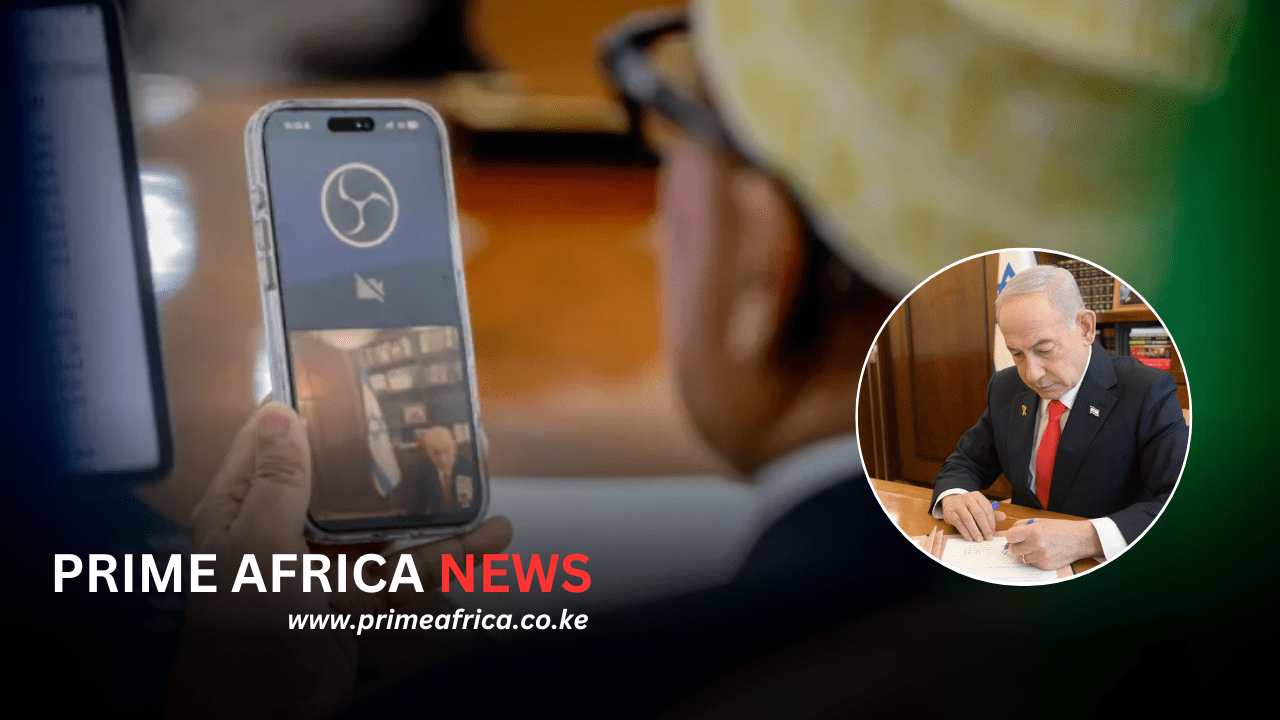

Nairobi, Kenya — Israel has become the first country in the world to formally recognise Somaliland as a sovereign state, marking a historic diplomatic breakthrough for the self-declared republic and setting off sharp reactions across the Horn of Africa and beyond.
Israeli Prime Minister Benjamin Netanyahu announced on Friday that Israel and Somaliland had signed a joint declaration establishing full diplomatic relations, describing the agreement as being “in the spirit of the Abraham Accords” — the US-brokered deals that normalised ties between Israel and several Arab states.
Netanyahu congratulated Somaliland President Abdirahman Mohamed Abdullahi, popularly known as Abdirahman Cirro, during a video call, praising his “leadership and commitment to promoting stability and peace” and extending an invitation for an official visit to Israel.
Israeli Foreign Minister Gideon Saar said the decision followed more than a year of intensive dialogue between the two governments and was based on a joint resolution by Netanyahu and Cirro to establish full diplomatic relations. These will include the exchange of ambassadors and the opening of embassies in Tel Aviv and Hargeisa.
“We will work together to promote relations between our countries and nations, regional stability and economic prosperity,” Saar said, adding that he had instructed his ministry to immediately institutionalise cooperation across multiple sectors.
Somalia Condemns Recognition
Somalia reacted swiftly and angrily to the announcement, describing Israel’s move as an “attack on Somalia’s sovereignty” and an “unlawful action” under international law.
In a statement issued hours after Israel’s declaration, Mogadishu reaffirmed that Somaliland remains an “inseparable part” of Somalia. Somaliland declared independence in 1991 following the collapse of Somalia’s central government, but until now had failed to secure recognition from any United Nations member state.
Somalia’s Foreign Minister Abdisalam Abdi Ali held an emergency call with his counterparts from Egypt, Türkiye and Djibouti, during which the four countries reiterated their support for Somalia’s unity and territorial integrity.
Egypt’s Foreign Ministry warned that recognising the independence of a region within a sovereign state sets a “dangerous precedent” in violation of the UN Charter.
“Respect for the unity, sovereignty and territorial integrity of states is a fundamental pillar of the stability of the international system and must not be violated or circumvented under any pretext,” the ministry said.
A Historic Moment for Somaliland
President Cirro welcomed Israel’s decision as a “historic moment” and said Somaliland was ready to join the Abraham Accords framework.
“This recognition marks the beginning of a strategic partnership that advances mutual interests, strengthens regional peace and security, and delivers shared benefits to all stakeholders,” Cirro said.
The recognition represents a dramatic shift in Somaliland’s fortunes after more than three decades of diplomatic isolation. While Somalia descended into prolonged instability following the fall of dictator Siad Barre, Somaliland stabilised by the late 1990s, building its own political institutions, currency, flag and parliament.
However, the region’s eastern areas remain contested by communities that do not support secession from Somalia.
Regional and Global Implications
In recent years, Somaliland has deepened ties with the United Arab Emirates, a signatory to the Abraham Accords, and with Taiwan, as part of its push for international legitimacy.
Prominent figures within US President Donald Trump’s Republican Party, including Senator Ted Cruz, have openly lobbied for Somaliland’s recognition. Trump himself hinted at movement on the issue in August, telling reporters at the White House: “Another complex one, but we’re working on that one, Somaliland.”
Despite the signals, the United States has not formally changed its long-standing policy supporting Somalia’s territorial integrity.
The announcement also comes amid declining US engagement with Somalia and renewed controversy following reports earlier this year linking possible recognition of Somaliland to proposals involving the forced relocation of Palestinians from Gaza — claims that sparked regional outrage.
The foreign ministers of Egypt, Türkiye, Somalia and Djibouti jointly rejected any such plans, reaffirming their opposition to the displacement of Palestinians.
A Precedent in a Fragmented State?
Analysts say Israel’s recognition could have far-reaching consequences inside Somalia, which operates a federal system granting significant autonomy to its member states.
Jethro Norman, a Somalia expert at the Danish Institute for International Studies, said it remains unclear whether other countries will follow Israel’s lead, but warned the move could “embolden other centrifugal forces” in an already fragmented political landscape.
Two key federal states, Puntland and Jubaland, have recently withdrawn from Somalia’s federal framework amid constitutional and electoral disputes.
In a post on X, Puntland’s Interior Minister Juha Farah appeared to welcome the development, suggesting it validated a strategic, long-term approach.
“Basically, you already have a series of de facto states, and Israel’s message is that if you provide strategic value, recognition becomes transactional rather than principled,” Norman observed.
Uncertain Road Ahead
In 2024, Ethiopia briefly pursued a controversial pact with Somaliland, offering recognition in exchange for access to the sea, before retreating under intense diplomatic pressure.
Whether Israel’s bold move will open the door for wider international recognition of Somaliland — or deepen regional tensions — remains an open question. What is clear is that the decision has fundamentally altered the diplomatic landscape of the Horn of Africa, with implications likely to reverberate far beyond the region.
About The Author

