
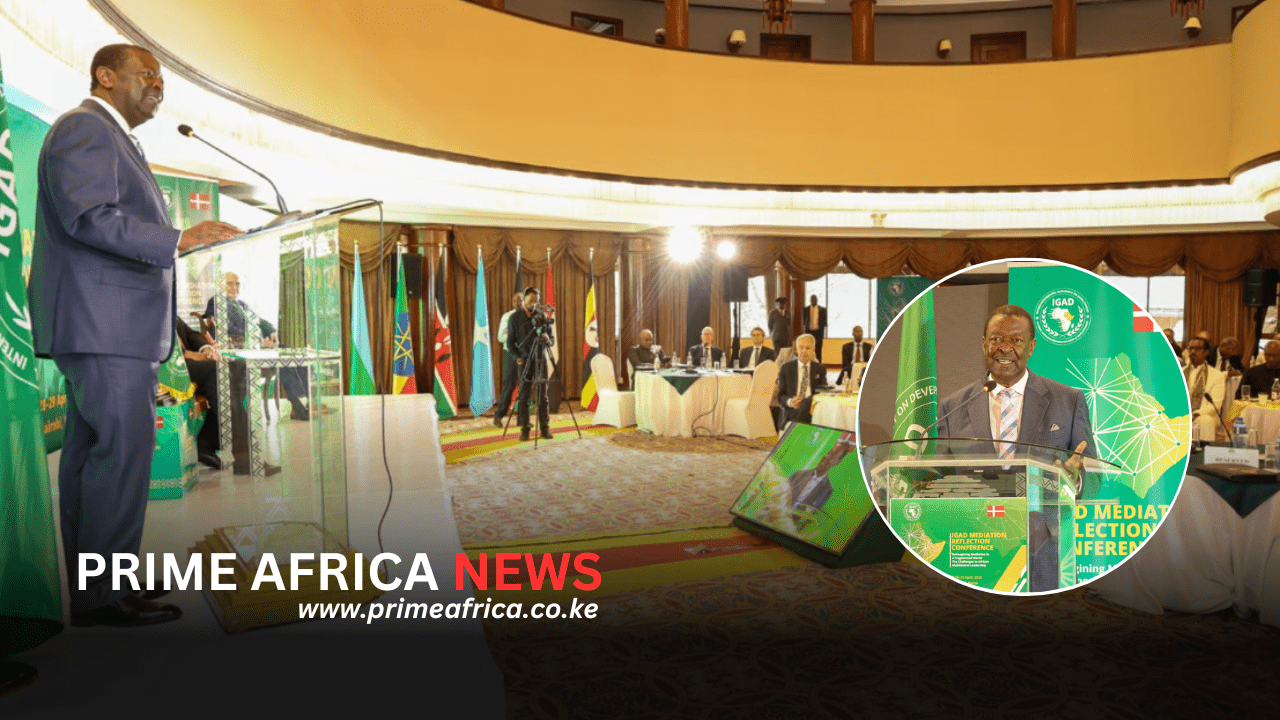

NAIROBI, Kenya – Prime Cabinet Secretary Musalia Mudavadi has raised alarm over what he described as the growing commercialization and privatization of peace initiatives across the globe, warning that mediation efforts are increasingly being treated as business transactions rather than genuine attempts to restore peace and stability.
Speaking at the ongoing IGAD Mediation Reflection Conference in Nairobi, Mudavadi said the trend is eroding the core values of diplomacy and undermining humanity’s collective responsibility to safeguard lives.
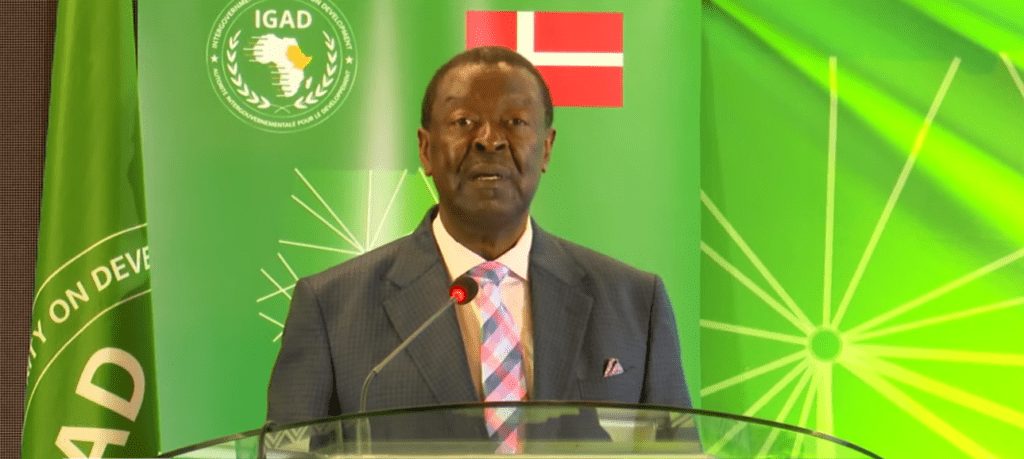
He noted that some mediation processes have shifted away from resolving conflicts and instead evolved into platforms for transactional negotiations.
“We are seeing an emerging trend where factions are turning into arbitrators of transactions instead of genuinely pursuing efforts that will restore peace and stability in the affected nations and regions,” he said.
Mudavadi further warned that the traditional understanding of sovereignty is being redefined in ways that challenge the independence of nations.
“We are now seeing sovereignty facing a new definition other than the description of a self-governing state independent of outside control,” he added.
The Prime CS urged African leaders to rethink and adapt mediation strategies to suit the continent’s realities, emphasizing the need for more flexible and responsive frameworks that address the unique nature of African conflicts.
He observed that rapidly shifting global dynamics and increasing pressure on multilateral institutions are affecting the coherence, predictability, and effectiveness of conflict resolution mechanisms.
According to Mudavadi, African-led solutions remain critical in addressing the continent’s persistent conflicts, particularly in the Horn of Africa, where protracted crises and fragmented actors continue to test traditional peacebuilding approaches.
“Regional cooperation, political transition, and humanitarian diplomacy should continue to anchor and enrich our collective efforts for peace and stability,” he said.
Mudavadi stressed that fragmentation and duplication among stakeholders weaken collective efforts in conflict resolution and called for stronger coordination between regional and continental bodies.
“African ownership in addressing African conflicts remains essential in ensuring legitimacy, sustainability, and long-term success,” he noted.
He underscored the need for a harmonized approach anchored on Intergovernmental Authority on Development leadership to strengthen peace efforts in the Horn of Africa.
IGAD Calls for Bold Rethink of Peace Mediation as Global Order Shifts
The Prime CS also cautioned against undermining African institutions such as the African Union and IGAD, saying they occupy a strategic and irreplaceable role in the continent’s conflict resolution architecture.
“It is disturbing to see the people who tend to discredit African institutions like the AU being Africans themselves,” he said.
He criticized the tendency to reject proposals developed by African institutions, only for the same ideas to be accepted when presented by external actors.
“This must stop,” Mudavadi asserted.
While acknowledging the role of international partners in regional peace initiatives, he emphasized that such contributions should complement—not replace—Africa-led mechanisms.
“Safeguarding the integrity of African-led mediation requires ensuring that external engagement is aligned with, and advances, our collective objectives,” he said.
Mudavadi also highlighted the economic cost of conflict, noting that Africa’s vast natural resources remain underutilized due to instability.
He cited gas reserves in Tanzania and Mozambique, as well as oil reserves in Sudan, arguing that continued conflicts prevent the continent from harnessing its full economic potential.
“Africa has all that is needed to make the continent self-sustaining, but the persistence of conflicts draws back the gains that the continent could achieve,” he said.
He added that while global crises continue to disrupt international supply chains, Africa has yet to fully capitalize on its own reserves due to inadequate coherence in addressing regional conflicts.
“Africa values and welcomes the support of international partners; however, such support should remain complementary and supplementary, not foundational,” he concluded.
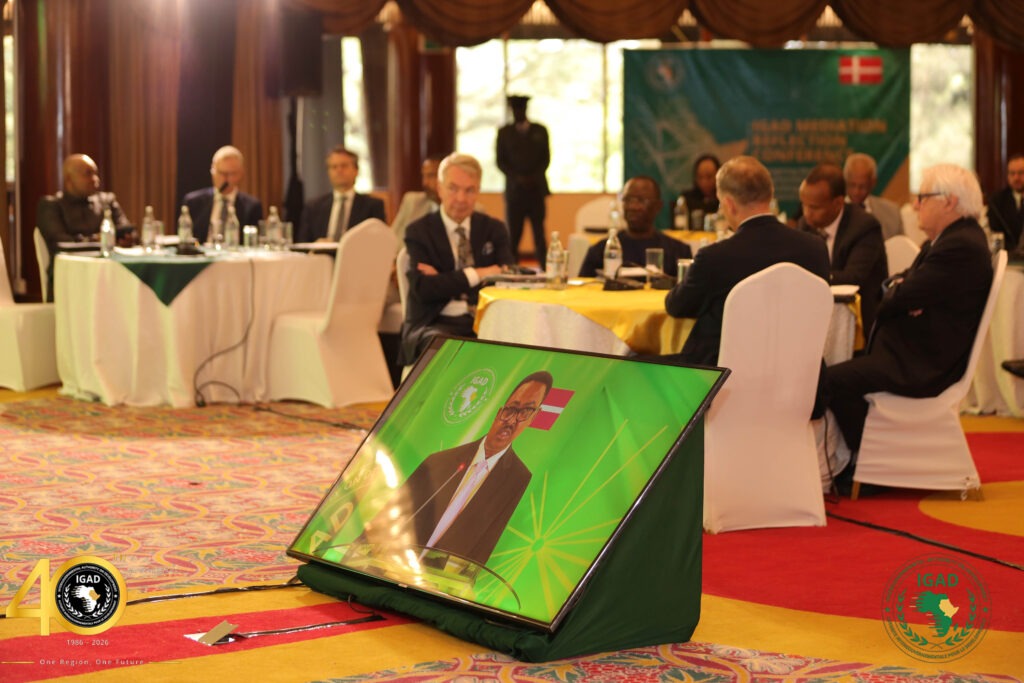
The conference was attended by Workneh Gebeyehu, Mohamed Belaiche, and former Sudan Prime Minister Abdalla Hamdok, among other distinguished leaders.
