
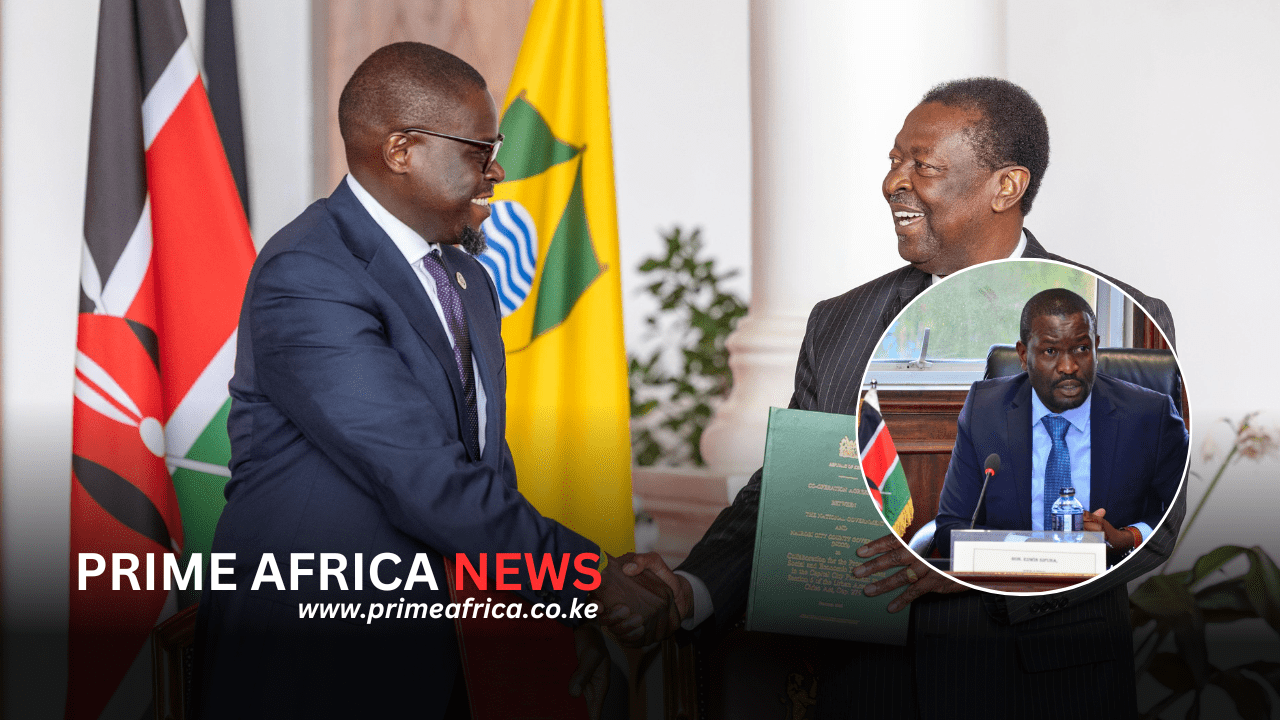

Nairobi, Kenya — Nairobi is set to receive KSh80 billion under a new cooperation framework between the national government and the Nairobi City County Government, in what is being described as one of the largest intergovernmental financing arrangements in recent years.
[spacer height=”20px”]
The funds — nearly four times the county’s current allocation — are earmarked for critical infrastructure and service delivery projects aimed at improving the capital’s urban systems and quality of life.
[spacer height=”20px”]
Major Infrastructure Investments
[spacer height=”20px”]
According to the framework, the allocation will support key sectors, including:
-
KSh3.7 billion for modernization of street lighting
-
KSh1.5 billion for transformers to strengthen last-mile electricity connectivity
-
KSh5 billion for water treatment and supply
-
KSh9 billion for construction of a 27-kilometre sewer line in the northern corridor
-
KSh4 billion for waste management improvements
[spacer height=”20px”]
The investment is expected to address longstanding infrastructure gaps in Nairobi, East Africa’s largest urban economy and a regional hub for business, diplomacy, and innovation.
[spacer height=”20px”]
However, Edwin Sifuna has called for the suspension of the agreement, arguing that the process violates the spirit and letter of Kenya’s Constitution on devolution.
[spacer height=”20px”]
In a statement released Wednesday, Sifuna faulted the absence of public participation prior to the signing of the agreement. He also criticized the 14-day window set aside for public input, describing it as inadequate for meaningful civic engagement in a capital city of Nairobi’s size and complexity.
[spacer height=”20px”]
The senator further questioned a clause limiting public participation to amendments, arguing that it presumes acceptance of the deal and denies residents the opportunity to reject it outright.
[spacer height=”20px”]
Attention has also turned to the steering committee overseeing implementation. The committee is chaired by Prime Cabinet Secretary Musalia Mudavadi, with Nairobi Governor Johnson Sakaja serving as vice chair.
[spacer height=”20px”]
Sifuna argues that the majority of committee members are drawn from the national government, raising concerns about balance and the autonomy of the county government.
[spacer height=”20px”]
While acknowledging Nairobi’s strategic importance as Kenya’s capital, the senator maintains that constitutional mechanisms already exist to channel additional resources to counties without direct national government control over devolved functions.
[spacer height=”20px”]
As an alternative, Sifuna proposes that national government agencies settle outstanding debts owed to the county — estimated at over KSh100 billion — to enable reinvestment in local projects and clearance of pending bills.
[spacer height=”20px”]
He has also called for:
-
Full transfer of devolved functions to counties
-
Dissolution of the Kenya Urban Roads Authority and Kenya Rural Roads Authority
-
Direct channeling of road construction funds to county governments in line with devolution principles
[spacer height=”20px”]
Sifuna has warned that if the agreement proceeds unchanged, he will pursue all legal avenues available, including formally tabling the matter before the Senate.
[spacer height=”20px”]
The unfolding dispute adds a new dimension to Kenya’s ongoing national conversation on devolution, intergovernmental relations, and the balance of power between county administrations and the central government
[spacer height=”20px”]
As the debate intensifies, the fate of the KSh80 billion framework may shape not only Nairobi’s development trajectory but also the future of intergovernmental financing models across Kenya.
[spacer height=”20px”]
About The Author

