
South Sudan’s prominent civil society activist, Edmond Yakani, has warned that the country risks violating its own electoral laws and undermining the credibility of the planned December 2026 elections unless political leaders urgently address legal, financial and security challenges facing the electoral process.
[spacer height=”20px”]
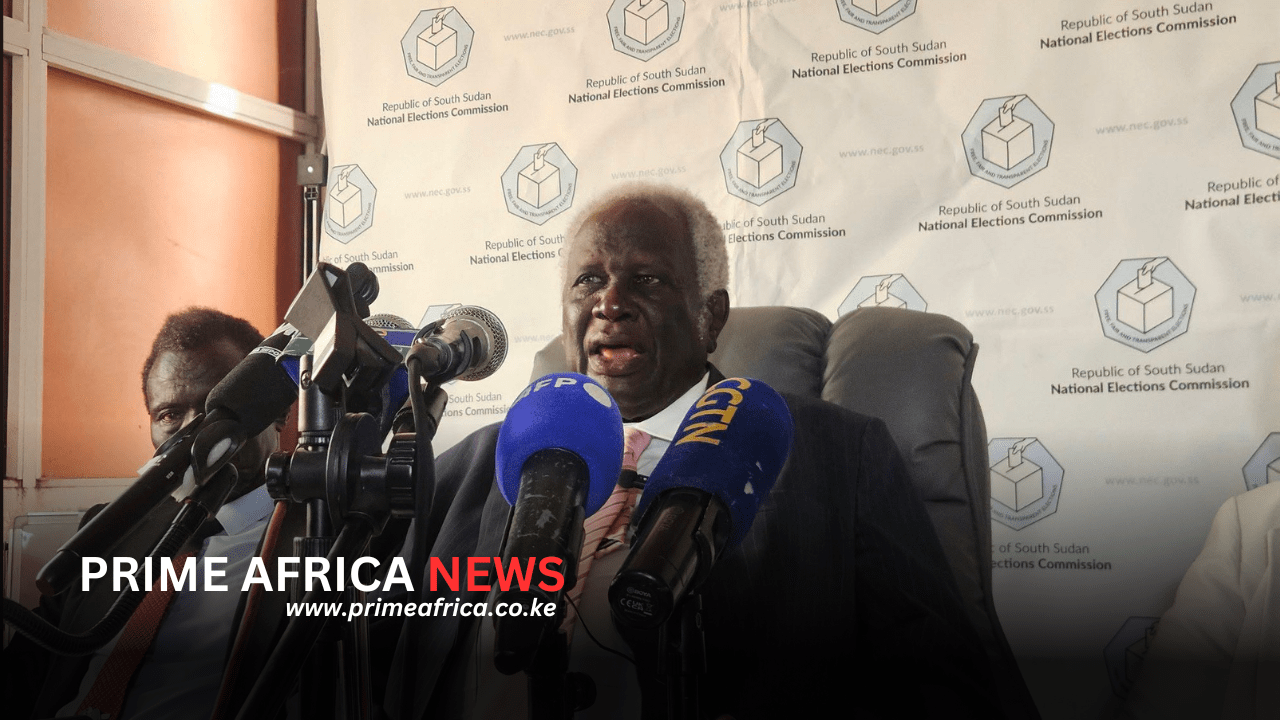
Yakani, the Executive Director of the Community Empowerment for Progress Organization (CEPO), made the remarks on Monday after the National Elections Commission (NEC) officially announced that South Sudan’s first-ever general elections will be held on December 22, 2026, in accordance with legal requirements that require the polling date to be declared six months in advance.
[spacer height=”20px”]
“We still see serious chances of violation of the electoral law if the political leadership fails to demonstrate commitment, provide timely funding to the Electoral Commission and fully recommit to the implementation of the peace agreement,” Yakani said.
[spacer height=”20px”]
The announcement marks a significant milestone in South Sudan’s political transition, coming nearly 15 years after the country gained independence and amid repeated delays in implementing key provisions of the 2018 Revitalized Agreement on the Resolution of the Conflict in South Sudan (R-ARCSS).
[spacer height=”20px”]
Yakani welcomed the commission’s compliance with the law in announcing the polling date, but expressed concern over the absence of a final voter registration list, which he said should have been available on the same day.
[spacer height=”20px”]
“The declaration of the election date is an important legal requirement that has now been fulfilled. However, the lack of a final voter register raises serious concerns about the preparedness of the electoral process.”
[spacer height=”20px”]
The civil society leader noted that the December 22, 2026 election date stems from commitments made by the parties to the peace agreement under a September 18, 2024 resolution that ruled out any further extension of the transitional period and pledged that elections would proceed as scheduled.
[spacer height=”20px”]
Yakani identified legal inconsistencies as one of the most pressing challenges facing the electoral process.
[spacer height=”20px”]
According to CEPO, South Sudan could face difficulties conducting elections using constituency boundaries established in 2010 while operating under the amended National Elections Act of 2023, which provides for a parliament of 332 seats, compared to the 204-seat structure reflected in the older constituency framework.
[spacer height=”20px”]
He urged lawmakers to address these legal gaps urgently to strengthen the Electoral Commission’s ability to conduct elections in accordance with the law.
[spacer height=”20px”]
“Legal clarity is required. The legislature must act to resolve these challenges and create the minimum legal conditions necessary for credible elections.”
[spacer height=”20px”]
He further warned that the elections are taking place within the broader context of the implementation of the 2018 peace agreement, which continues to face significant obstacles.
[spacer height=”20px”]
CEPO executive director argued that failure to make genuine progress on key provisions of the agreement could create additional complications for the electoral process.
[spacer height=”20px”]
“The implementation of the peace agreement remains fundamental to the success of the elections,” he said.
[spacer height=”20px”]
He also cited persistent insecurity, economic difficulties, inadequate funding for election activities and restrictions on civic freedoms as major concerns. The civil activist pointed to the recent arrest of youth activist Willy Angok Ngor as an example of what he described as a shrinking civic space, warning that such developments could undermine public confidence in the electoral process.
[spacer height=”20px”]
To address the growing challenges, he called on South Sudan’s political leaders and signatories to the peace agreement to convene an urgent and inclusive political dialogue aimed at building consensus ahead of the elections.
[spacer height=”20px”]
He said such dialogue should align with recent recommendations from the African Union Committee of Five (AU C5) and findings from the African Union Peace and Security Council following its recent assessment mission to South Sudan.
[spacer height=”20px”]
“Without an inclusive political dialogue that builds electoral consensus among political actors, it will be difficult to create the conditions necessary for peaceful, credible and non-violent elections,” Yakani said.
[spacer height=”20px”]
He also welcomed ongoing efforts toward inter-party dialogue, but stressed that such initiatives must remain consistent with the provisions of the peace agreement and regional recommendations. With exactly six months remaining until polling day, Edmond said civil society organizations will continue monitoring the country’s preparedness for the historic vote.
[spacer height=”20px”]
While acknowledging the significance of the NEC’s announcement, he cautioned that substantial work remains before South Sudan can achieve a credible electoral process.
[spacer height=”20px”]
“The countdown has begun,” he said. “What is now required is political will, adequate resources and a genuine commitment to peace and democratic transition.”
[spacer height=”20px”]
On Monday 22, June 2026, the National Election Commission officially declared 22 December 2026 as the date for South Sudan’s general elections, in accordance with the National Elections Act, 2012, as amended in 2023, and the extended transitional roadmap.
[spacer height=”20px”]
The National Elections Commission has yet to publicly announce the final voter registration figures or provide an updated timeline for the publication of the final voter register.
[spacer height=”20px”]
About The Author