
VOI, Taita Taveta — A long-running dispute over the sub-division, survey and titling of Kishamba B Community Land in Voi, Taita Taveta County, has taken a new turn following intervention from the Office of President William Ruto.
The development comes after months of complaints from a section of community members who raised questions over the transparency, cost and administration of an ongoing land adjudication exercise initiated following the President’s directive to accelerate the issuance of title deeds in the Coast region.
On May 21, 2026, during a five-day development tour of the Coast region, President Ruto announced that the government was processing an additional 200,000 title deeds expected to benefit more than one million residents.

“One million residents will be issued with title deeds. They will stop being squatters and become landowners,” the President said.
A directive that seemed to be slowed down by in-house disagreement between Leadership and Members of Kishamba B Community Land on logical grounds as members raised grave public interest concerns regarding the ongoing survey, sub-division, and titling exercise.
For residents of Kishamba B, the announcement offered renewed hope after years of uncertainty surrounding ownership and documentation of their community land.
But the subsequent survey and subdivision exercise quickly became contentious, with some residents questioning how the process was initiated, the selection of the survey service provider and the reported cost of the exercise.
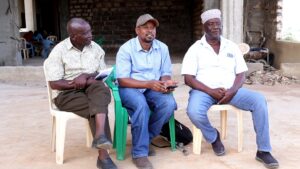
At the center of the controversy is the Kishamba B Community Land Management Committee, whose leadership has faced criticism from a section of residents over what they describe as inadequate consultation, lack of transparency in procurement and concerns over the affordability of the exercise. A formal inquiry sent by Infonile Communications Limited to the Kishamba B Community Land Management Committee on August 14, 2026, sought clarification on, among other issues, public participation, the methodology used to select the surveyor, the reported KSh581 million project budget and whether cheaper alternatives involving government survey departments had been considered.
The inquiry also raised questions concerning alleged financial irregularities, disputed land allocations, exclusion of some sections from mapping and claims that parcels belonging to existing community members were being offered to third parties without their consent. The allegations were presented as matters requiring clarification rather than established wrongdoing.
Among residents who have challenged aspects of the process is Roseline Tiribo Nzighe, a Kishamba B resident with land located near the Nairobi-Mombasa Highway.
Nzighe alleges that individuals have repeatedly entered portions of her property without her consent, with some purportedly interested in acquiring land in the area..
She further alleges that she was assaulted during an incident in which individuals arrived with a tractor to clear vegetation on part of her property.
“I have seen the unseen standing here on my land. Our committee chair has been sending proxies to come and monitor my land during the day and they would bring their potential buyers in the cover of darkness without my consent,” Nzighe told Prime Africa.
She alleged that she has also been threatened and physically confronted over the property.
The rush to Buy and Sell land all of a sudden in the area raised concerns, A matter that sparked outrage across the village and it’s wide vicinity raising questions about the management and leadership of Kishamba B community land.
Retired educationist Kennedy Machora, one of the residents who petitioned State House over the exercise, says the community was not opposed to surveying or obtaining title deeds.
“Our position was never that the people were opposed to surveying their land. We wanted the land surveyed. We wanted titles. We wanted the process completed,” Machora told Prime Africa.
“Our concern was how the process was initiated, whether the required procurement procedures were properly followed, and whether the proposed cost was realistic and affordable for ordinary community members.”

The petition dated June 10, 2026, and supported by minutes of a residents’ meeting held on June 6 at Bible Hall in Kirumbi, Voi, raised questions about the procurement of survey services, the proposed cost and the level of community participation.
The concerns included whether comparative quotations had been obtained, whether an approved work plan and itemised budget existed, and whether government survey departments could undertake the exercise at a lower cost.
The petitioners also questioned the management of funds and alleged irregularities involving land allocation and existing parcels. These remain allegations raised by community members and have not been independently established by Prime Africa.
Questions have also been raised over whether government surveyors could undertake or supervise the demarcation of community land.
Documents reviewed by Prime Africa indicate that government survey authorities can play a role in community land demarcation, including verification and approval of survey plans, subject to the applicable legal and administrative procedures.
Residents have therefore questioned why a private survey arrangement was preferred and whether the community could have accessed government technical support at a lower cost.
The Community Land Act, 2016 (Cap. 287) also places emphasis on community participation and accountability in the management of community land.
As the dispute intensified, community members sought intervention from various government offices, including the Office of the President.
Credible Sources familiar with the development told Prime Africa that the Kishamba B leadership subsequently paused the adjudication process and disbanded the contracted survey company amid mounting pressure and calls for the exercise to be reviewed.
The development has been welcomed by residents who had called for the process to be reconsidered, although questions remain over what framework will be used to restart the exercise.
The ongoing land tussle continues to raise concerns over the absence of leadership from the Taita Taveta County Government, according to a section of villagers in Sagalla.
The residents say the county government leadership has remained quiet on the matter despite a public petition that was launched and formally served to county officials.
“I don’t know what kind of leaders we chose. I don’t understand why they are quiet on this matter despite its magnitude. Why are they silent while we are being oppressed?” one of the villagers lamented to the Prime Africa team.
However, despite the complaints over the county leadership’s silence, a section of local leaders has openly and boldly criticized the situation.
Area Member of Parliament Khamisi Chome told Prime Africa that the issue requires urgent attention and a lasting resolution.
Chome further expressed concern over the process, particularly the procurement and decision-making procedures.
“I am aware of the frustration that the members of Kishamba B are going through. I am much concerned about the issue of transparency since the tendering process was opaque in nature. The committee must come out clean and explain to the members, otherwise the whole thing is unfair,” Chome told Prime Africa.
He said decisions of such magnitude should be subjected to the appropriate community meetings and quorum requirements.
The dispute took another turn on Sunday, September 13, 2026, when Taita Taveta Governor Andrew Mwadime publicly addressed the controversy for the first time.
Speaking during a joint press interview, Mwadime criticized the survey arrangement and called for fairness in the adjudication process.
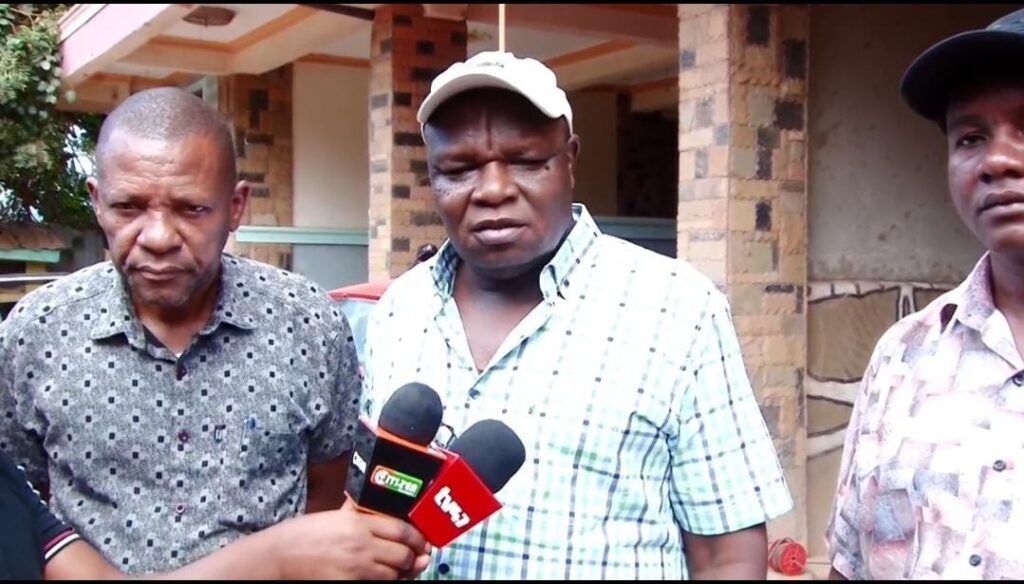
“If you observe the case in Kishamba B, we have had problems, locals complaining over title deeds but unfortunately the leadership went ahead and hired a surveyor asking for 580 million, an amount that cannot be raised by the members,” Mwadime said.
The Governor further disclosed that the State House land adjudication and settlement team had contacted him over discussions to restart the process.
According to Mwadime, the fresh approach would seek to address the concerns raised by residents and provide a more inclusive path towards land adjudication and titling.
For Kishamba B residents, the central question is no longer whether the community wants title deeds.
The dispute is now centred on how the process should be conducted, who should oversee it, what it should cost and whether every legitimate beneficiary will be treated fairly.
With the State House reportedly pushing for a fresh process, residents are now waiting to see whether the intervention will deliver a transparent, affordable and inclusive adjudication exercise — and finally end years of uncertainty over Kishamba B land.
On August 14, 2026, Infonile Communications Limited formally wrote to the Kishamba B Community Land Management Committee seeking its response and documentary clarification on the allegations and questions raised by community members.
The letter specifically stated that the inquiry was not intended to prejudge or establish wrongdoing against any individual, committee member or service provider, but to provide the Committee an opportunity to present its official position for balanced public-interest reporting.
As of the time of publication, the Committee had not responded to the request for comment
About The Author